





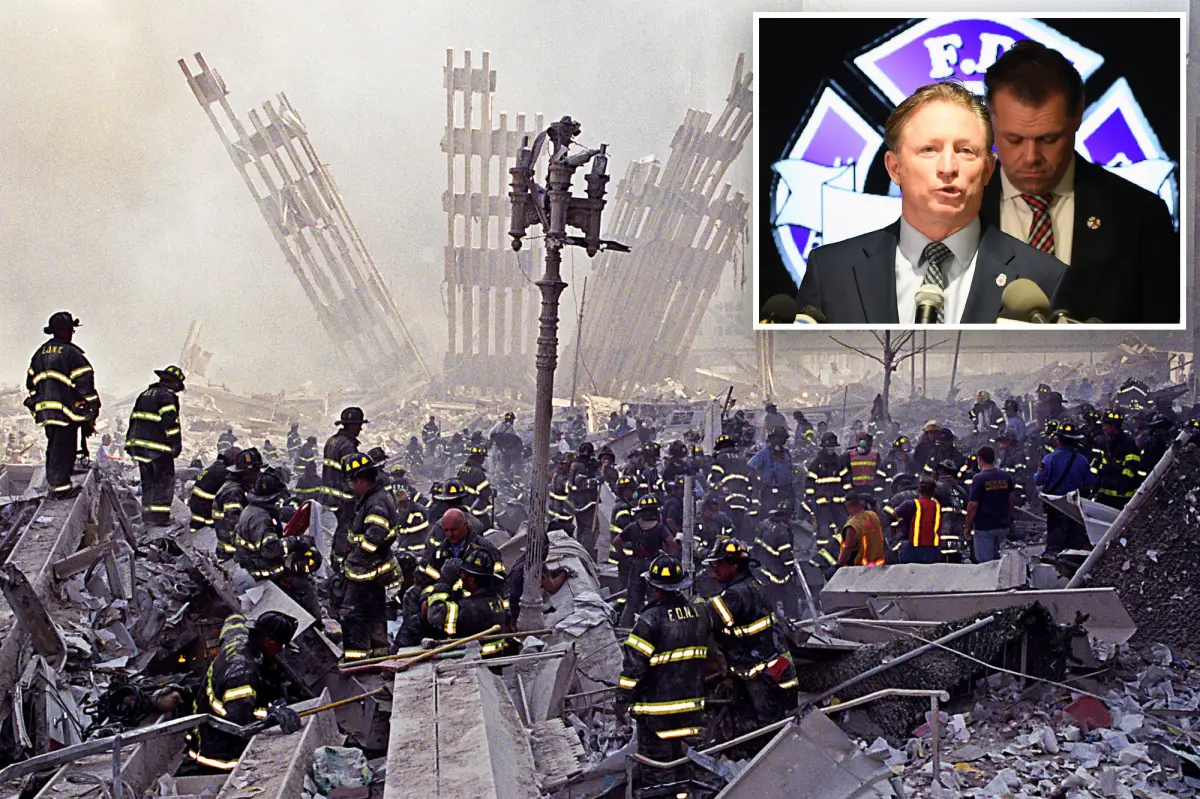
For a quarter of a century, the shadow of September 11, 2001 has stretched far beyond that single, terrible morning. For the New York City Fire Department, the attacks did not end when the towers fell. They have endured in the suffocating dust, the toxic air, and the slow, relentless march of disease that has followed. This week, advocates and union leaders gathered to confront a painful milestone: the 453rd member of the FDNY has now died from a World Trade Center-related illness. That number, staggering in its finality, has surpassed the 343 members who were killed on the day itself. The men and women who ran into burning buildings while others fled have been dying, one by one, in the years since—not from the collapse, but from what they breathed in. Robert Eustace, president of the FDNY Uniformed Firefighters Association, spoke with raw clarity when he said, “For the FDNY, Sept. 11 did not end on Sept. 11.” It is a truth that has become a permanent part of the department’s identity, a grief that has layered upon itself, year after year, as the families of heroes continue to bury their loved ones in a tragedy that refuses to close its final chapter.
The human cost is not merely a statistic on a memorial wall. It lives in the quiet, everyday moments that have been stolen from firefighters and their families. Eustace described the painful reality with a specificity that makes the numbers impossible to ignore. “There are firefighters who cannot make it up the stairs without losing their breath,” he said. The image is visceral: strong, capable first responders, the very picture of physical fitness, now winded by a single flight of stairs. It haunts the hallways of firehouses across the city. “It’s a member who sits with chemotherapy,” he continued, picturing a chair beside a treatment bay, a once-vibrant body weakened by a poison inhaled decades ago. And then there are the families left to piece together a future that was never supposed to be this way. “It’s a widow who has to explain to her children that their father is not coming home,” Eustace said—a conversation that has been repeated 453 times, often years after the initial rescue efforts had ended. “The retiree who survived 9/11 only to find out, years later, that the dust he breathed in is still killing him,” he added. These are not abstract cases. They are the quiet heartbreak that has become a second war for the FDNY, fought not with hoses and axes, but with panic attacks, oncology appointments, and the slow-dawning terror that survival was only a prelude to another battle.
The occasion for this collective reckoning was the recent release of 170,000 documents concerning air quality and the aftermath of the attacks. For the families and the surviving members, these documents are more than historical records; they are a potential tool for understanding the full extent of what they were exposed to. The gathering of union leaders and supporters was not just to mark a bureaucratic release, but to demand that the truth be known. For years, questions have lingered about whether sufficient warnings were given to the workers who toiled for months in the toxic rubble, sorting through steel and ash without respiratory protection, or with only flimsy bandanas. The release of these documents represents a promise that the past will not be hidden, that the sacrifices of those who died will not be covered in a layer of bureaucratic silence. The advocates who gathered are determined to use this information to protect the living, to ensure that every remaining firefighter receives the medical care and compensation they deserve, and to hold accountable any official or agency that may have downplayed the danger in the rush to reopen the city. It is a fight for justice, but more importantly, it is a fight for memory.
The FDNY is a brotherhood forged in fire, and this prolonged tragedy has tested the bonds of that brotherhood in ways no one could have anticipated. The department’s culture has always been one of resilience, of moving forward, of doing the job no matter what. But when the job itself becomes the cause of your death, the rules change. Firehouses now carry a dual burden: they are the sites of immense pride and tradition, but they are also places of medical leave, memorial plaques, and empty lockers that remain perpetually too full. Younger firefighters who were children on 9/11 now work alongside veterans who spent weeks on “the pile,” and the generational divide is often marked by a silent understanding of what is yet to come. The illness waves have become a grim calendar. There are annual remembrance ceremonies, but also annual funerals. The department has developed an expertise in a morbid arithmetic: comparing the date of death to the date of exposure, calculating the latency period of various cancers, tracking which cancers are now considered presumptive. It is a professional intimacy with disease that no firehouse should ever have to possess. Yet, they persist, showing up for one another, standing in dress uniforms at funeral after funeral, holding flag-draped coffins and offering condolences to widows who have become all too familiar with the ritual.
The medical and health crisis unfolding in the FDNY has broader implications for how we understand heroism and its aftermath. The sheer breadth of the illnesses—ranging from a host of cancers, to severe respiratory diseases, to neurological disorders—has forced a reevaluation of what “dying from 9/11” actually means. For many, there is no dramatic rescue to memorialize, no final act of bravery to recount. Instead, there is a gradual decline, a middle-aged man or woman whose shortness of breath was initially attributed to age, only to be diagnosed with a disease that is directly linked to the toxic cocktail of pulverized concrete, glass, lead, and burning jet fuel that hung over Lower Manhattan for months. This has demanded a corresponding evolution in advocacy. The James Zadroga 9/11 Health and Compensation Act, named after a police officer who died of a respiratory disease, was a recognition that the government had a duty to care for the people who answered the call. But the fight for funding and healthcare is never finished. Each new study, each new death, each new family left without a provider is a reminder that the cost of that single day is still compounding, and that the nation’s gratitude cannot end with a ceremony. It must be a permanent commitment to the lives that were shortened by the very act of saving others.
And yet, amidst the sorrow, there remains a profound sense of purpose. The FDNY has not been broken by this slow-moving disaster. It has been changed, irrevocably, but not broken. The 453 members who died of World Trade Center-related illnesses are honored not simply as casualties, but as participants in a continuous act of sacrifice. Their names are read aloud, their stories are told, and their families are embraced by a department that refuses to let them walk the path of grief alone. There is a determination in the eyes of the advocates who gathered this week, a grim resolve that the release of those 170,000 documents will not be an end, but a beginning. They will use the information to fight for better screening, for earlier detection, for stronger support systems. They will tell the story of the retiree who sifts through the dust, the widow who explains the unthinkable, and the firefighter who can no longer climb the stairs. They will make sure that the world understands that 9/11 is not a historical date, but an ongoing presence in the lives of thousands. The towers fell, but their legacy is not only one of destruction. It is also a legacy of love, of duty, and of a brotherhood that stands together, even as the dust continues to settle—a brotherhood that ensures no one who ran into the fire is ever left to face the smoke alone.