


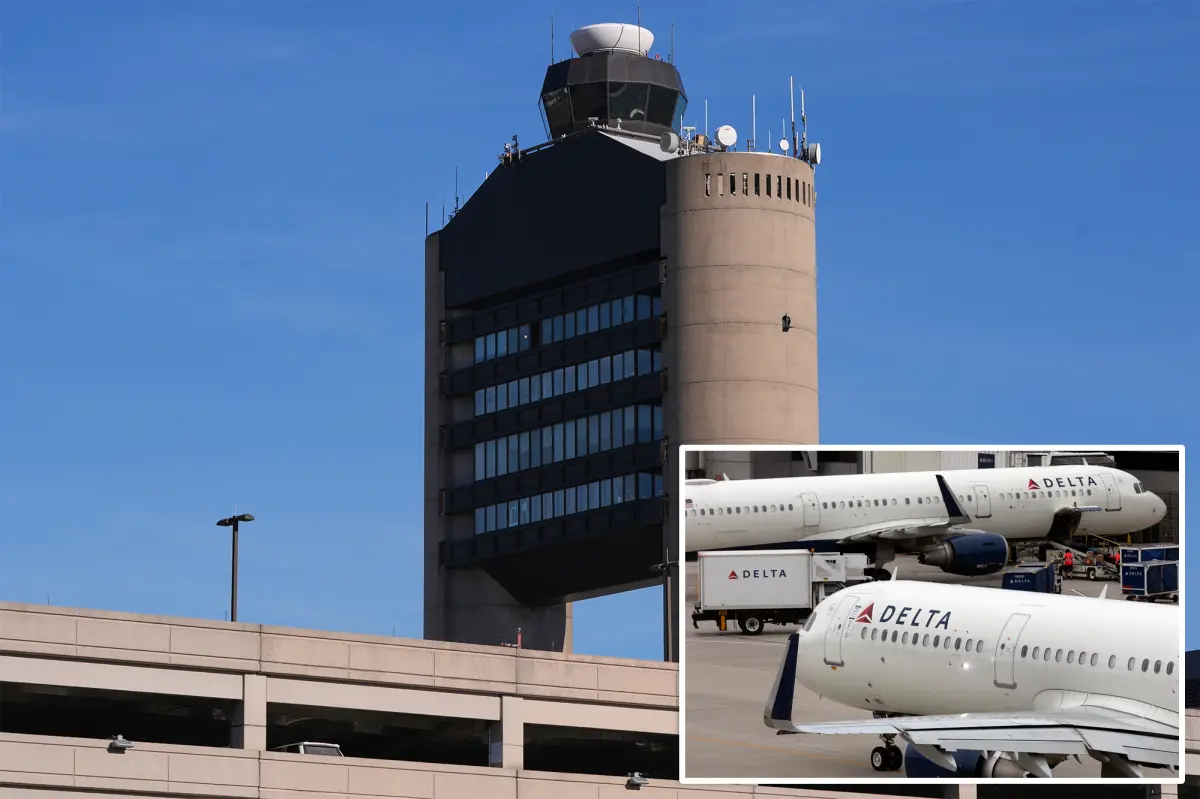
For the millions of travelers who step onto commercial airplanes everyday, flight has become a beautifully mundane part of modern existence, defined by the quiet hum of jet engines, the reading of books, and the anticipation of arriving at a destination. We surrender ourselves to the sky with a profound, unspoken trust in the complex web of pilots, controllers, and engineers who manage our journeys from behind the scenes. However, that comforting illusion of routine safety was briefly shattered on a chilly Saturday morning for the 129 passengers and six crew members aboard Delta Air Lines Flight 2351. Traveling from Dallas to Boston Logan International Airport, these individuals were preparing for a normal landing—stowing their trays, fastening their seatbelts, and mentally preparing for the weekend ahead in New England. Instead, they were thrust into a heart-stopping moment of sudden suspense that highlighted just how quickly the safety of flight depends on split-second human decisions. As the passenger airliner descended through its final approach, the peaceful atmosphere inside the cabin was suddenly interrupted by a roar of engine power as the pilots aborted the landing, pitching the aircraft sharply upward back into the gray sky. For those in the passenger seats, who could not see the runway ahead, the sudden, aggressive climb was a jarring shock, transitioning their routine journey into a high-stakes emergency evasion. This sudden maneuver, known as a go-around, was executed to avoid a catastrophic ground collision with an American Airlines aircraft that was departing from an intersecting runway, transforming a quiet morning arrival into an intense display of emergency coordination.
At the heart of this close call lies one of the most intellectually demanding challenges of airport operations: managing intersecting runways. The Federal Aviation Administration quickly launched a comprehensive investigation to determine exactly how two multi-ton passenger jets ended up on a direct collision course. According to flight registries and radar data, the Delta flight was on its final glide path when the American Airlines flight began its departure roll on a crossing strip of asphalt. In the high-velocity environment of commercial aviation, there is absolutely zero margin for error; a fraction of a second or a few feet can mean the difference between a safe landing and an unspeakable tragedy. Recognizing the imminent danger of their crossing paths, the Delta flight crew demonstrated the exceptional poise that defines modern pilot training, quickly communicating with air traffic control towers to abort their landing sequence. While passengers often interpret a sudden go-around as a sign of mechanical failure or pilot error, aviation experts emphasize that it is actually one of the most rehearsed and successful safety procedures in the industry. It represents a healthy aviation culture where pilots are empowered to reject a landing the moment any variable, no matter how minor, introduces doubt. This preemptive safety mindset, which prioritizes safety over schedule, is what stood between a routine Saturday morning and a tragedy that would have devastated families across the country.
Once the Delta aircraft climbed back into the safety of the sky, circling over Boston to allow the runway confusion to settle, the pilots brought the plane down for a successful, uneventful second landing. The physical relief that swept through the cabin when the tires finally touched the runway is something only those who have survived a near-miss can fully understand. The 135 souls on board were able to walk down the jet bridge normally, stepping back into their lives with a newfound appreciation for the simple gift of safety, perhaps only realizing how close they had crawled to disaster when they turned on their phones and saw the breaking news alerts. In the days following the event, the contrast in organizational responses was notable. Delta Air Lines openly praised its flight crew for their professionalism and decisive coordination, while American Airlines and Boston Logan Airport officials redirected all inquiries to the regulatory scrutiny of the government. This silence underscores the quiet gravity of the investigation, as safety boards analyze radar files, voice recordings, and flight logs to determine how the breakdown in communication occurred. For the passengers, however, the technical details were secondary to the simple, beautiful reality of returning to the safety of the earth and the warm embrace of waiting family members.
Yet, this fortunate escape in Boston stands in stark, emotional contrast to a series of devastating aviation accidents worldwide that occurred in the very same week, serving as a somber reminder of the absolute unforgiving nature of flight when things go wrong. On the same Saturday that the Delta flight was successfully avoiding disaster at Logan Airport, a tragic accident was unfolding across the Atlantic Ocean, where the founder of a popular gaming company was killed in a private plane crash in France. His sudden death sent shockwaves through the technology community, turning a peaceful weekend into a period of deep mourning for his friends, colleagues, and loved ones. Sadly, this was not the only tragedy to touch the aviation community that week. Just days earlier, a business jet crashed during operations in Laredo, Texas, claiming the life of a person on board and leaving a trail of wreckage and unanswered questions in its wake. These accidents strip away the dry statistics of aviation, reminding us that behind every news report lies a deeply human story of a life cut short, a family permanently altered, and a community left grappling with the sudden loss of someone who was simply traveling to their next destination.
The cloud of grief hanging over the aviation community grew even heavier with two more catastrophic accidents that claimed dozens of lives in quick succession. On a testing range at Edwards Air Force Base in California, a historic B-52 bomber crashed during a test flight, claiming the lives of all eight service members on board—highly trained professionals who dedicated their lives to pushing the boundaries of flight safety and military performance. These military aviators were mothers, fathers, sons, and daughters who accepted the daily, quiet risks of test piloting to ensure the security of others. This military tragedy was mirrored in the civilian world just days prior, when a skydiving outing in Missouri turned into an unimaginable nightmare. A plane carrying twelve eager adventurers plunged to the earth, killing everyone on board and shattering the lives of families who had seen their loved ones off for a weekend of joy and exhilarating freedom. The loss of these twenty lives in such a short span of time heavily weighed upon the collective consciousness of the aviation world, showcasing the heavy toll of flight, whether in the rigorous environment of military testing or the joyful pursuit of extreme sports.
Ultimately, these contrasting events from Boston to France, Texas, California, and Missouri write a complex narrative about our relationship with human flight. They serve as a somber reminder of the absolute vigilance required to keep the skies safe, showing that the line between a routine, forgettable flight and a historical tragedy is often measured in split seconds and feet. The successful go-around at Boston Logan International Airport is a victory of human training, institutional safety, and clear-headed decision-making under pressure. It stands as a beacon of hope against a backdrop of mourning, proving that while we cannot eliminate all risks, our collective commitment to safety, continuous learning, and rigorous investigation remains our strongest shield. As investigators piece together the puzzles of the past week’s tragedies, the passengers of Delta Flight 2351 can cherish the quiet gift of another day, a testament to the quiet heroes in cockpits and control towers who work tirelessly to ensure the sky remains a bridge, not a barrier, to our loved ones.