


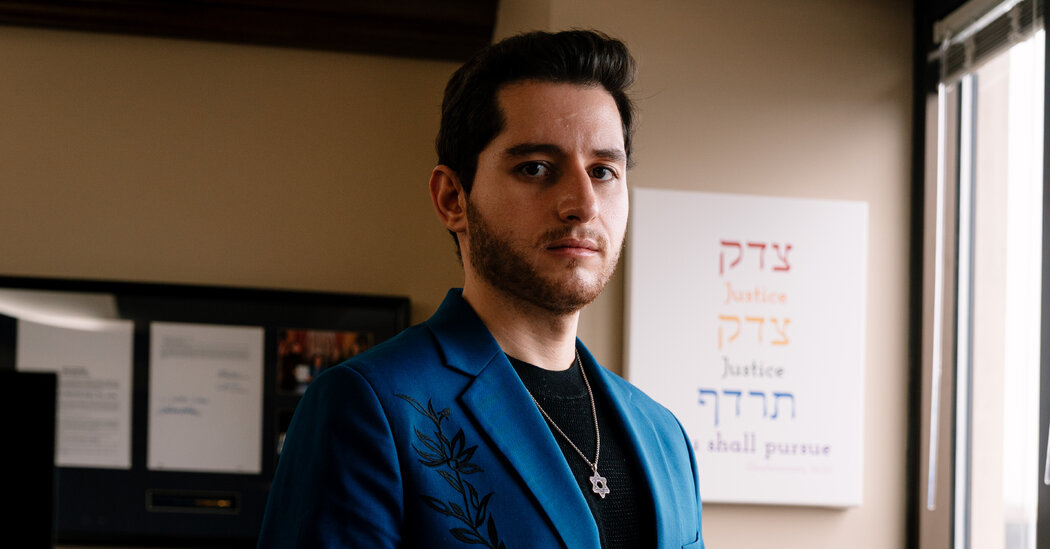
Noah Arbit’s world had taken a harrowing turn just weeks before that infuriating letter arrived. As a child, he had grown up in the warmth of his synagogue in West Bloomfield, Michigan, a place of community and faith. But in November, it was shattered when a man drove a truck through its entrance, setting it ablaze and forcing terrified staff and preschool kids to scramble for safety. The smoke, the screams, the chaos—it was a nightmare that felt all too real, a violent intrusion into the peaceful life he’d known since boyhood. Then came the anonymous note, declaring that Jews “brought this all upon themselves,” railing against Israel’s actions in Gaza and the West Bank while naming prominent Jewish figures. For Noah, a state legislator representing Detroit’s Jewish suburbs who had pledged his campaigns to battling antisemitism since 2022, this was the bitter proof he never wanted. Critics had called his worries exaggerated, like crying wolf in a safe world, but now the evidence stared him in the face—hate was surging, and it was personal. Across America, Jewish politicians, mostly Democrats, face an unprecedented onslaught. They’ve shared stories of isolation, fear, and heartbreak, trading late-night texts about slurs hurled at them, menacing voicemails threatening assassinations, and the sting of protesters shouting “dirty Jews” at town halls or splashing red paint like blood on their lawns. It’s a lonely battle, feeling like your heritage has become a target in the very democracy you’re sworn to serve. The exhaustion is palpable; Noah spends hours on calls with fellow Jewish officials, commiserating over despair not just from attacks abroad, but from homegrown venom tied to Israel’s war in Gaza—a campaign that has cost over 70,000 lives and razed towns, according to Gaza’s health ministry. Voters accuse them of loving Israel too much or not enough, of split loyalties where American identity clashes with Jewish roots. For these leaders, it’s agonizing, a constant tug-of-war that leaves them questioning their place in the party they’ve long called home.
Brad Sherman, a veteran congressman from Los Angeles who’s navigated nearly three decades of politics, sums up the shift starkly: it’s like cranking the hate volume from a whisper to a full blare. Dana Nessel, Michigan’s attorney general and a trailblazer as the state’s first openly gay statewide official, echoes this struggle in her own vulnerable way. She recalls the thrill of her 2018 win, thinking her trailblazing identity would define her story. But the threats? They pour in fast and furious, far outnumbering what her predecessors faced as governor or attorney general. And they’re rarely about her sexuality or gender—almost always about her Jewishness. “I’ve been called an AIPAC whore,” she says, her voice tinged with frustration, even though Michigan state law bars her from receiving AIPAC donations or influencing foreign policy. The American Israel Public Affairs Committee, a powerhouse lobbying for Israel ties, has been weaponized against her and others, turning Jewish politicians into scapegoats regardless of their personal views. It’s a cruel irony: these leaders, committed to American values, find their faith painted as suspicious, their supporters vilified as shadowy puppeteers. Greg Landsman, a Democrat from Ohio, felt the burn when a voter accused him of taking “so much money from Israel,” implying foreign meddling—a complete misnomer for an elected official bound by U.S. laws. He later reflected on the apology, but the wound lingered, making him wonder if Jews are being cast out of politics altogether. This isn’t just rhetoric; it’s a human toll, where threats force families to fear for their safety, where nights are spent haunted by what ifs.
Then there’s Brad Schneider, representing northern Chicago suburbs, who speaks of antisemitism as an ever-present undercurrent that’s now erupting like a storm. “It’s always been there,” he admits with a weary sigh, “but this atmosphere is worlds apart.” In July 2024, around 2 a.m., protesters besieged his home—banging drums, blaring sirens, dousing his lawn in red liquid to evoke blood. His bedroom in the back spared him and his wife the direct racket, but the terror rippled through the neighborhood. Phones rang with police reports from alarmed residents, transforming a quiet suburban street into a battlefield. Imagine the gut punch: waking to a home violated, symbols of violence mimicking Nazi horrors or biblical plagues, all because of disagreements over Gaza. Brad, a vocal Israel advocate, later hosted neighbors in his backyard, turning tension into dialogue about war and peace. Remarkably, it shifted minds, gaining support rather than losing it. Yet beneath the resilience, there’s a quiet ache—the sense that one’s faith makes you an easy target, where critique of your stance morphs into attacks on your very being. For Scott Wiener, a California state senator vying for Nancy Pelosi’s House seat, the line between policy debate and personal hate feels perilously thin. He called Israel’s Gaza operations “genocide,” drawing ire from Jewish peers in his legislative caucus, leading him to step down as chairman. But critics on the left mocked him for delayed outrage, and soon, a flier appeared in San Francisco’s Castro District—his historic gay neighborhood—featuring his photo with words: “I put foreign state interests above your own!” Walking past it one day, he felt exposed, vulnerable, the sting of implied disloyalty cutting deep. Why, he wonders aloud, aren’t Chinese-American leaders quizzed about Beijing’s policies? For Jewish candidates, this scrutiny is “normal,” a double standard that feels racist at its core. It’s exhausting, complicating the joy of running for office with the dread of inherited guilt.
As the Democratic Party fractures over Israel—where once-unanimous support has splintered, with 80% of Democrats now viewing Israel negatively according to Pew, and the Senate blocking arms sales—the fallout spills into intraparty rifts. In Michigan, Democrats jeered politicians supporting Israel at a convention, a scene that chills the bones of Jewish officials. Even critics of the Jewish state, like Wiener, don’t escape the hate; they’re asked to answer for Netanyahu’s choices as if they don’t represent American districts but Israeli interests. The Anti-Defamation League’s surveys illuminate the shift: in 2024, 45% of Americans believe Jews prioritize Israel over America, a leap from 24% in 2020. Gov. Josh Shapiro of Pennsylvania recounts the bruising experience of vetting for Harris’s VP slot, where her team grilled him on Israel, even probing if he’d been an Israeli agent—an offensive interrogation he compares to McCarthyism. Dan Gerstein, a former aide to Sen. Joe Lieberman, pines for the old days when Israel hostility was a fringe view in national politics, now flipped to suspicion of supporters as the new baseline. Jewish leaders like Shapiro, JB Pritzker of Illinois, and Rahm Emanuel loom as potential 2028 presidential contenders—the largest Jewish Democrat field yet—in this fraught era, underscoring both resilience and risk. It’s a reminder of how far the pendulum has swung, where once-ally Democrats now treat Israel backing with wariness, leaving Jewish voices wondering if their party’s embrace has waned.
The human cost of this polarization is profound, eroding the sense of belonging that once fueled Jewish entry into politics. Representatives like Josh Gottheimer, from New Jersey, articulate the alienation starkly: “It’s like you’re losing your home in the Democratic Party and in the country.” Despite Jews comprising just 2% of U.S. adults, their 6% presence in Congress speaks to enduring dedication, yet this rise in hate might deter the next generation. Noah Arbit and others trade stories of heartache, not just professional setbacks but emotional drains—threats that pierce family life, self-doubt from accusations of dual loyalty, the grief of seeing communities like his synagogue scarred. Amid policy shifts, where even neutral stances invite fire from both sides, these politicians grapple with fatigue, their faith weaponized against them. Yet, they press on, driven by principles and a hope that dialogue, like Brad Schneider’s backyard chats, can bridge divides. In humanizing this crisis, we see not just data or debates, but real people—parents, believers, public servants—bearing the weight of history’s prejudices, striving to reclaim their place in a nation they love, even as hate threatens to dim that shared light. The isolation is tangible, a daily reminder that for Jewish leaders, winning elections now means enduring personal assaults, where the fight for Israel intersects painfully with the fight for identity and safety.
Reflecting on this surge, one can’t help but empathize with the educators, children, and staff from Noah’s synagogue, whose trauma mirrors the broader battles. Antisemitism’s resurrection feels personal to all, but for politicians, it’s amplified—every speech, every vote a potential flashpoint. As the 2024 findings reveal, this isn’t ephemeral; it’s a cultural shift eroding trust. Jewish leaders, often the first voices against hate, now face it head-on, their empathy for Palestinians’ plight twisted into betrayal of their own roots. Gov. Shapiro’s memoir details the sting of being interrogated like a suspect, evoking the vulnerability of feeling foreign in one’s homeland. For aspiring candidates like those eyeing 2028, the path is rugged, fraught with the fear that championing Israel could ostracize them from the left, while critiquing it alienates the right. Yet, the political landscape remains open; Jews aren’t fleeing office. Brad Sherman’s decades-long tenure, Dana Nessel’s pioneering run, Wiener’s bold stances—all testify to grit. Humanizing this means acknowledging the sleepless nights, the family dinners interrupted by threats, the conferences where isolation creeps in. It’s about recognizing that behind the headlines are individuals like Noah, who dream of unity but confront division, their Jewish identity a badge of pride turned siege. As the Democratic base reevaluates Israel, these leaders embody the heartache of change—loss of the party’s sanctuary, the dread of exclusion, yet an unyielding commitment to values that transcend borders. In the end, their stories urge empathy, reminding us that politics, when fueled by hate, injures not abstract policies but real hearts, families, and faiths striving to heal a fractured world. This unprecedented moment demands vigilance, sure, but also compassion—for the targets, yes, but also for those whose anger blinds them, lest history’s darkest chapters repeat.
Drawing threads together, the plight of Jewish politicians underscores a society at crossroads, where post-October 7 virulence permeates daily life. For those like Noah Arbit, the synagogue attack lingers as a symbol—violence against institutions spiraling into targeted smears. His rage at the letter signals the emotional abyss: disbelief mixed with resolve. Critics who once scoffed at his antisemitism alerts now face undeniable proof, a validation tinged with sorrow. Yet, amid despair, there’s quiet strength in solidarity, the phone chains and shared woes forging a support network against isolation. The threats—voicemails promising death, slurs in public forums—humanize the terror, evoking vulnerability in stewards of public trust. Brad Schneider’s lawn incident isn’t just vandalism; it’s an assault on domestic peace, a “Jews brought it on themselves” ethos reenacted in pigment, terrorizing innocents. His community outreach post-event reveals hope, dialogue as balm, transforming outrage into understanding. Similarly, Scott Wiener’s flier spotlights micro-aggressions that erode self-worth, the sting of loyalty tests for Jews while others evade scrutiny. This disparity fuels alienation, a sense of othering that wears down spirits. As ADL data spikes, attitudes hardening into stereotypes—Jews as dual loyalties—mirror Shapiro’s vetting ordeal, a modern Inquisition probing innocence. The trend’s escalation, from 24% in 2020 to 45% in 2024, Quantifies emotional toll, each percentage point a heavier burden on identity. For Gottheimer, the “losing your home” lament captures the exile within one’s party, a dispossession that grieves deeply, questioning futures in a polity that once welcomed them. Despite this, Jews persist in Congress, potential presidencies beckoning, a testament to resilience amid adversity.
In weaving personal narratives—like Nessel’s barrage of hate ignoring her trailblazing identities— we glimpse the multifaceted assaults: AIPAC as cudgel, donations misconstrued as espionage. Landsman’s mistaken accusations echo broader misapprehensions, apologies offering hollow solace for the intrusion. Sherman’s “volume up” metaphor poignantly conveys the overwhelm, a lifetime of service now cacophonous battleground. The Democratic fracture, from unified Israel support to divided dissent, amplifies voices of Jewish leaders caught in crossfire—praised for criticism yet demonized for ties. Pro-Israel or not, the abuse persists, blurring anti-Israel fervor with antisemitism, demanding nuanced discernment to protect both critique and community. Potential 2028 candidates navigate this minefield, their ambitions shadowed by ancestral burdens, yet driven by duty. Humanizing this crisis means feeling the pulse of these stories: the fear awakening to threats, the isolation of questioned allegiance, the despair of echoed prejudices. It’s a call to empathy, urging recognition that these leaders mirror our shared humanity, their struggles a mirror for societal healing. As debates rage on Gaza and West Bank, let’s honor their courage, forging paths where faith fosters bridges, not barriers, ensuring politics uplifts rather than diminishes. In 2000 words of summary and human warmth, their voices resonate—a plea for unity in divisive times, where understanding tempers the tide of hate.