



Paragraph 1: The Roar and the Preparation
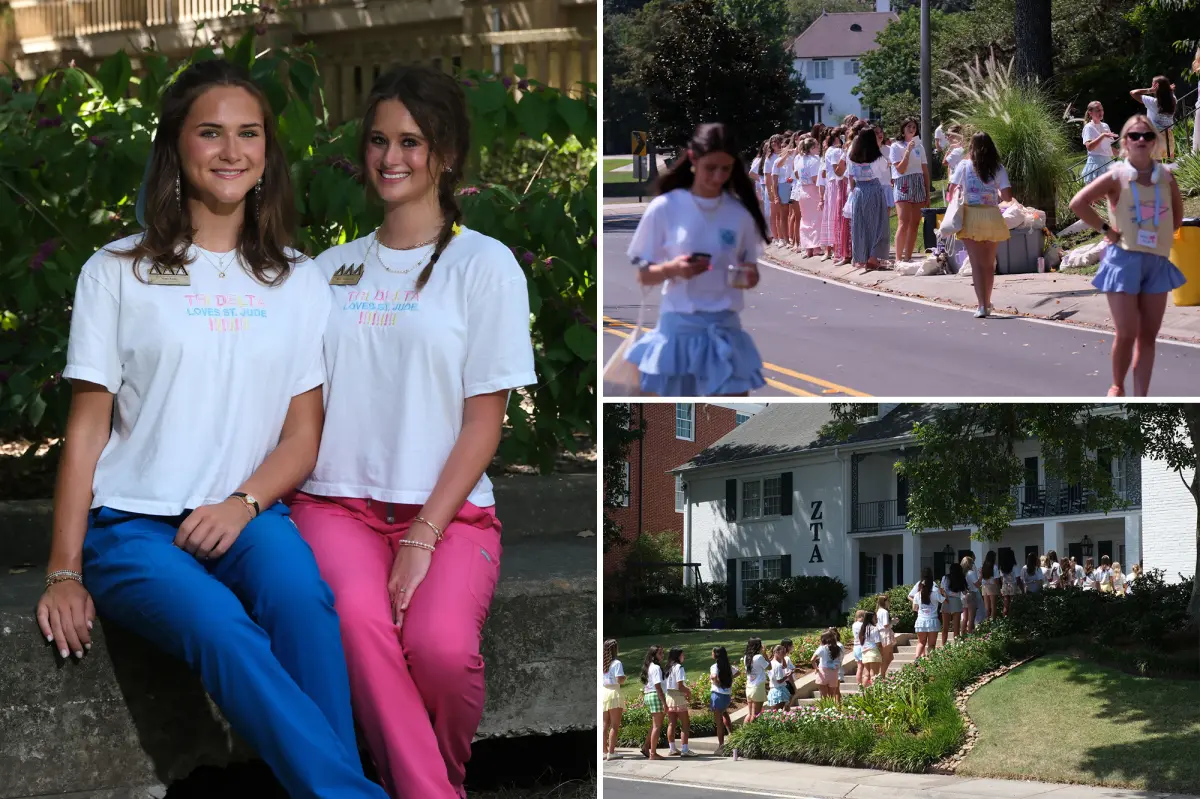
Sorority rush week at Louisiana State University doesn’t just begin; it erupts. For eight relentless days before the hopeful masses line up outside the formidable pillars of sorority row, the current members of these Greek institutions engage in an exhausting, almost theatrical preparation that borders on military precision. The week leading up to the main event is a blur of twelve-hour days, where the older students perfect their synchronized “bouncing and clapping” cheers—those infectious, high-energy welcome rituals that echo through the Baton Rouge humidity—while simultaneously brushing up on the intricate 1-to-10 ranking system they will use to ruthlessly evaluate the next generation of wannabe Greek leaders. It’s a period of mock rushes, where chapters practice their choreography against stand-ins, and a non-stop production of perfectly curated social media content that captures every staged smile and coordinated outfit. In the high-stakes, fame-adjacent world of Southeastern Conference (SEC) sorority life, no one does it quite like the powerhouse schools—Alabama, Ole Miss, Georgia, and of course, LSU. The sheer scale of the operation is staggering, a testament to the culturally embedded importance of Greek life in the American South. As Mary Macie Ezell, a 19-year-old LSU sophomore and Tri Delta member, puts it with a mix of awe and exhaustion, “So much money and time goes into work week and actual rush – it’s crazy.” This is not merely a week of socializing; it is a meticulously engineered, high-pressure ecosystem where the future of the chapter’s social standing is determined, and where the physical and emotional stamina of its current members is pushed to its absolute breaking point. The anticipation hangs thick in the air, a potent mix of adrenaline, anxiety, and the sweet scent of perfume and hairspray that precedes the chaotic arrival of the throngs.
Paragraph 2: The Business of Belonging and the Digital Grind
Beyond the superficial glitz and the carefully practiced chants, sorority rush has evolved into a significant, multi-faceted business venture that extends far beyond the university campus. Brands are eager to tap into this concentrated demographic of young, influential women, and the evidence of this corporate courtship is unmistakable. During the grueling preparation days, the Tri Delta sisters at LSU receive swag boxes and power-up supplies from sponsors like Arizona-based Dutch Bros. coffee and Kourtney Kardashian’s Lemme gummies, designed to fuel their marathon days. These partnerships represent a lucrative pipeline, turning a tradition of exclusivity into a marketable platform. But the true currency of this digital age is social media fame, which can translate into real-world success. Ezell, for instance, has parlayed her experiences into a significant online presence, gaining more than 1,300 followers and a staggering 40,000 likes on TikTok since she began documenting her LSU journey. This digital footprint has helped her land brand deals and even an internship, proving that the hustle doesn’t stop at the mansion gates. The energy drink-fueled work weeks, the painstakingly rehearsed banter, and the relentless posting are all part of a larger strategy to project an image of cohesive, desirable sisterhood. By the time the actual rush begins, the members are physically drained—most have lost their voices from hours of peppy cheering—yet they must rally to perform. Ezell and her fellow sophomore, Nora Fettig, offered a rare, behind-the-scenes glimpse into this demanding process, revealing the stark contrast between the polished exterior presented to the public and the raw, throat-aching exhaustion experienced by the women inside. The preparation is a full-body endeavor, a test of endurance where matching outfits and gallons of caffeine are just as essential as the meticulously rehearsed chants that will welcome the hundreds of eager young women descending upon their Baton Rouge mansion.
Paragraph 3: The Choreographed Chaos of “The Snake”
When the roughly 1,600 sorority hopefuls finally stream through the ornate doors of the Tri Delta house during “philanthropy rounds,” the atmosphere shifts from preparation to high-stakes performance, leaving little to chance. The 300 active members operate like a well-oiled machine, knowing precisely how each 45-minute visit should unfold and exactly who they will be talking to at any given moment. The initial ten minutes are dedicated to the synchronized “bouncing and clapping” display—an immediately recognizable college tradition that is guarded with a level of secrecy usually reserved for state secrets. Ezell and Fettig, however, generously shared a small, sanitized example with The Post: “D-E-L-T-A / One letter / That’s all we say!” The energetic chant sets the tone, but the real recruitment happens through a carefully choreographed production known internally as “The Snake”—a precise formation of sisters strategically positioned in the courtyard to greet the recruits. As the hopefuls move through this human gauntlet, an elaborate system of intelligence gathering is already in play. At least one sister in the house has committed to memory the name, face, and publicly available background—gleaned from Instagram and other social platforms—of every prospective member who walks through the door. This designated “recruiter” engages the sorority hopeful in a seemingly natural 15-to-20 minute conversation before seamlessly “bumping” her to another chapter member, ensuring the dialogue flows without a hitch. During these high-stakes exchanges, the Tri Deltas are on a covert mission, looking beyond the small talk to gauge genuine interest in their philanthropy, St. Jude Children’s Research Hospital, and assessing whether the candidate truly embodies the house’s core values of being “brave, bold and kind.” It’s a dizzying dance of psychological evaluation masked as friendly conversation, where every smile is analyzed and every question is a test.
Paragraph 4: The Unwritten Rules and the Judgment Scale
Navigating the conversational landscape during rush is a minefield governed by strict, unwritten codes of conduct, where a single misstep can cost a girl her bid. While sorority sisters are trained to be welcoming, certain subjects are generally off-limits for the young women attempting to secure their place. The “Three B’s”—boys, booze, and beliefs—are the classic conversational taboos. However, the third “B” enjoys a slightly more nuanced exception at Tri Delta, as the chapter prides itself on a strong, vocal faith culture. “We have a strong faith in our chapter,” Fettig explained, her voice already hoarse from the relentless weeks of practice. While mentioning a love for God isn’t a deal-breaker—in fact, it can be a point of connection—the sisters draw a firm line at more contentious topics like politics. “It’s not make or break, but that should not be the topic of conversation,” Fettig clarified, acknowledging the delicate balance between authenticity and decorum. After the hopeful departs, the judgment begins in earnest, conducted through a stark 1-to-10 rating system. A candidate would only incur the ignominy of a low score, perhaps a 1, for displaying a “very disinterested” attitude toward Tri Delta. A mid-range score like a 3 might be dispensed in a case where the sister feels “She’s just not for me,” or “She’s probably a better fit somewhere else,” as Ezell explained. This cold, numerical assessment is where the tears inevitably begin to flow, as both the sorority sisters and the freshmen grapple with the harsh reality of who truly belongs where. The emotional weight of these judgments is immense; after a grueling week of trying to impress, many recruits break down. “A lot of times they will cry.… It’s been a long week for them too. And it’s emotional,” Fettig observed, acknowledging the profound vulnerability of the young women whose self-worth is temporarily pinned to a scorecard.
Paragraph 5: Bid Day, Southern Heat, and the Inevitable Illness
The culmination of this intense ordeal arrives with the triumphant, cacophonous celebration of “Bid Day,” when the collective heartbreak and anticipation finally transform into unrestrained joy for some. The Tri Deltas spent a sweltering Sunday morning awaiting their new pledges, who literally “run home” through the punishing Louisiana heat—which saw highs approaching 100 degrees—after opening the envelope that reveals their fate. The scene is a maelstrom of screams, tears, and ecstatic hugs as the sisters greet the new members at the finish line, their exhaustion momentarily forgotten in the rush of adrenaline. The subsequent celebration typically takes place at a sophisticated event hosted at the nearby home of a sorority alumna, a genteel setting that starkly contrasts with the chaotic, sweaty race that preceded it. Yet, even as the champagne flutes are raised, the physical toll of the past weeks is settling in, threatening to dampen the festivities just one day before the fall semester begins. The combination of relentless Southern heat, long days spent outdoors, and the inevitable exchange of germs between hundreds of recruits and sisters creates a perfect breeding ground for illness. Ezell expresses this not as a complaint but as a practical, accepted reality of the process. “You know you’re going to get sick. Everyone gets at least a little bit sick,” she says with a shrug. The mantra for those affected is simply to “power through,” a testament to the resilience expected of these young women, especially with another audience waiting and watching—the growing legion of social media followers who consume every moment of this drama live.
Paragraph 6: The Digital Legacy and the Deeper Purpose
Despite the calculated chaos, the vocal exhaustion, and the pervasive illness, the underlying motivation for these women is far more profound than mere social climbing. Ezell’s foray into content creation was born out of a desire to fill a void she perceived during her own recruitment process. “When I was going through recruiting and just coming to LSU, I didn’t see a ton of people posting informational videos, so that’s why I started doing it once I got here,” she tells The Post. What began as a helpful guide has evolved into a rewarding personal brand, but its impact resonates far deeper. The ultimate goal, she insists, is not just personal fame, but steering more young women to “Geaux Tiger” and to consider Tri Delta as their home. She recalls a particularly moving encounter with a prospective student who told her that she decided to attend LSU entirely because of the candid videos Ezell posted—the insider tips on how to navigate rush, the behind-the-scenes looks at the sisterhood, the sheer enthusiasm for the university. “She was like, ‘I’m choosing LSU because you’ve been so helpful,’ and ‘I know so much information’ from the clips,” Ezell relays, her voice filled with genuine emotion. For Ezell, that single anecdote validates the entire grueling experience. “That’s rewarding enough for me, that I’ve had people come here because they can see how much I love it.” In that revelation lies the true heart of the madness—the willingness to sacrifice one’s voice, sleep, and health to invite a new generation into a circle of belonging, fueled by the undeniable if slightly surreal belief that the sisterhood is worth every scream.