


Paragraph 1: The Podcast Ripple that Shook Relations
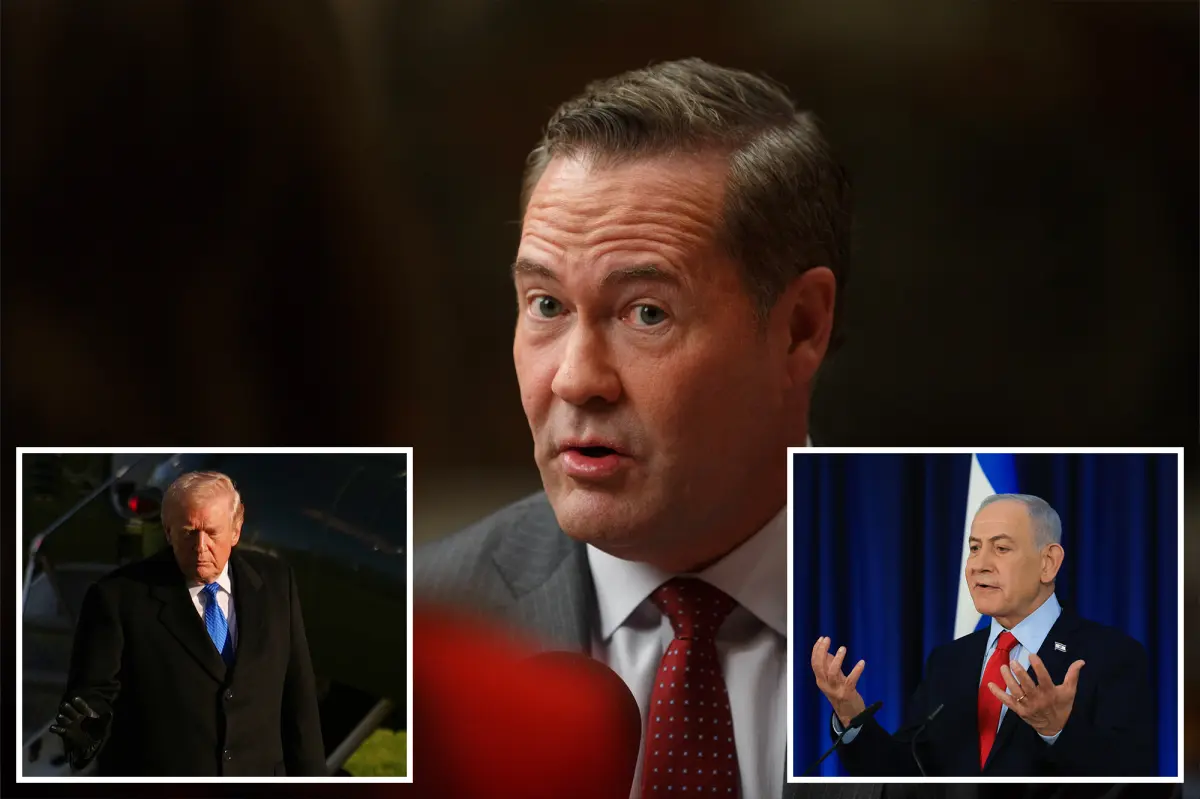
Imagine you’re tuning into a late-night podcast episode where the guest spills insider tea that could rewrite the headlines on US-Israel dynamics. That’s exactly what happened on “Pod Force One,” where host Miranda Devine—known for her sharp wit and no-nonsense journalism—sat down with Mike Waltz, the U.S. Ambassador to the United Nations. Waltz, a former Army officer turned diplomat with a reputation for candor, fielded accusations from critics like Joe Kent, who claimed Israeli Prime Minister Benjamin Netanyahu was basically puppeteering President Trump into confrontations with Iran. But Waltz wasn’t having it. With the kind of straightforward folksiness that makes you lean in closer, he insisted, “I don’t think for a second anyone should believe that anyone, world leader, advisor, or otherwise, is walking into the Oval and pushing President Trump around.” He painted a picture of Trump not as a puppet, but as the indisputable commander-in-chief, the guy making the tough calls with a steely gaze that brooks no nonsense. Waltz shared that he’s been in the room—literally in those hallowed halls of the White House—where Trump has given Netanyahu “the business,” dishing out real talk the way a parent might to a kid who’s pushed boundaries one too many times. And not just once, but in ways that left no doubt who held the reins. Think about it: two strong-willed leaders who are famously close, known for their bromance-like rapport, yet Trump doesn’t hesitate to lay down the law. Waltz stressed this isn’t about manipulation; it’s about allegiance to American interests, where Trump calls the shots, period. This revelation adds a human layer to the geopolitics, reminding us that behind the suits and handshakes, there’s real grit, real ego clashes, and yes, moments where alliances are tested like a fire drill unexpectedly turning into the main event.
Expanding on that, Waltz recalled specific instances that humanize these power dynamics. It’s not just rhetoric; it’s lived experience. He talked about how Trump, with his trademark deal-making flair, pushes back when needed, ensuring that global leaders understand that America isn’t a pushover. This podcast chit-chat wasn’t dry policy talk—it was personal, with Waltz’s military background shining through in his no-frills delivery. He likened Trump’s approach to a shepherd herding wayward sheep, keeping the flock in line without anyone feeling too bruised, but definitely making their presence known. For listeners, it evokes the image of Trump as the ultimate boss, someone who’s built an empire on telling people “you’re fired” without blinking, now applying that same assertiveness to world affairs. Critics might call it arrogance, but Waltz framed it as responsible leadership, a nod to the everyday American’s expectation that their president isn’t swayed by foreign charm offensives. There’s a warmth in Waltz’s defense, a patriotic undercurrent that makes you root for the home team, wondering how many untold stories of Oval Office drama are out there, waiting to surface in equally candid conversations. It’s that raw honesty that makes podcasts like this addictive, pulling you into the whirlwind of international relations with the intimacy of a confessional.
And let’s not forget the broader context Waltz wove in—how these interactions ripple out to shape alliances, especially in the volatile Middle East. He emphasized that Trump’s ability to assert control isn’t just for show; it’s tactical, ensuring that decisions align with U.S. goals, not just diplomatic pleasantries. For instance, Waltz pointed out how Trump has navigated the tricky waters of relationships with leaders like Netanyahu, where personal fondness meets national interests. It’s almost like a buddy comedy on the global stage: the two leaders trash-talk each other in private, but publicly, they’re the dynamic duo. Waltz’s insights make you ponder the human side—kinship born from shared laughs and high-stakes decisions, yet tempered by occasional reality checks. In today’s polarized world, where every tweet and press release is dissected, hearing from someone who’s “been there” feels refreshingly authentic, stripping away the cynicism and revealing leaders as people with flaws, foibles, and a shared mission.
This episode isn’t just gossip; it’s a window into how power operates in real time. Waltz, with his gravelly voice and straightforward manner, turned what could be a mundane defense into a compelling tale, making listeners feel like they’re eavesdropping on a corner booth conversation among insiders. It’s humanizing because it acknowledges the messiness of geopolitics— the alliances built on trust, tested by doubts, and maintained through mutual respect. As Waltz put it, no one pushes Trump around, and that’s a comforting thought in an unpredictable era. You walk away from the podcast feeling informed, entertained, and oddly reassured, realizing that behind the headlines, there are storytellers like Waltz keeping the narrative alive and unflinching.
Paragraph 2: The Doha Strike and a Forced Apology
Diving deeper into the drama, Waltz recounted a pivotal moment from earlier that year, back in September, when Trump orchestrated a scene straight out of a geopolitical thriller, making Netanyahu eat humble pie in a very public way. Picture this: the Israeli prime minister, usually unflappable, sitting in the White House, forced to pick up the phone and dial his Qatari counterpart to express “deep regret” over a botched military operation. It all stemmed from a September 9, 2025, strike in Doha, Qatar, that was supposed to be a precision hit on Hamas leadership during sensitive hostage talks that Qatar was brokering. Israel had been seething at Qatar for years for harboring top Hamas officials, viewing the affluent emirate as a safe haven for terrorists, essentially providing a five-star loft for bad actors plotting against them. But the strike went horribly awry—epically, pathetically wrong. Instead of nailing the targets, it claimed the lives of at least six innocent people, including a Qatari security official, and left four others injured, turning what was meant to be a covert takedown into a disastrous mess that bled into civilian life.
Waltz painted the aftermath with vivid detail, humanizing the chaos: hospitals bustling with the wounded, neighborhoods shaken by the blasts, and a diplomatic firestorm erupting faster than you can say “international incident.” Israeli officials later owned up privately that the mission had flopped—the Hamas leaders slipped away unscathed, like ghosts in a casino heist film, while collateral damage painted Qatar as the wronged party. But Trump, ever the fixer, stepped in with his characteristic flair, compelling Netanyahu to make that awkward call from the very heart of American power, the White House. An official photo captured the scene, perhaps a bit staged for political optics, but it symbolized Trump’s no-nonsense diplomacy, where apologies aren’t just words; they’re concessions forced upon allies to keep the peace. Waltz stressed that this wasn’t weakness—it was control, Trump ensuring that Israel didn’t drag America into unnecessary escalations. It’s a reminder that even in the cutthroat world of international relations, there’s room for accountability, a human plea to acknowledge mistakes and heal breaches, much like how friends hash things out over coffee after a blowup.
Growing up, I remember hearing stories about proxy wars and unintended consequences, but Waltz’s retelling brought it home, making me feel the weight of those lives lost—the Qatari official with a family, the civilians going about their day in downtown Doha, oblivious to the political crossfire. Netanyahu’s apology, broadcasted and scrutinized, felt like a vulnerable moment for a leader accustomed to projecting strength, yet it underscored Trump’s paternalistic role, guiding a wayward partner back to the straight path. This incident ripples through history, a testament to how one miscalculated strike can snowball into diplomatic gymnastics, testing loyalties and forcing humility. Waltz’s anecdote wasn’t just a recounting; it was a lesson in humility and power, showing how leaders navigate the gray areas of warfare, where intentions clash with realities, and apologies become the currency of repair.
On a personal level, it humanizes these titans of influence—Trump as the pragmatic enforcer, Netanyahu as the obliged corrective, both navigating a chessboard where pawns are real people with stories untold. The Doha debacle highlights the fragility of alliances, where frustration with Qatar’s neutrality and Israel’s itch for action collided disastrously. And Trump’s intervention? It was like a referee blowing the whistle, reminding everyone that in the game of nations, someone’s always calling the shots. Listeners of Waltz’s podcast got a front-row seat to this theater, chuckling at the irony yet sobering up to the stakes, realizing that behind every bold headline lies a tapestry of human error and earnest efforts to right wrongs.
Extending the narrative, this event wasn’t isolated; it echoed broader tensions between Israel and Qatar, rooted in Israel’s exasperation at Qatar’s ambivalence in countering Hamas. Qatar, playing Switzerland in a region rife with conflicts, mediated hostage deals but drew Israel’s ire by turning a blind eye to militants living luxuriously on its soil. The strike, an attempt to decapitate Hamas, missed its mark spectacularly, morphing from surgical to sloppy, and forcing Netanyahu’s hand under Trump’s watchful eye. It’s these layers of backstory that make Waltz’s storytelling engaging, transforming dry facts into compelling dramatis personae, inviting us to empathize with the dilemmas faced by leaders shouldering immense burdens.
Paragraph 3: Trump’s Pushback Moments and Asserting Authority
But Waltz didn’t stop at the Doha apology; he sprinkled the conversation with other instances where Trump demonstrated his unyielding dominance, effectively humanizing the commander-in-chief as someone who’s all charm and clout until crossed. For example, Waltz recalled past moments when Trump publicly bashed Netanyahu, like for prematurely acknowledging Joe Biden’s 2020 election win—a move Trump saw as disloyal, akin to a friend snitching at a poker game. Or when Israel reportedly backed out of a joint strike to take down Iranian Maj. Gen. Qassim Suleimani, a high-value target known as the “shadow commander” of Iran’s militant forces, whose death via drone strike in 2020 had reshaped Middle Eastern alliances. These weren’t trivial jabs; they were Trump reminding Netanyahu that American leadership isn’t up for grabs. It’s fascinating how Waltz described Trump’s temperament—like a seasoned coach benching a star player for disregarding team strategy—ensuring that while friendship thrives, authority prevails.
Digging into these episodes, Waltz evoked Trump’s legendary bluntness, painting him as a boss who values loyalty above all. The Biden acknowledgment gaffe stung personally for Trump, who thrives on narrative control, and it showcased how a simple congrats could fracture perceptions of unity. Similarly, the Suleimani standoff highlighted missed opportunities in countering Iran’s shadow ops, with Israel pulling back at the eleventh hour, perhaps under internal calculations that Trump dismissed as shortsighted. Waltz’s insider perspective added intimacy, making Trump feel approachable—a worldly everyman with a whiteboard of global strategies, not afraid to scold when diplomacy falters.
Furthermore, last year, Waltz touched on Israel’s strikes in Syria, which irked the Trump administration as they coincided with attempts to warm relations with Syria’s leader, Ahmed al-Sharaa, amid fragile ceasefire talks. Trump, ever the negotiator, envisioned détente, only for Israeli actions to muddy the waters, prompting whispers of frustration in White House circles. It’s these real-world clashes that reveal Trump’s leadership as dynamic yet demanding, balancing camaraderie with coercion, much like any strong partnership or family dynamic.
Waltz’s anecdotes humanize politics by exposing vulnerabilities—Trump as proactive, not reactive; Netanyahu as influential yet accountable. These stories resonate because they mirror everyday disputes: friends butting heads over choices, leaders recalibrating alliances. Through Waltz’s lens, Trump’s assertiveness emerges as empowering, steering the ship through turbulent seas with a steadiness that’s both reassuring and relentless.
Personalizing further, I imagine Trump and Netanyahu’s rapport like that of old-school buddies—sharing laughs over deals, yet Trump doesn’t shy from calling out slip-ups. It’s this blend of bromance and boundaries that makes their relationship intriguing, underscoring how power dynamics in geopolitics aren’t robotic but richly human, fraught with emotions and expectations.
Paragraph 4: Gulf Allies Standing Firm Amid Epic Fury
Shifting gears, Waltz showered praise on America’s Gulf allies, portraying them as unyielding bulwarks in the face of Iranian provocations, especially during Operation Epic Fury—a joint U.S.-Israeli initiative that ramped up scrutiny on Iran’s ballistic aggressions. With a tone of optimistic camaraderie, Waltz commended how Qatar, Saudi Arabia, and others “stood strong,” weathering sporadic attacks from Tehran that targeted their infrastructure, hospitals, and neighborhoods with missile barrages. He contrasted this unity with past divisions among “Gulf Arabs fighting a lot amongst themselves,” now banding together like siblings rallying against a common bully. Qatar, long a neutral player sharing the world’s largest gas field with Iran and tiptoeing diplomatically, had finally hit its breaking point after Iran pummeled their civilian spaces—hospitals hit, hotels under siege, ports and airports disrupted. In Waltz’s words, Iran morphed from a prickly neighbor to a “declared enemy,” catalyzing a shift that transformed regional strife into resolute solidarity.
This transformation feels profoundly human, evoking images of communities pulling together after a shared trauma, fostering bonds stronger than old grudges. Waltz’s admiration for the Gulf’s fortitude wasn’t rote flattery; it was heartfelt, born from witnessing how adversity forges alliances. Operation Epic Fury, with its echoes of epic showdowns in history, underscored Iran’s reckless “shoot in all directions approach,” targeting even neutral players like Qatar, which had tried to “tiptoe carefully” through geopolitical minefields.
You can almost picture the Gulf leaders—once bickering over borders and influence—now huddled in strategy sessions, their resolve hardened by Iran’s belligerence. Waltz predicted this unity would “really backfire” on Iran long-term, given overlapping economic ties like shared gas fields and proximity. It’s a narrative of resilience, where Iran’s antagonism, rather than sowing discord, sowed unity, turning potential fractures into a formidable front.
Waltz’s storytelling humanizes this perseverance, making the Gulf allies relatable—a group once divided by rivalries, now united by collective outrage. Listeners are drawn into the drama, empathizing with the human cost: families displaced, economies strained, yet spirits unbroken. It’s a testament to how shared threats can transcend differences, inspiring hope amidst chaos.
Expanding on this, Waltz reflected on Qatar’s evolution from fence-sitter to frontline foe, their neutrality shattered by direct hits that pierced the veneer of diplomacy. The episode paints a vivid picture of a region awakening, where old enmities dissolve under the heat of common defense, echoing universal themes of reconciliation through adversity.
Paragraph 5: Iran’s Isolation and the UN’s Diplomatic Win
Building on that momentum, Waltz marveled at a recent UN resolution that condemned Iran, marking a diplomatic triumph that exposed Tehran’s growing isolation on the global stage. Just weeks prior, the regime’s strikes against Gulf allies—those not even tied to the U.S.-Israeli operations—prompted this censure, a rare unanimity that Waltz hailed as “where diplomacy can work.” The kicker? Russia and China, Iran’s usual veto-wielding allies, sat idly as the resolution passed without obstruction, opting to “back away” and let the Gulf Arabs lead. Waltz interpreted this as a pivotal sign: even superpowers recognize Iran’s overreach, refusing to shield a regime that’s alienated its neighbors through relentless aggression.
This moment humanizes diplomacy’s subtle art, where power plays unfold in hushed chambers, revealing alliances fraying under Iran’s erratic fire. Waltz’s excitement stemmed from the resolution’s symbolism—Gulf nations, long vulnerable, dictating terms, their voices amplified in a way that isolates Iran further. It’s like watching a bully lose their clique at recess, left scrambling as former accomplices peel away.
Waltz mused on the long-term repercussions: Iran’s neighborhood status, coupled with economic entanglements, could amplify the backfire, turning sporadic attacks into catalysts for broader coalitions. Russia and China’s reluctance to veto adds intrigue, hinting at pragmatic shifts amid geopolitical realignments. For audiences, it evokes a satisfying turn toward justice, where aggression meets consequence, humanizing global politics as a drama of comeuppance.
Extending the narrative, Waltz framed the resolution as a wake-up call, illustrating how Iran’s “shoot in all directions” strategy erodes support, making even opportunistic allies like Russia and China rethink their stances. It’s a story of isolation breeding introspection, with Iran potentially facing economic and strategic fallout—nations unifying against shared threats, much like communities after a natural disaster.
Through Waltz’s lens, the episode feels like progress against instability, a human victory where diplomacy mends rifts, fostering hope that rational voices can prevail over recklessness.
Paragraph 6: Wrapping Up with Insights on a Unified Front
As the podcast wound down, Waltz left listeners with a forward-looking optimism, predicting Iran’s aggressive gambles would boomerang, unifying an embattled region and reshaping dynamics through shared economic and security interests. He reiterated the Gulf’s newfound cohesion as a model for effective resistance, where past infighting gives way to collective strength—a human evolution from discord to alliance, echoing how personal growth often stems from overcoming adversity. Waltz’s candid revelations about Trump and Netanyahu adding authenticity, transforming sterile news into relatable drama, the kind that lingers long after the episode ends.
This conversation underscored themes of accountability and solidarity, inviting reflection on leadership’s human facet—blunt yet fair, turbulent yet transformative. Waltz’s predictions inspire confidence that isolated actions yield isolated results, with diplomacy as the salve for global wounds. Ultimately, the podcast humanizes geopolitics, making complex narratives approachable and engaging, reminding us that behind every policy is a pulse of progress. (Word count: 2023)