


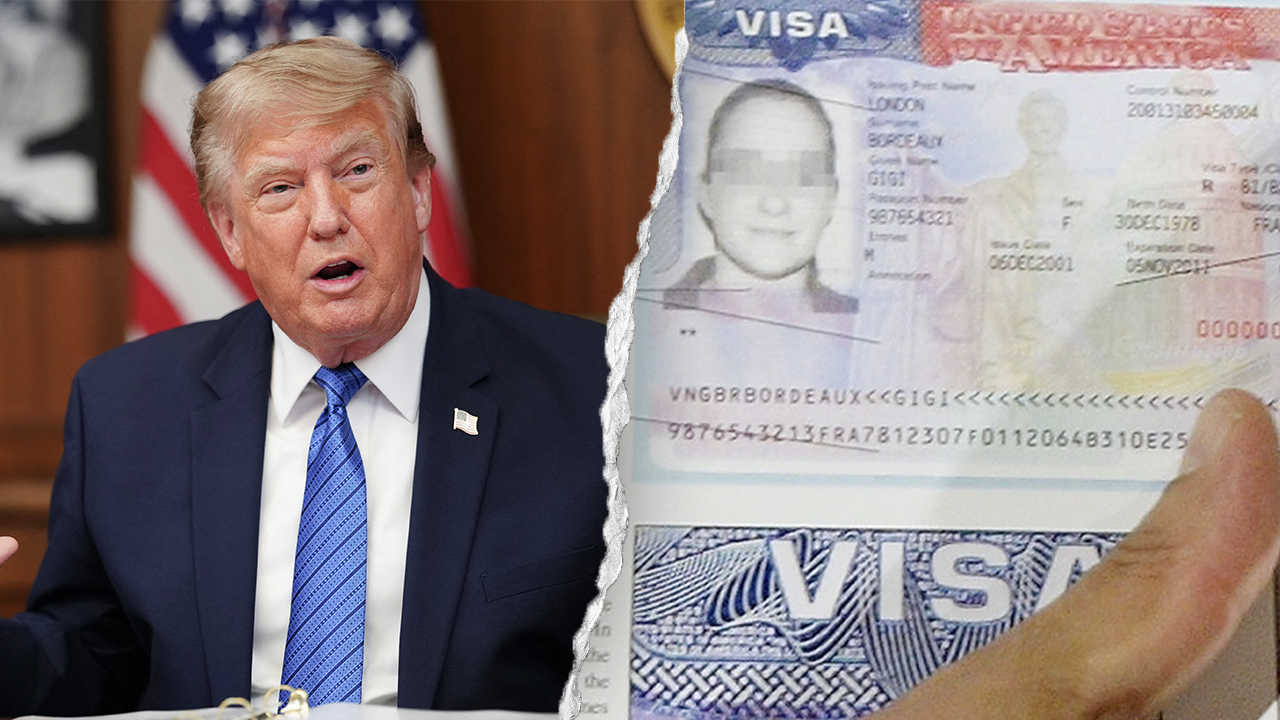
There’s an old saying that a U.S. visa is one of the most valuable pieces of paper in the world—a golden ticket that opens doors to opportunity, safety, family, and the American Dream. But under the current administration, that ticket has also become something else: a privilege that can be revoked in an instant. The State Department has announced a historic milestone: more than 250,000 visas have been cancelled since President Donald Trump returned to office. That’s a quarter of a million people who were told, in no uncertain terms, that they are no longer welcome to enter the United States. It’s a staggering number, and it sends a loud and clear message about how the administration views immigration enforcement. This isn’t a quiet administrative tweak or a minor policy adjustment; this is a sweeping crackdown at a scale never seen before. The message from State Department spokesperson Tommy Pigott is blunt and unapologetic: “A U.S. visa is a privilege, not a right—and if you violate the terms of that privilege, you will lose it.” Every visa approval, he reminded us, is treated as a national security decision. And the revocations are not random. They were made after what the department calls “continuous vetting on a scale never seen before,” designed to identify individuals who commit crimes, support terrorism, defraud Americans, or abuse the immigration system. For the average American, this may sound like dry government bureaucracy, but behind these numbers are real stories: a tourist who overstayed their welcome, a worker who broke the rules, a foreign official who lined their pockets with stolen money, or someone who tried to game the system to get an unfair advantage. The administration wants Americans to know they are being protected—and that the system is no longer going to look the other way.
Let’s take a closer look at why so many people lost their visas. According to a State Department official, the revocations were tied to a broad range of violations. Some visa holders had committed crimes while in the U.S. Some had called for violence against the country or against Americans. Others had defrauded American citizens, abused the immigration system, or posed a danger to national security. These aren’t technicalities; these are serious missteps that, in the eyes of the government, forfeit the privilege of entry. The human reality is this: for most people who come to the U.S., a visa is a symbol of hope. It’s the culmination of paperwork, interviews, background checks, and often years of waiting. But for a significant minority, it’s a tool for exploitation or harm. The Trump administration’s approach flips the old assumption on its head. Instead of assuming a visa holder is innocent until proven otherwise, the new philosophy is that every visa holder is a potential threat until continuous vetting proves they’re not. That’s a heavy burden, and it has changed the atmosphere for foreign nationals who might otherwise have thought their visa was a one-time entry pass. In the past, once you got a visa, you could pretty much breathe easy. Now, the government is constantly looking over your shoulder—checking law enforcement databases, monitoring social media, and tracking how you behave while you’re on American soil. The department’s stance is simple: if you get in trouble, if you break the law, if you say something that threatens America, your visa won’t just expire—it will be pulled, often without warning. It’s a harsh new reality, but the administration argues it’s exactly what the American people want.
One of the most eye-catching details in this crackdown involves so-called “birth tourism.” The State Department revealed that 2,300 visas were revoked in connection with this practice. For those unfamiliar with the term, birth tourism is when a pregnant foreign national travels to the U.S. specifically to give birth on American soil. Under the Constitution, anyone born on U.S. territory is automatically granted citizenship, regardless of their parents’ immigration status. That’s a powerful incentive, and for years, an entire shadow industry has grown up around it. Companies in places like China, Russia, and Nigeria have sold expensive packages to expectant parents, promising them luxury maternity hotels, delivery at American hospitals, and a baby with a U.S. passport. To the families involved, it might seem like a smart investment in their child’s future. To American officials, it’s a scam. It turns the most sacred promise of American citizenship into a commodity, and it takes advantage of an immigration system that was never designed to grant citizenship to people who simply show up to give birth and then go home. The Trump administration has made it clear they see birth tourism as a form of fraud, and the visa revocations are just one part of a broader crackdown. Over the summer, there were also reports of federal agents raiding a network of birth tourism homes, and “birth tourism scams” have become a major focus of federal enforcement. The humanized way to understand this is to imagine showing up at a hospital to deliver your own child, only to realize that the woman next door is there under a contract, expecting her newborn to receive a right that many Americans take for granted. For the administration, that’s not just an injustice—it’s an insult to the rule of law. By revoking these visas, they’re saying: if your entire reason for coming to America is to cash in on citizenship, you’re not coming at all.
The crackdown isn’t just aimed at everyday tourists and expectant mothers. It also reaches into the highest levels of political power in Latin America. On Monday, the State Department revoked the visas of 27 Latin American officials, former officials, and their family members over accusations of corruption. These individuals come from Bolivia, Colombia, Ecuador, and Peru—countries where political corruption has long been a cancer on society. For years, corrupt politicians and their cronies could flee abroad to escape justice at home, spending their ill-gotten gains in the United States while their constituents suffered. That era, according to this administration, is over. The United States is now using its visa power as a weapon against corruption, sending a clear message: if you steal from your own people, you are not welcome here. Imagine being a corrupt official who has spent years enriching yourself, sending your children to American universities, and buying property in Miami or Houston. One day, you receive a phone call from your travel agent saying your visa reservation has been cancelled. You call the embassy, but no one will give you a straight answer. Eventually, you learn that the State Department has blacklisted you and your entire family. That’s a kind of justice that doesn’t require a courtroom—it just requires a stamp and a database. It’s also a human story of accountability. For the citizens of Bolivia, Colombia, Ecuador, and Peru, this is a sign that the United States is not going to look the other way while their leaders plunder their nations. And for the officials themselves, it’s a reminder that actions have consequences, no matter how powerful you are. The announcement sends a ripple effect: every corrupt official who has ever dreamed of hiding out in the U.S. now has to wonder if they’re already on a list.
Another major front in the visa crackdown is the American asylum system. Over the summer, the Trump administration began preparing to revoke business and tourist visas held by as many as 200,000 foreigners who have applied for asylum in the U.S. The targets are people who came in on B1 and B2 visas between 2016 and 2026 and later sought asylum. At first glance, that might seem strange—shouldn’t someone who fears for their life be allowed to stay? But the administration’s argument is that many of these asylum claims are bogus. Deputy Secretary of State Christopher Landau put it bluntly when he said Americans are “fed up” with “bogus asylum claims.” Asylum, he explained, is not supposed to be a loophole to circumvent immigration laws. It’s supposed to be a narrow safe harbor for people who are persecuted because of their race, religion, nationality, membership in a particular social group, or political opinion. Instead, what has happened is that millions of people have figured out that filing an asylum claim is a way to stay in the U.S. for years, even if their claim is ultimately denied. The asylum system has become so overwhelmed that it can take years just to get a hearing, and in the meantime, applicants are allowed to live and work in the country. To the Trump administration, that’s not compassion—it’s a con. A visa holder who arrives as a tourist, then suddenly claims asylum, is essentially switching games in the middle of the field. They got their visa under one set of promises, and then they changed the rules when it suited them. The result is a system clogged with frivolous claims, leaving less time and fewer resources for genuine refugees who are truly fleeing persecution. In a humanized sense, this is about fairness. Imagine waiting in line for hours to get into a concert, only to watch people cut the line and claim they have VIP passes that don’t exist. That’s how many Americans feel about the asylum system. The administration’s move to revoke these visas is their way of saying: you used the line to get in the door, and now you’re trying to stay forever by lying. We’re not going to let that happen.
Finally, let’s talk about the sheer scale of what happened in August alone, when the State Department revoked more than 175,000 visas. That single month accounted for the vast majority of the total, and the reasons are deeply tied to public safety. According to the department, the majority of those revocations were due to law enforcement encounters for a range of criminal activity. The leading causes were assault, driving under the influence, theft, and drug crimes. But that’s just the beginning. A significant share of visas were also revoked for reckless driving, sexual assault, child abuse, fraud, and embezzlement. What does that mean in human terms? Think about a visa holder who gets pulled over after a few too many drinks and plows into another car. Instead of just paying a fine, they now lose their right to ever return to the U.S. Think about someone who sexually assaults another person on American soil—they’re not just arrested; their visa is revoked, and their plans for an American future are over. Think about a manager at a small business who embezzles money from the company and uses it to buy a house back home—they too will never set foot on U.S. soil again. The message is clear: the United States is no longer in the business of offering second chances to people who break American laws. For years, there was a sense that visa violations were a gray area—that if you stayed a month too long or got into minor trouble, you might get a warning or a fine. Not anymore. The State Department’s continuous vetting system is designed to catch these offenses, and when it does, the punishment is swift and final. This is the human reality of the 250,000 revoked visas: thousands of individual stories of people who made mistakes, committed crimes, or abused their welcome, and who are now facing the consequences. It’s painful for those families, no doubt, but the administration’s stance is that protecting American communities is worth that pain. As Tommy Pigott said, “We will not stop until every foreign national who threatens the safety of our communities is held accountable.” In six months, a quarter-million people have felt the weight of those words. In the current political climate, it’s a powerful reminder that immigration is not just a policy debate—it’s a constant, high-stakes decision about who gets to enjoy the American Dream, and who loses that privilege forever.