


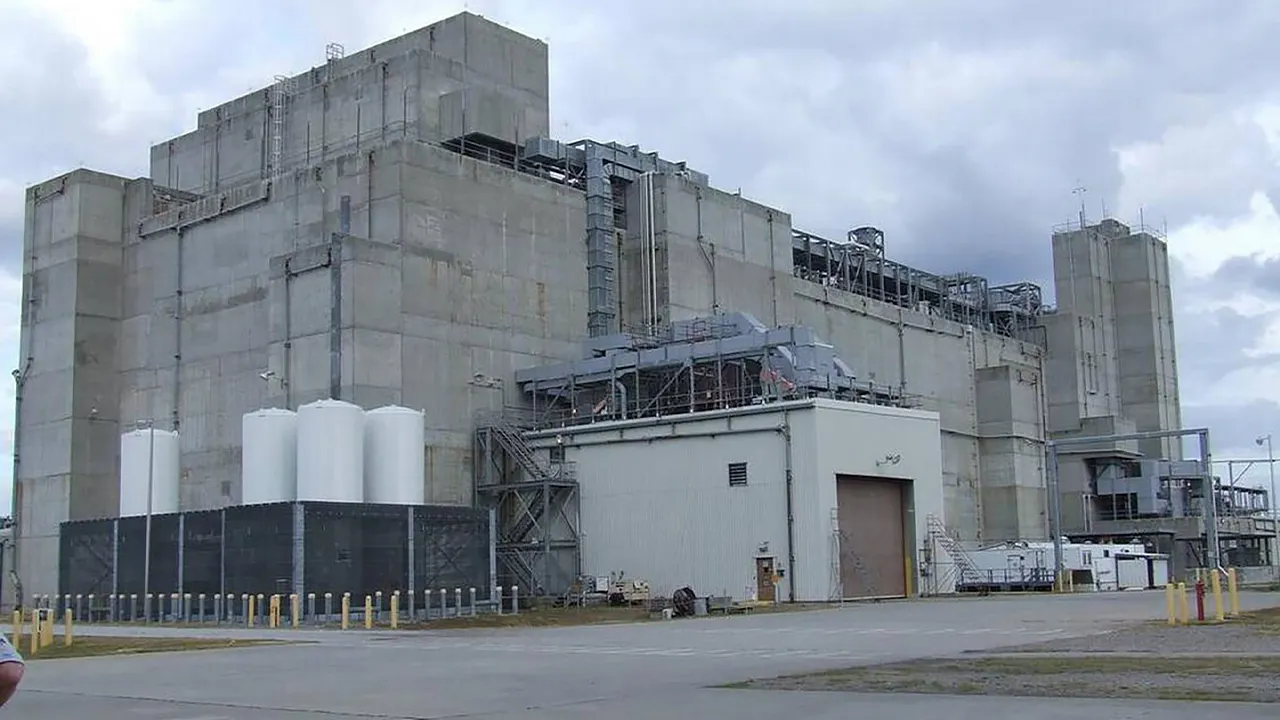
On a Wednesday evening that began like any other at the sprawling Savannah River Site, an alarm cut through the routine of the nuclear reservation near Aiken, South Carolina. At 5:39 p.m., the U.S. Department of Energy declared a Site Area Emergency after a fire broke out at the Savannah River National Laboratory, one of the most sensitive research facilities within the nation’s nuclear complex. The blaze sent at least one employee to a local hospital with minor injuries, and for the next four hours, the site’s emergency response teams moved with practiced precision, assessing the situation, securing perimeters, and monitoring the air and ground for any sign of radiological release. The emergency was officially terminated at 9:45 p.m., once the fire was extinguished and comprehensive radiological surveys confirmed there were no detectable levels of contamination. The all-clear was not just a procedural formality; it was a quiet assurance to thousands of workers and residents in the surrounding South Carolina and Georgia communities that the danger had passed. Roadblocks that had been placed at site entrances came down, Highway 125 reopened, and the restrictions that had been imposed on rail, river, and air traffic near the facility were lifted. A Department of Energy spokesperson said no radiological contamination had been reported, and all protective actions were rescinded. The language was clinical, but the underlying relief was real. For a few tense hours, the site had been on high alert, a reminder that even the safest and most carefully managed facilities can face unexpected moments of danger. Yet the outcome also demonstrated something important: when every protocol works as designed, a frightening incident can end with nothing more than a minor injury and a story to tell. The employee who was taken to the hospital was expected to recover, and by Thursday morning, the site was preparing for a normal shift change, with workers instructed to report as usual and no scheduled delays in operations. The incident had been contained, and life at the Savannah River Site was returning to its carefully regulated rhythm.
Behind the official updates and press releases, there were real people whose evening was suddenly upended. When the Site Area Emergency was declared, the phrase carried weight. It meant something had happened that could, under different circumstances, threaten the health and safety of workers and the public. Shift workers who were already on site were directed to shelter in place, a precautionary measure that is drilled into the culture of nuclear facilities. Meanwhile, the site’s emergency operations center sprang to life, coordinating with state and local government agencies, updating elected officials, and preparing to communicate with the broader community. Residents in the region were advised to monitor local radio and television stations for updates and any instructions from state officials. That guidance may sound simple, but for families in Aiken, North Augusta, and other nearby towns, it was a reminder that they live in the shadow of one of the most important and carefully watched pieces of America’s defense infrastructure. The Savannah River Site has been part of the region’s identity for more than seven decades. Many of the people who work there are second- or third-generation employees; their parents and grandparents helped build the facility in the 1950s, and they themselves have chosen to carry on that legacy. So when word spread of a fire at the Savannah River National Laboratory, the concern was not abstract. It was personal. Calls were made, texts were exchanged, and neighborhood conversations turned to the question of what had happened behind those guarded gates. The site’s response was methodical and transparent. Officials lifted the shelter-in-place order for oncoming shift workers and allowed those who had been directed to shelter to return to work as usual. By the time the emergency was terminated, the only lasting effect seemed to be a heightened awareness of how quickly things can change. The roadblocks that had briefly closed site entrances were removed, and traffic flowed again. There were no lingering evacuations, no environmental concerns, and no detectable contamination. For a community that has learned to live with the nuclear complex, the evening ended with a familiar mixture of caution and confidence: the knowledge that the site takes every precaution, and the gratitude that this time, the precautions were enough.
The Savannah River Site is not just any government installation. It is a major cornerstone of the nation’s weapons complex, a sprawling industrial and research reservation that has supported the U.S. military’s strategic deterrence mission for more than 75 years. According to the site’s own descriptions, it is responsible for managing nuclear materials and radioactive waste, including some of the most hazardous substances ever created by human hands. Its work ranges from the production and processing of nuclear materials to the development of technologies for national security, energy, and environmental cleanup. The site also hosts a range of scientific research programs at the Savannah River National Laboratory, where experts study everything from nuclear chemistry to advanced materials, working on problems that have implications far beyond the fence line. The laboratory is one of the Department of Energy’s applied research laboratories, and its work is integral to maintaining the safety and effectiveness of the nation’s nuclear deterrent. But the site is also deeply involved in a different kind of mission: cleaning up the legacy of the Cold War. Decades of nuclear weapons production left behind tanks of radioactive waste, contaminated buildings, and other environmental challenges. The cleanup effort is one of the largest and most complex environmental restoration projects in the world. It involves pumping and processing millions of gallons of high-level waste, deactivating and decommissioning obsolete facilities, and working to protect the groundwater and the Savannah River that flows nearby. For the people who work there, the dual mission—national security and environmental stewardship—creates a sense of purpose that goes beyond any single job. It is not uncommon to hear workers describe the site as a place where science, service, and sacrifice come together. The site’s website puts it simply: “While serving as one of the nation’s most critical pieces in the weapons complex, the site is also one of the safest major industrial sites in the world. Ensuring national security, protecting workers, the public, and the environment, are our highest goals.” Those are not just words. They are a promise that is tested every day, and especially on evenings like the one when a fire at the national laboratory forced the site to declare an emergency.
The history of the Savannah River Site goes back to the early years of the Cold War, when the United States was racing to build and maintain a nuclear arsenal in response to the growing threat of the Soviet Union. In the 1950s, the federal government selected a remote stretch of land near Aiken, South Carolina, for a massive new nuclear production complex. The location was chosen for its water supply, its relative isolation, and its access to transportation. Construction was an undertaking of extraordinary scale. At its peak, tens of thousands of workers labored around the clock to build five nuclear reactors, two chemical separation plants, and a host of support facilities that would produce the materials needed for nuclear weapons. The primary products were tritium, a radioactive isotope of hydrogen used to boost the yield of thermonuclear weapons, and plutonium-239, the fissile core of many atomic bombs. The reactors hummed for decades, and the chemical separation plants extracted the precious materials with painstaking care. Entire communities grew up around the site. Workers came from all over the South, drawn by good wages and the chance to be part of something historically important. They built homes, schools, churches, and neighborhoods in the towns that surrounded the facility. They raised families, and many of their children and grandchildren would eventually follow them through the gates. The work was demanding and often secret. Employees learned not to talk about what they did on the job, even with their families. The secrecy was part of the price of the Cold War, and most people paid it willingly. But the legacy of that work was complicated. The same reactors and separation plants that helped keep the nation safe also created enormous amounts of radioactive waste and left behind a contaminated landscape that would require decades of cleanup. Today, the site is a place where that history is both honored and confronted. The remaining reactors have been shut down and, in some cases, placed into a safe, decommissioned state. The environmental legacy is being addressed with modern technology and a commitment to future generations. And the site continues to play a vital role in the nation’s nuclear security, even as it works to heal the scars of the past. The fire at the Savannah River National Laboratory was a small reminder that this work is never without risk, but also that the people who do it have been meeting that risk with skill and dedication for more than 75 years.
What makes the Savannah River Site unique is not just the scale of its operations, but the culture of safety that underpins everything that happens there. In the nuclear industry, safety is not an abstract concept. It is a set of disciplined practices, written procedures, continuous training, and a willingness to stop and reassess whenever something seems out of the ordinary. The site’s emergency response to the fire at the national laboratory was a textbook example of that culture in action. The moment the fire was detected, trained responders moved into their assigned roles. The emergency was declared quickly and clearly, ensuring that everyone on site and in the surrounding communities understood the need for caution. Radiological surveys were conducted with the kind of meticulous attention that has been honed over decades of handling dangerous materials. The fact that no detectable levels of contamination were found is a testament to the safeguards that are built into every facility and the quick work of the responders who contained the fire before it could threaten any nuclear materials. The site’s safety record is a point of pride for its workforce. It is not an accident that the Savannah River Site describes itself as one of the safest major industrial sites in the world. That reputation has been earned through years of hard work, from the nuclear safety engineers who design redundant systems to the security officers who guard the perimeter, from the environmental scientists who monitor groundwater to the line workers who perform routine maintenance in highly radioactive areas. They all share a common understanding: the mission is important, but the people who carry it out and the communities that live nearby matter more. That is why the response to Wednesday’s fire included not only the immediate fight to put out the flames, but also a broad effort to keep the public informed. State and local agencies were notified, residents were advised to stay tuned for updates, and restrictions were placed on rail, river, and air traffic as a precaution. When the all-clear was given, the site did not simply move on. It took the time to assess what had happened, to understand why it happened, and to make sure that any lessons learned would be applied to prevent a recurrence. This is the daily, unglamorous work of nuclear safety. It is not always visible from the outside, but it is always happening, and it is the reason that incidents like this one can end with a minor injury and a sense of relief instead of a catastrophe.
By the time the sun rose on Thursday, the Savannah River Site was back to business. The shelter-in-place orders had been lifted, the roadblocks were gone, and workers were streaming through the gates for their regular shifts. The official notification that followed was almost anticlimactic: “There are currently no operational emergencies or scheduled delays for the Savannah River Site.” For most people, the incident was already fading into memory, another chapter in the long, quiet history of a facility that rarely makes headlines unless something goes wrong. But the fire at the Savannah River National Laboratory was more than just a momentary disruption. It was a reminder of the delicate balance between the benefits and risks of nuclear technology, and of the constant vigilance required to keep that balance from tipping. The men and women who work at the site understand this better than anyone. They live with the responsibility every day, and they accept it because they believe in the mission. They also understand that the trust of the public is not something to be taken for granted. That trust is built through transparency, through honest communication, and through a demonstrated commitment to safety. In the hours after the fire, the site did exactly that. It released timely updates, answered questions, and took every precaution to protect both its workers and the surrounding communities. The outcome was reassuring, but it was not inevitable. It was the result of planning, training, and a culture that refuses to compromise on safety. As the community returns to its normal routines, there is a renewed appreciation for the people who keep the Savannah River Site running. They are scientists, engineers, security officers, and maintenance workers. They are neighbors, friends, and family members. And they are the reason that a fire at one of the nation’s most critical nuclear installations could be contained, controlled, and resolved without leaving a trace of radiological contamination. The emergency may be over, but the commitment to safety, service, and stewardship at the Savannah River Site endures. It has endured for more than 75 years, and it will endure long after the current generation of workers has handed the torch to the next. That is the real story of the fire that wasn’t a disaster—not because luck was on the site’s side, but because the people who work there made sure it wasn’t.