






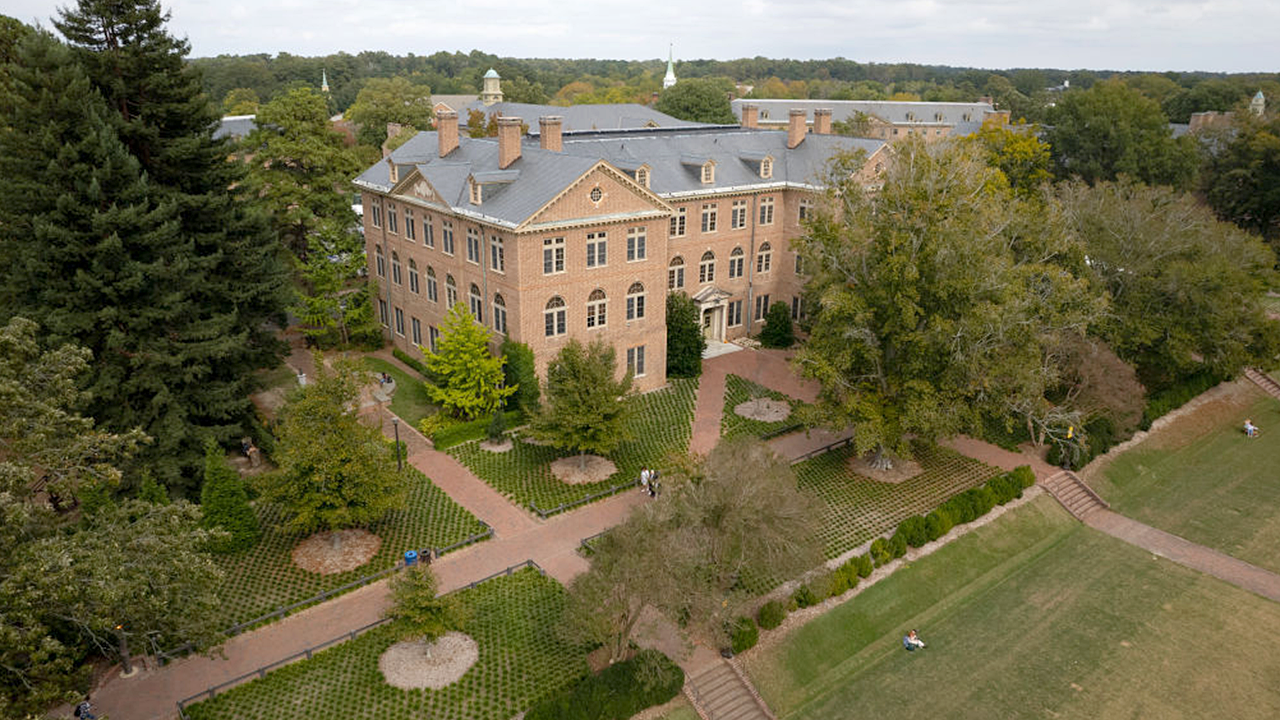
The news arrived on a Monday with little fanfare, but for students, faculty, and administrators at the College of William & Mary, it landed like a thunderclap. The Department of Justice had officially opened a civil rights investigation into one of the nation’s oldest and most respected public universities, a school that prides itself on tradition, academic rigor, and a carefully cultivated reputation for inclusivity. The target of the probe was not a research lab or a sports program, but something far more personal: scholarships and student benefits. Federal investigators from the DOJ’s Civil Rights Division want to know whether some of these awards are being distributed on the basis of race, rather than merit or financial need, in violation of Title VI of the Civil Rights Act of 1964. That law, a landmark of American civil rights legislation, prohibits any program or activity that receives federal funding from discriminating on the basis of race, color, or national origin. For a university like William & Mary, which receives substantial federal support, this is not merely a symbolic inquiry—it carries real legal and financial weight. The government’s message was unmistakable, delivered through the sharp words of Assistant Attorney General Harmeet Dhillon, who declared that awarding scholarships or opportunities based on skin color is illegal and offends the guarantees of a color-blind Constitution. She promised the Department would not turn a blind eye to race-based preferences, no matter how universities package or portray them. For many, this is exactly the kind of enforcement they have been waiting for; for others, it feels like an assault on longstanding efforts to correct historical inequities.
But what does this investigation actually look like on the ground? It is not a vague ideological battle. It is a meticulous review of specific programs, names, and dollar amounts. At the undergraduate level, the DOJ is scrutinizing the “W&M Scholars” program, a prestigious award for first-year students that covers at least the full cost of in-state tuition and fees. On paper, the scholarship does not limit applicants to any particular race. Yet the university’s own website indicates that applicants with an “interest in diverse people and perspectives” receive “top consideration” when decisions are made. That phrase, perhaps deliberately vague, is exactly what caught the attention of federal investigators. In a notice letter to the institution, the DOJ flagged this language alongside other factors like academic ability, potential, and first-generation or limited-income status. The concern is subtle but significant: even if a scholarship is not explicitly race-exclusive, using diversity-related criteria as a deciding factor can function as a racial preference in practice. The government’s position is that such criteria, however framed or euphemized, are still preferences based on race and therefore unlawful. For William & Mary, this raises difficult questions about how to craft inclusive policies without violating federal law, and about whether the university’s commitment to diversity can survive this legal challenge. The university, for its part, maintains that it is committed to nondiscriminatory learning environments and compliance with all laws, but the very existence of the probe suggests that federal officials believe there is more to uncover.
The investigation extends far beyond undergraduate scholarships, reaching into graduate programs and specialized fellowships that carry profound personal meaning for their recipients. One program in particular, the Martha L. Muguira Fellowship within the W&M School of Education, is described as need-based but gives a clear “preference” to Hispanic or Latino women with financial need. For a student who identifies as a Hispanic woman, this fellowship might feel like a lifeline—a recognition of both her financial struggles and her identity in a field where she may otherwise feel underrepresented. For federal investigators, however, it looks like a textbook example of a race-and-gender-based criteria embedded in a financial aid program. The DOJ also examined the Holmes Scholars program, a doctoral-level initiative that provides mentorship, access to job fairs, professional development, policy and advocacy training, and opportunities to present research. The program was created, according to its own materials, for “future education leaders of color” and is described as serving students from “traditionally under-represented backgrounds.” It is impossible to read that language without understanding that race is central to the program’s mission. The benefits are not trivial: mentoring relationships, national conferences, and a professional network that can shape an entire career. These are not fringe perks; they are the kind of opportunities that open doors in academia. And that is precisely why the DOJ is interested. The government’s position is that when a public university offers exclusive benefits based on race, it is violating the Constitution and federal civil rights law, regardless of how well-intentioned or historically justified the program may be.
Nowhere is the tension between historical mission and legal compliance more visible than in the law school. William & Mary’s Law School offers the Lemon Legal Scholars Program, which provides up to five full scholarships covering tuition and fees, along with networking opportunities, one-on-one academic advising for coursework and bar exam preparation, and access to special events with faculty, senior administrators, and alumni. The catch? These scholarships appear to be exclusively for graduates of Historically Black Colleges and Universities, or HBCUs. The university’s website currently says it “will award at least five full scholarships” to HBCU graduates admitted to its J.D. program. To federal investigators, this is race-based exclusivity on its face, no matter how noble the intention. Then there is the “Reaching Back Scholarship,” a need-based award that gives preference to HBCU graduates or those “who contribute to the diversity” of the law school. The phrase “contribute to the diversity” is another red flag, echoing language that has been litigated in affirmative action cases across the country. The DOJ is not asking whether these programs are popular, well-intentioned, or effective. It is asking whether they violate the law. And the legal landscape has shifted dramatically in recent years. With the Supreme Court’s 2023 decision striking down race-conscious admissions in higher education, federal enforcement agencies have grown more aggressive in pursuing what they see as proxy policies that achieve the same result through scholarships and mentorship programs. William & Mary’s law school, with its prestigious name and nationally ranked programs, has now become a testing ground for that new legal reality.
In response to the federal probe, William & Mary issued a carefully worded statement, saying it is committed to nondiscriminatory learning environments across its campus and to complying with all state and federal laws. Notably, the university did not fiercely attack the investigation or declare war on the administration. Instead, it chose a measured, diplomatic tone, perhaps hoping to resolve the matter quietly. The DOJ, for its part, says it has reached no conclusions, but it has urged the college to produce certain documents and information by September 8. The department says it prefers to secure compliance by informal, voluntary means. That is a conciliatory phrase, but it comes with an implicit threat. If the university does not cooperate, or if investigators find violations, the DOJ may initiate formal proceedings that could result in the termination of federal financial assistance. For a public research institution, losing federal funding would be catastrophic, affecting research grants, student loans, and financial aid programs that serve thousands of people. That threat looms large over every conversation, every email, and every legal strategy session at the college. There is also an uncomfortable historical dimension here. Some of the programs under investigation were established specifically to deal with the legacy of slavery and racial discrimination at William & Mary, which has acknowledged that it owned and sold enslaved people in the 18th century and did not welcome Black students for generations. To have those very efforts at reconciliation and repair now targeted by the federal government is deeply disorienting for many faculty, students, and alumni.
This investigation is not happening in a vacuum. It is part of a much broader wave of actions by the Trump administration targeting educational institutions across the country with a combination of legal pressure, political scrutiny, and public criticism. The DOJ has opened probes into Harvard’s financial aid practices, alleging discrimination against American students, and has sued the University of California, Los Angeles over conditions on campus during anti-Israel encampments. Meanwhile, conservative lawmakers and activists have made diversity, equity, and inclusion programs—often simply called DEI—into a central front in the culture wars. For them, the investigation of William & Mary is exactly the kind of accountability they have long demanded: a public reckoning with university policies that they believe are un-American, unconstitutional, and corrosive to the principle of individual merit. For supporters of the university and defenders of these programs, the investigation is a chilling warning that any effort to address historical inequities will be met with the full force of federal power. They argue that the Constitution’s guarantee of equal protection was never intended to dismantle programs designed to help marginalized groups; rather, it was meant to prevent the kind of systemic exclusion that these programs seek to remedy. The question gnawing at everyone involved is whether there is any middle ground left. Can a university acknowledge the painful legacies of racism, support students from underrepresented backgrounds, and still satisfy a federal government that sees race-conscious policies as illegal? Or is the country now in an era where any mention of diversity is enough to trigger a federal investigation? The answers will unfold in the coming months, not only in Williamsburg, Virginia, but in classrooms, courtrooms, and university boardrooms across the nation. For now, all anyone can do is wait, watch, and wonder what the search for a color-blind society will truly cost.