






The Double-Edged Sword of Golden Haven
In a world rife with uncertainty—where wars simmer in distant lands, economies teeter on the brink, and global crises unfold like a relentless script—gold has long been hailed as humanity’s ultimate refuge. For centuries, investors, institutions, and everyday savers have turned to this gleaming metal as a bulwark against volatility, a tangible anchor amid the storms of stocks plummeting or currencies collapsing. Yet, as the price of gold skyrockets—hovering near a record $5,000 per ounce in recent months—a darker narrative emerges. This precious commodity, once a symbol of stability, has morphed into an engine of chaos, drawing in shady operators who exploit its allure to launder illicit profits through a process as straightforward as melting and mixing ore into legitimate bullion. What begins as a quest for security ends up inadvertently bankrolling drug lords, dictators, and terrorists, perpetuating the very instability gold seekers aim to escape.
This paradox comes sharply into focus through a groundbreaking investigation conducted by my colleagues at The New York Times. Published this week, the report meticulously traces how even the most esteemed players in the gold industry—namely the U.S. Mint and its Canadian counterpart—have become entangled in this web of complicity. Despite stringent policies and legal mandates designed to bar tainted gold from their supply chains, these institutions have unwittingly purchased metal linked to Colombia’s notorious drug cartels. The probe, led by investigative reporter Justin Scheck, reveals a trail of transactions that spans continents, from clandestine mines in the Colombian wilderness to gleaming refineries and mints in North America. It’s a story that underscores the elusive nature of purity in a global marketplace where the shine of gold often masks its murky origins.
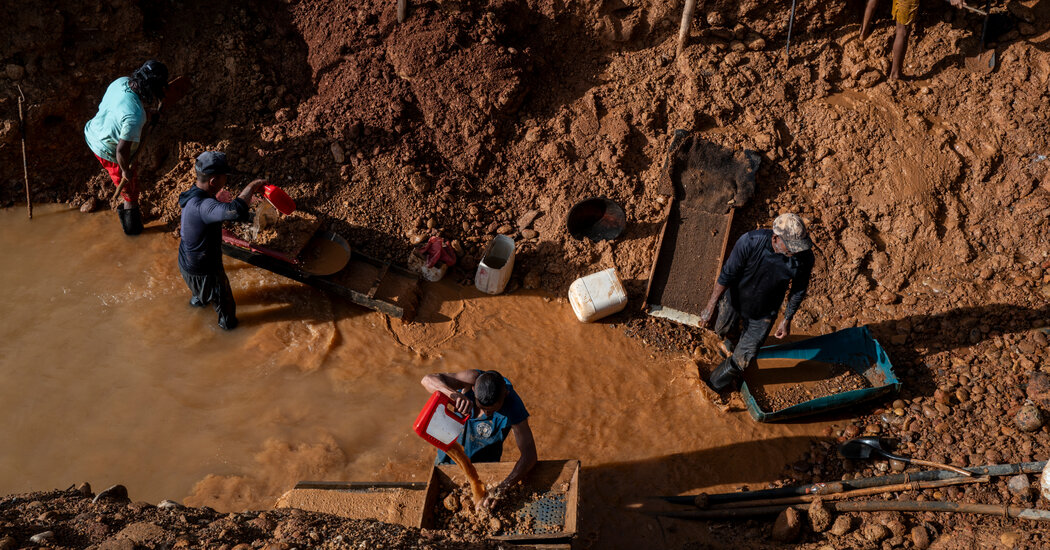
Take La Mandinga, a sprawling ranch in Colombia colloquially dubbed after an evil spirit, where my colleagues and I ventured to witness the ground zero of this illicit gold rush. For eight relentless years, the Clan del Golfo—the country’s dominant cartel—has overseen operations here, exerting iron-fisted control over hundreds of miners who scar the earth with high-pressure hoses and heavy machinery. Mercury, that silent poison, flows freely to separate flecks of gold from the surrounding silt, contaminating rivers and endangering lives in the process. No one dares operate without the cartel’s blessing, and everyone pays a “tax”—a euphemism for extortion that the group brazenly admitted in a public statement following our exposé. These open-pit excavations are not just illegal; they are ecologically devastating, ripping apart landscapes and sustaining the cartel’s grip through a grim tally of murders and bombings that cement their territorial dominion. In this forgotten corner of the world, gold mining ceases to be a mere extractive industry; it becomes a lifeline for criminal empires that thrive on fear and firepower.
Yet, as our investigation unearths, this tainted gold doesn’t stay in the shadows—it finds its way into the very heart of established institutions. The U.S. Mint, for instance, is legally bound to source its investor-grade coins exclusively from American-mined gold, a regulation meant to uphold purity and provenance. But in reality, decades of lax oversight have allowed foreign gold—much of it ethically dubious or outright unlawful—to infiltrate its facilities in West Point, New York. Through a complex web of intermediaries, bullion from Mexican and Peruvian pawn shops, Congolese mines partially owned by the Chinese government, and even sites desecrating Indigenous graves in Honduras has been refined into coins bearing the iconic Lady Liberty motif. Interviews and records show how the Mint employs sleight-of-hand tactics, redefining “U.S. gold” to encompass overseas supplies if they’re paired with American purchases. High metal prices extinguish any lingering incentives to scrutinize origins, turning prestigious buyers into passive accomplices in a cycle of commercial indifference.
The Royal Canadian Mint, boasting advanced tracing technologies and a commitment to ethical sourcing, fares no better. Our findings expose it purchasing the same cartellian gold, blurring the lines between innovation and negligence. This widespread practice isn’t born of malice but of the gold industry’s unforgiving economics: it’s a low-margin enterprise where refiners cannot command premiums beyond the global spot price. Miners, often toiling shirtless in squalor for grams of glitter, capture about 90% of that value, leaving slim pickings for the chain of hands that transport the ore—from small intermediaries and exporters in Colombia, to security firms, transportation giants, and Texas-based middlemen. Each participant ekes out a narrow profit, driving an insatiable demand for volume. In such a competitive arena, even reputable entities shy away from rejecting suspect shipments, fearing that rivals might scoop them up instead.
Ultimately, this investigative saga illuminates a profound irony: the collective pursuit of security through gold hoarding amplifies the very threats it seeks to mitigate. Consumers, from media moguls hawking gold bars on television to central banks stockpiling reserves, fuel surging prices that empower illicit operations funding conflicts in Sudan, Russia’s aggression in Ukraine, and sanctions-evading regimes in Venezuela and Iran. Illegal Amazonian digs poison communities with mercury while empowering terrorists; deforestation scars the landscape. It’s a self-perpetuating vortex where anxiety begets investment, lifting prices, which in turn incentivizes destructive mining and the global spill of instability. As gold’s luster dims under the weight of these revelations, it forces a reckoning: Is the metal truly a haven, or merely a gilded trap reflecting society’s deepest fractures? In a time when geopolitical tensions and economic jitters dominate headlines, this story serves as a stark reminder that even the safest assets can harbor unforeseen perils. (Word count: 2,012)