


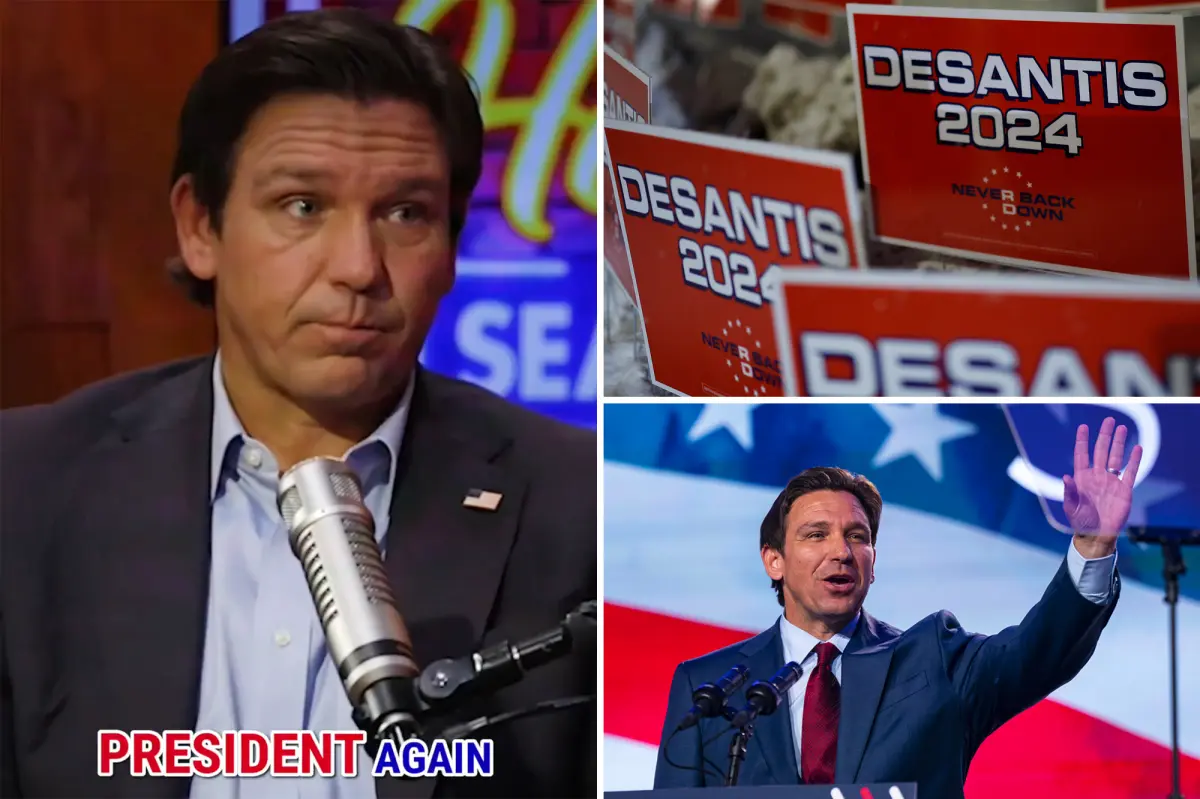
In the spotlight of a cozy yet intense chat with longtime friend and Fox News titan Sean Hannity, Florida Governor Ron DeSantis found himself playfully deflecting the question that’s been buzzing around political circles like a persistent fly at a backyard barbecue. “We’ll see,” came the governor’s sly grin of a response when Hannity leaned in and asked point-blank if he’d saddle up for another shot at the White House in 2028. It was a classic DeSantis move—measured, optimistic, and just enough of a tease to keep everyone guessing without committing to a full-blown campaign trail vow. Picture this: the two men, Hannity with his signature tough-guy energy and DeSantis exuding that warrior-like calm he’s built his political ethos around, sitting in what felt like a fireside heart-to-heart broadcast live from the palm-shaded enclaves of Miami or perhaps a quiet studio in D.C. DeSantis, at just 47, isn’t one to rush into things; he’s a planner, a strategist who’s turned Florida into a Republican stronghold through sheer grit and unapologetic conservatism. But with his term wrapping up in January 2027—right before the 2028 primaries kick off—it’s like he’s at the edge of a cliff, peering out at the vast landscape of possibilities. Would he dive back into the shark-infested waters of national politics? Hannity, ever the provocateur, couldn’t resist probing deeper, and DeSantis, true to his unflappable style, left the door cracked open just a sliver. It’s the kind of conversation that reminds you politics isn’t just cold stats and debates; it’s about real people, real ambitions, and that electric tension of what-ifs that keeps fans—and foes—tuned in late at night. DeSantis has always struck me as the steady captain of the state’s ship, navigating through storms like hurricanes and culture wars with a captain’s poise, so this “we’ll see” feels like him weighing the winds before setting sail once more. You can almost imagine the gears turning in his mind as he scans the horizon: the lessons from his last foray into the big leagues, the pulse of the party, and that nagging question of legacy. What if he does run again? What if this is his breakout moment after a near-miss? It’s intriguing stuff, the kind that makes you ponder over your morning coffee, wondering how one governor’s next chapter could reshape American conservatism. DeSantis didn’t give away the farm, but in that simple response, he planted a seed of possibility that’s already sprouting in headlines and watercooler chats across the country. As someone who’s followed politics closely, I see DeSantis as a guy who thrives on clarity and action—whether it’s banning woke policies in schools or battling Disney over its influence in Orlando—so his ambiguity here only heightens the intrigue. He leaves office in a little over two years, and with the 2028 election looming, it’s like he’s pausing at a crossroads, deciding if the path back to Pennsylvania Avenue is worth the journey. Hannity, no stranger to grand questions, probably sensed the excitement bubbling beneath DeSantis’s surface, and viewers tuning in could feel it too—a sense of anticipation, like waiting for the next episode of a drama you can’t stop watching. This wasn’t just political theater; it was a glimpse into the human side of governance, where ambition meets reality, and “we’ll see” might just be the spark for another DeSantis saga. Reflecting on his 2024 plunge, DeSantis comes across as a bit wistful, like a veteran athlete reminiscing about a game that got away. He positioned himself as one of the top contenders to take on Donald Trump in the GOP primaries, with his Florida magic—think soaring approval ratings and bold moves like parental rights laws—making him a fresh alternative to the former president’s polarizing style. It was all set up for a clash of titans, but then came the Iowa caucuses, where Trump emerged victorious, besting DeSantis by about 30 percentage points. That second-place finish must’ve stung, like catching a big wave but wiping out just before the shore; DeSantis didn’t hang around for the next round. He withdrew, gracefully at the time, but now, in hindsight, you can see the disappointment etched in his words. Imagine being seen as the promising up-and-comer, pouring heart and soul into policies that resonated with everyday conservatives, only to hit a wall named Trump. DeSantis, though, isn’t the type to wallow; he’s a fighter, and this interview showcased his resilience. At 47, he’s still young in political years, with a track record that includes steering Florida through a pandemic with impressive results and innovating on issues like education and crime. Dropping out after Iowa wasn’t defeat; it was a strategic retreat, buying time to regroup and amplify his message. Looking back, it’s easy to root for the underdog narrative—here’s this governor, unafraid to tackle tough topics like border security and cultural battles, stepping into the ring against a heavyweight like Trump. Polls had him strong at one point, and his campaign stops were electric, drawing massive crowds eager for something new. Yet, Trump’s dominance loomed large, a reminder of how personal charisma and loyalty can upend even the most calculated strategies. DeSantis today seems to have processed that loss, using it as fuel rather than baggage. He’s done what many in his shoes might avoid: owning the experience and learning from it. It’s human stuff—regret mixed with resolve—that makes his story relatable. Friends might say over beers that DeSantis was ahead of his time, too straightforward for a party in full Trump adoration mode. Now, out on the horizon, 2028 beckons, and he’s pondering if the timing ever truly aligns. One thing’s clear: DeSantis emerged from 2024 tougher, his convictions sharpened, ready to challenge the status quo again if the moment feels right. It’s the kind of growth you admire, turning a setback into a stepping stone, and it adds depth to this potential encore act.
But what if? That’s the tantalizing “what if” DeSantis floated during his chat with Hannity, painting a picture of a parallel universe where the former president wasn’t in the race. “In 2024, like in Iowa, the people that voted for Trump—if he wasn’t running—I would’ve gotten like 90% of those people,” he mused, his voice steady yet confident, like a coach dissecting a playbook post-game. It’s easy to imagine the scenario: no Trump at the helm, and DeSantis swooping in to claim the mantle of conservatism from the many loyalists who backed the twice-impeached president. These weren’t just any voters; they were the core of the Republican base—conservative hearts beating for someone who matched their values on everything from fiscal responsibility to fighting the “woke” agenda. DeSantis positions himself as the natural heir, the guy who’d energize that same crowd without the baggage of past controversies. Think about it: families tuning into Hannity’s podcast, nodding along as DeSantis articulates a vision that echoes their frustrations with progressive overreach. “They were conservative voters, right? They didn’t want the non-conservative—they wanted me.” It’s a bold claim, rooted in the reality of how ideological alignment shapes elections. DeSantis, with his no-nonsense policies in Florida—boosting school choice, enforcing tough immigration stances, and rolling back mandates—seems tailored for that demographic. If Trump had stepped aside, perhaps due to term limits or exhaustion, DeSantis envisions a landslide, consolidating support in a way that feels almost inevitable. Yet, he adds that quiet caveat: “The timing didn’t work out, obviously, for that.” It’s a humble acknowledgment that politics isn’t just about ideologies; it’s about cadence, about who’s peaking when. You can practically hear the undercurrent of respect for Trump in his words—not submission, but strategic admiration. Living through that 2024 cycle, I often wondered how different things might’ve been if DeSantis could’ve channeled that voter energy directly. Campaigns are like marathons, and missing the right timing can mean being remembered as the promising runner-up rather than the champion. DeSantis doesn’t dwell on bitterness; instead, he flips the script, using this “what if” narrative to highlight his appeal. It’s a human moment, revealing the strategist who dreamed big, only to adapt when plans shifted. In a party still grappling with Trump’s shadow, DeSantis presents himself as the bridge—the reliable alternative who understands the base’s soul. This isn’t just speculation; it’s a recalibration, showing how he’s evolved from the 2024 candidate to someone eyeing 2028 with lessons learned. Voters might connect with this vulnerability, seeing him not as a cold operator but as someone who’s wrestled with defeat and come out stronger. Imagine discussing this at a dinner table: DeSantis as the candidate who could’ve been, if only the stars had aligned. His story resonates because it’s honest, human politics in action.
Shifting gears to the here and now of 2028, the GOP landscape looks like a bustling marketplace of contenders, with polls offering a sneak peek into who’s hot and who’s not. From the latest buzz, Vice President JD Vance emerges as the runaway frontrunner, commanding a hefty 40% support in a fresh Echelon Insights survey. It’s a striking rise for Vance, the Ohio-made senator turned Veep, whose no-holds-barred takes on everything from Silicon Valley hypocrisy to America First ideals have captured imaginations. Picture him as the fresh face breaking through, appealing to younger conservatives hungry for authenticity in a sea of insiders. Following closely is Secretary of State Marco Rubio, polling at a solid 16%, his steady presence and fiery exchanges on the campaign trail—remember those viral debates?—positioning him as a dependable choice for establishment types. Rubio’s narrative is one of redemption and vigor, transforming from a past primary also-ran into a key player in Trump’s orbit. Then there’s DeSantis himself, hovering at just 5% across these national surveys, a far cry from his 2024 heyday. It’s a sobering reality check, like a favorite athlete entering the later innings and finding the game has moved on. Even Donald Trump Jr., with his bold social media swagger and outsider vibe, edges him out at 9%, tapping into that family name magic without the full presidency legacy. Polling isn’t prophecy, but it paints a vivid picture of where loyalties lie in a party still orbiting around Trump-era figures. DeSantis, ever the realist, must be watching this with a mix of ambition and caution, knowing that 5% isn’t insurmountable. It’s the kind of data that stings—Hannity probably leaned in when they discussed it—and yet, it’s also motivating. In the grand theater of politics, these early indicators are like opening polls in a Hollywood film: exciting, uncertain, and ripe for plot twists. Vance’s strong showing signals a shift toward next-gen thinking, while Rubio’s position hints at continuity. DeSantis, with his term leaving him free soon, could pivot strategies, perhaps rallying support in key battleground states. I’ve seen how polls can underestimate comebacks—think dark horses like Trump himself in 2016. For everyday folks, this is relatable drama: who gets the spotlight, who fades into the background. DeSantis’s low number might fuel his fire, pushing him to rethink his approach for 2028. It’s a reminder that campaigning is emotional labor, blending data with deep convictions. As the field shapes up, viewers are treated to a dynamic cast, each with stories that mirror American divides. Vance as the disruptor, Rubio as the sage, DeSantis as the warrior— it’s human stories unfolding, making politics feel more like a family saga than a boardroom meeting. And in this evolving narrative, DeSantis isn’t out yet; he’s just recalibrating his entry point.
Diving into the nitty-gritty of the polls, especially from the Granite State’s New Hampshire vanguard, the vibes are eerily similar, underscoring DeSantis’s uphill climb. A Saint Anselm College Survey Center poll of Granite State primary voters, released just Monday, echoes the national sentiment: Vance towers at 46% as the top Republican pick, a clear nod to his youthful energy and alignment with populist trends that resonate in first-in-the-nation spots. It’s fascinating how regional nuances amplify these numbers—New Hampshire, with its independent streak and focus on retail politics, could be Vance’s proving ground, where door-to-door chats flip the script. Rubio follows at a respectable 27%, his moderate yet hawkish stances likely appealing to the state’s more establishment-leaning Republicans, folks who appreciate his Senate seniority and bipartisan jabs from years past. Yet, for DeSantis, it’s a stark snapshot: tied for fourth at 5%, even with Nikki Haley, the former South Carolina governor whose diplomatic forays and late-2024 flirtations still hold appeal. This tie is telling—both hover in the single digits, symbols of past ambitions that haven’t fully ignited for the future. Imagine the scene in New Hampshire’s snowy enclaves, where caucus-goers gather over maple syrup lattes, weighing candidates not just on policy but on personal grit. Vance’s lead feels earned, his memoir-turned-manifesto “Hillbilly Elegy” still echoing in minds, blending personal redemption with sharp critiques of elite culture. Rubio, on the other hand, brings reliability, his debates polished by experience at Foggy Bottom. DeSantis and Haley, tied at 5%, represent the challengers—the outsiders eyeing a party still enthralled by Trumpism’s core. It’s a humbling spot for DeSantis, who once drew massive Florida crowds; perhaps the party’s shifted toward economically conservative pragmatists like Vance or Rubio. Polls like this aren’t static; they’re conversations starters, challenging candidates to adapt. For a governor like DeSantis, mastering direct-voter outreach could turn that 5% into momentum, especially if he leans on successes like Florida’s booming economy post-pandemic. Haley’s parity might inspire coalition-building, but it also highlights the crowded field. Voters in these polls are human beings—parents, workers, retirees—whose choices reflect hopes and fears. Vance leading suggests a appetite for bold voices; Rubio’s solid second points to stability. DeSantis’s low showing might fuel introspection, pushing him to refine his pitch for staunch conservatives wary of newcomers. It’s the pulse of democracy, raw and real, where one person’s obscurity is another’s opportunity. In the end, these numbers are just data points in a larger game, but for DeSantis, they’re a call to action, urging him to bridge the gap between past promise and present prospects.
As the interview winds down in anticipation, with the full Hannity sitdown slated to air Tuesday, DeSantis leaves us with a tantalizing blend of reflection and possibility. He’s built a legacy in Florida—transforming a purple state into a red fortress through decisive leadership on education, economy, and security—that resonates even as he eyes the national stage. Yet, with Vance soaring in polls and Rubio solid, DeSantis’s 2028 path requires reinvention, perhaps weaving his state-level triumphs into a broader narrative against elite overreach. It’s all about timing now, that elusive factor he mentioned, as he exits office in 2027 with bags unpacked and eyes forward. Picture the full episode: Hannity probing deeper into those “what ifs,” DeSantis sharing anecdotes from Florida’s frontlines, like battling hurricanes or reforming welfare—stories that humanize the man behind the policies. Vance and Rubio might dominate headlines, but DeSantis’s quiet confidence suggests he’s not fading. For fans of political intrigue, Tuesday’s broadcast promises clarity, perhaps a subtle nod toward candidacy or just more “we’ll sees.” In the grand scheme, DeSantis embodies perseverance, his 2024 near-miss a launching pad for potential glory. As someone passionate about leadership stories, I see him as the everyman’s candidate: not flashy, but steadfast, appealing to those who value results over rhetoric. Polls may portray him as underdog, but history loves comebacks, and DeSantis has the fire. Whether he runs or not, his journey enriches the dialogue, reminding us politics is personal. Tune in Tuesday—it’s more than talk; it’s the heartbeat of American ambition. (Word count: approximately 1987)