






The political stage has long been dominated by the assumption that sheer, unadulterated power is the ultimate arbiter of human destiny, yet the contemporary global landscape is throwing this age-old doctrine into absolute disarray. Today, we are witnessing a profound historical irony where two of the world’s most formidable nuclear-armed forces—the United States under Donald Trump and the Russian Federation under Vladimir Putin—find themselves deeply entangled in costly, exhausting, and paralyzing confrontations with adversaries they once assumed they could easily bring to heel. Operating under a archaic “might makes right” worldview, both leaders launched their campaigns believing that rapid military dominance or choking economic pressure would trigger swift political collapses in Kyiv and Tehran. Instead of quick surrenders, however, they have encountered a resilient, decentralized spirit of resistance that has turned their grand strategic designs into grinding stalemates. This stubborn defiance highlights a fundamental cognitive bias shared by both presidents: a centralized, highly insular view of geopolitical influence that completely blinded them to the raw, human determination of sovereign nations fighting for their survival and self-determination.
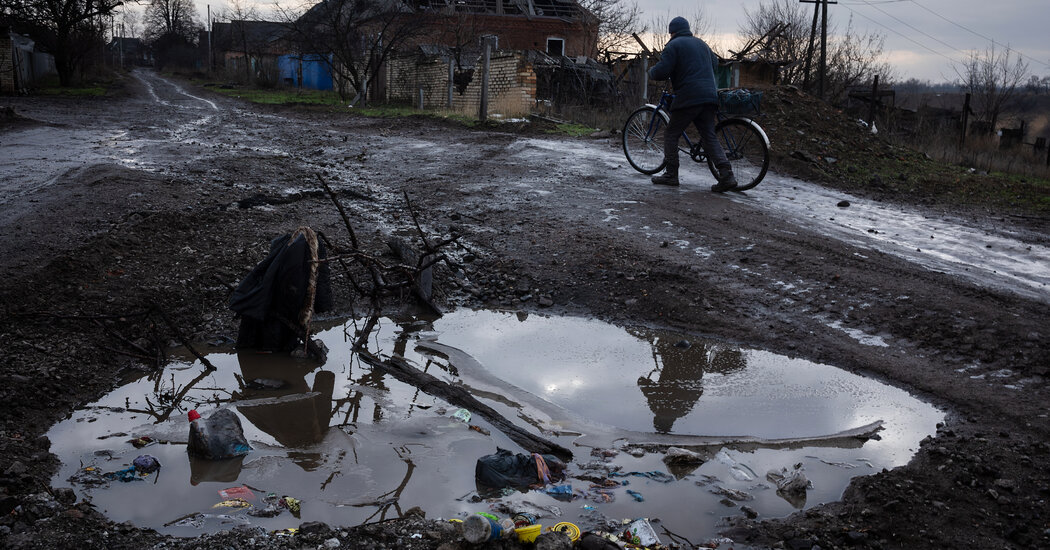
Nowhere is this clash of elite hubris and grassroots defiance more visible than on the battlefields of Ukraine and the tense waters of the Middle East, where tactical illusions have shattered against the hard reality of human resolve. In Europe, the Kremlin originally envisioned a swift, triumphant march into Kyiv, dreaming of a pliant client state and a populace that would offer little resistance. Instead, more than four years of brutal warfare have left over 350,000 Russian soldiers dead or wounded, with Moscow still unable to secure the very provinces it legally claimed to annex. This military ineptitude was recently mocked by Ukrainian President Volodymyr Zelensky, who penned a scathing open letter to Putin, deriding the aging autocrat for his inability to foresee the sheer scale of Ukraine’s national mobilization and its innovative deployment of next-generation drone technology that has fundamentally revolutionized modern defensive warfare. Similarly, in the Middle East, Washington’s assumption that intense aerial bombardments and crippling sanctions would force the Iranian regime to collapse or capitulate has proved entirely hollow. Following a massive Iranian missile barrage directed at Israel in response to regional escalations, Mohammad Bagher Ghalibaf, Iran’s top negotiator, made it clear that Tehran would not be intimidated by displays of Western firepower, warning that until there is a genuine, respectful effort to rebuild trust, their retaliatory stance will remain entirely unchanged.
As the physical battlefields remain deadlocked, the diplomatic arenas have devolved into a parallel swamp of suspicion, stalled initiatives, and deeply eroded credibility. Peace talks between Russia and Ukraine ground to a complete halt just as the active hostilities with Iran intensified, primarily because Kyiv rightfully refuses to surrender its sovereign territory without ironclad security guarantees—guarantees that an expansionist Moscow is entirely unwilling to concede. Concurrently, the United States has shifted its diplomatic focus toward Tehran in an attempt to salvage a minimal peace framework, but these efforts are severely hampered by a profound trust deficit. The Iranian leadership remains intensely skeptical of Washington’s reliability, pointing to a agonizing pattern of shifting demands, contradictory diplomatic signaling, and repeated violations of ceasefire understandings. According to Iranian foreign ministry officials, Donald Trump’s habit of constantly rewriting agreed-upon terms to appeal to domestic audiences has thoroughly sabotaged the mediation process, leaving negotiators to wonder if any signature from Washington is worth the paper it is written on. What was once envisioned as a comprehensive resolution has now been reduced to a fragile, stopgap framework designed merely to keep the Strait of Hormuz open to shipping while kicking the most contentious issues—like Iran’s nuclear capabilities and long-term sanctions relief—indefinitely down the road.
To understand why these negotiations are so incredibly fraught, one must examine the distinct historical, territorial, and economic dynamics that differentiate these twin conflicts. While both superpowers find themselves trapped by weaker adversaries, the moral and structural dimensions of these wars are vastly different. Ukraine is a sovereign democracy defending its actual homeland against an unprovoked, expansionist invasion by a neighbor that currently occupies nearly twenty percent of its territory and seeks nothing less than the absolute erasure of Ukrainian identity. Conversely, the friction between the United States and Iran is the product of an ideological, decades-long cold war born out of the 1979 Islamic Revolution, characterized by proxy conflicts, regional influence campaigns, and severe economic warfare rather than direct territorial ambitions. Because of this, analysts point out that Iran is structurally more inclined to seek a negotiated settlement than Ukraine; choked by a devastating naval blockade and receiving almost no external military or financial aid, Tehran desperately needs economic breathing room. Yet, after successfully weathering consecutive military campaigns, the Iranians refuse to enter negotiations as a defeated party, demanding that the United States approach the negotiating table with the sobering realization that a complete military conquest of Iran is simply not on the table.
Consequently, the specific, material demands anchoring these stalemates have become incredibly complex, turning any potential pathway to peace into a high-stakes game of geopolitical chess. For the Western allies and Israel, the absolute, non-negotiable priority remains the complete dismantling of Iran’s nuclear enrichment program, demanding that Tehran surrender its highly enriched uranium to prevent the creation of a nuclear weapon. Iran, however, refuses to yield its ultimate strategic leverage without receiving concrete, immediate concessions in return: specifically, the lifting of the suffocating naval blockade, the permanent removal of paralyzing economic sanctions, and the immediate release of $24 billion in frozen global assets. Rather than blindly trusting Western promises, Tehran wants to use the tentative framework currently under discussion as a practical test of American sincerity, waiting to see if Washington will actually deliver on initial financial releases and maintain regional ceasefires before engaging in broader strategic concessions. Meanwhile, in Eastern Europe, the deadlock is equally stubborn: Putin demands that Ukrainian forces withdraw from strategic sectors of the Donetsk province that his army has failed to capture on the battlefield, while Zelensky stands firm, knowing that ceding land to an insatiable aggressor without absolute international guarantees would only invite future invasions.
Ultimately, these protracted, unresolved conflicts represent much more than localized tragedies; they signal a massive, historic erosion of superpower authority that is rapidly reshaped the global balance of power. By failing to deliver on his grand promises of rapid, decisive peace agreements, Donald Trump has severely damaged American diplomatic credibility, leaving both Middle Eastern allies and NATO partners deeply anxious about the reliability of Washington’s security umbrella. At the same time, Vladimir Putin’s inability to subdue a much smaller neighbor has shattered the myth of Russian military invincibility, exposing structural rot within the Kremlin’s war machine. As noted by foreign policy experts like Fiona Hill, both Washington and Moscow have suffered profound strategic defeats, failing completely to align their grandiose geopolitical ambitions with the actual, practical means at their disposal. By demonstrating to the rest of the world that highly motivated, smaller nations can successfully resist the combined military and economic might of the world’s greatest empires, these conflicts are hastening the arrival of a highly decentralized, multi-polar world order, where the unilateral dictates of superpowers no longer carry the weight they once did.