




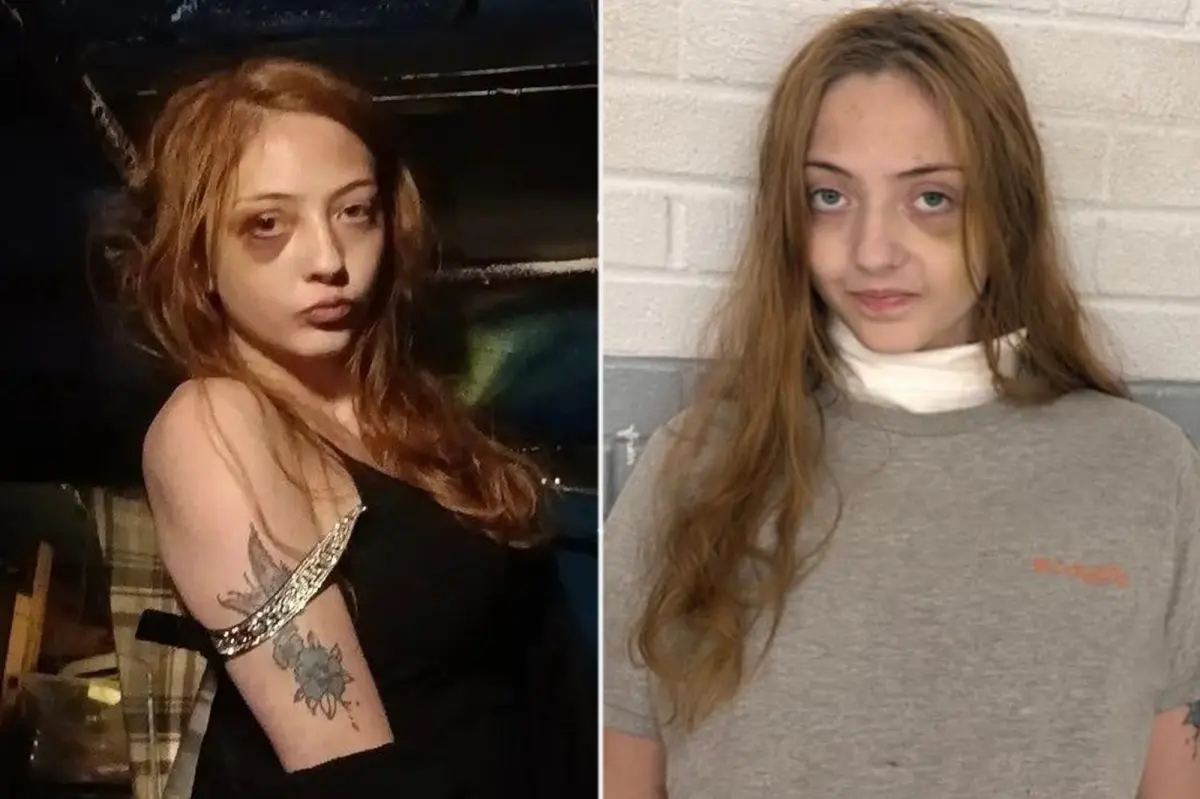
The remote, heavily wooded outskirts of Lexington, North Carolina, became the backdrop for a harrowing tragedy that was foretold in a desperate digital cry for help. Just twenty-four hours before a fatal encounter, twenty-year-old Maleigha Allen posted a chilling, disjointed message on Facebook, warning that her home was about to become “a murder scene” because of her father’s “voices.” On the morning of April 17, that haunting prediction became a horrific reality when her father, Michael Allen, was found stabbed to death inside the house they shared. Far from a sudden, random act of violence, the incident represents the explosive and tragic culmination of a lifetime of isolation, severe trauma, and systemic neglect. By looking past the sensational headlines, we find a young woman trapped in an inescapable domestic pressure cooker, struggling with profound mental distress and fighting a battle that seemed destined to end in bloodshed.
The physical reality of this domestic nightmare manifested on the porch of a family friend, Jennifer Lanning, at around 7:20 a.m. that morning. Maleigha arrived at the house trembling, dazed, and literally drenched in blood, her body bearing horrific physical evidence of a violent struggle. She suffered from deep, jagged stab wounds sliced across her stomach, carving into her neck near her heart, and marking her legs. When emergency services and police arrived on the scene, responding to Lanning’s frantic 911 call, they asked the young woman where her severe injuries had come from. With a quiet, devastating honesty, Maleigha whispered that her father had attacked her, adding a heartbreaking confession: “I’m sorry, I had to kill him.” To those standing on the porch, the sheer trauma radiating from Maleigha painted a picture of a child who believed she was fighting for her very survival, leaving witnesses with a haunting memory of a young life broken by domestic horror.
The roots of this tragedy stretch deep into an unsettling and highly toxic domestic environment that onlookers had long watched with growing unease. Jennifer Lanning recalled the blurred, deeply inappropriate boundaries of the father-daughter relationship, describing a dynamic that uncomfortably resembled “dating” rather than a healthy parental bond. Just hours before the stabbing, during a visit to Lanning’s home, the atmosphere had been thick with tension, fueled by Michael’s heavy drinking and Maleigha’s suspected struggle with methamphetamine addiction. Maleigha’s mental state was visibly deteriorating under the weight of severe psychological distress and substance abuse. Before they left the gathering around 2:00 a.m., a heavily intoxicated Michael boastfully displayed three new knives, including a lethal switchblade. But the most devastating revelation of that night came in a quiet, desperate whisper from Maleigha to Lanning, confessing that she desperately did not want “sexy time” with her father—a heartbreaking plea that signaled the horrific abuse occurring behind closed doors.
Following the confrontation, Maleigha was hospitalized for four days to treat her severe wounds before being arrested, beginning a dizzying and painful legal journey. Initially, a local grand jury reviewed the circumstances of the case and declined to indict her, citing a lack of sufficient evidence to prosecute her for murder—a decision that offered a brief moment of hope for her defense. Yet, this reprieve was short-lived; a separate grand jury panel was convened months later, returning a first-degree premeditated murder indictment that landed Maleigha back behind bars without bond. Her defense attorney, Karen Gerber, has vociferously asserted Maleigha’s innocence, expressing deep disappointment that prosecutors chose to seek the harshest possible charge instead of recognizing the context of self-defense. Gerber points directly to Michael’s documented history of severe physical and sexual abuse, most notably a 2019 arrest involving six counts of incest and child rape against Maleigha when she was just thirteen years old. Those charges were ultimately dropped after a terrified, vulnerable child recanted her testimony, a systemic failure that forced her back into the clutches of her abuser.
Beyond the courtroom battles, the tragedy reveals a generational cycle of addiction, abuse, and profound neglect that left Maleigha virtually defenseless from the start. Both her biological mother, Amy Simerson, and her half-sister have spoken out about the toxic, violent environment that defined the household, which was further exacerbated by both father and daughter battling severe alcoholism and substance addiction. Simerson lamented that her daughter “never had a chance” while living under Michael’s roof, describing a sinister psychological game where he constantly manipulated, controlled, and broke down Maleigha’s mental defenses. Physical evidence of this ongoing violence was written plain across Maleigha’s face; her mugshots and social media photos frequently showed her sporting heavy black eyes and other injuries. It was an environment of absolute isolation, where she was cut off from external support networks and left to navigate a terrifying reality where the person who was supposed to protect her was instead her primary tormentor.
Today, Maleigha sits in a jail cell awaiting trial, a haunting symbol of the complex, agonizing nature of trauma bonds and domestic survival. Speaking from behind bars, she firmly maintains that she acted entirely in self-defense, asserting that her father had begun sexually abusing and molesting her once again in the moments leading up to the fatal struggle. Yet, despite the years of unspeakable physical and psychological torment he inflicted upon her, she uttered a sentiment that highlights the deeply tragic, confusing human heart: “I still miss him.” This heartbreaking admission speaks volumes about the paralyzing grip of abuse, where victims are often forced to love and depend on the very people who destroy them. As she prepares to face a court of law on first-degree murder charges, Maleigha’s story stands as a devastating reminder of what happens when society fails to protect its most vulnerable children, leaving them to fight lonely battles for survival that almost inevitably end in tragedy.