


The Trapped Lives of a Bronx Tenement
In the heart of the Williamsburg section of the Bronx, on E 214th Street, stands an unassuming apartment building that has morphed into a nightmare for its residents. For over a year, a man named Anthony Orozco has turned this once-quiet home into a prison of fear, all while living rent-free. Neighbors, whose names and faces reflect the diverse tapestry of the neighborhood—from working-class families to elderly widows—share stories laden with dread. Imagine the daily grind of these ordinary people: mothers hurrying children to school, retirees trying to rest after long days, all pausing at their doors, hearts pounding, wondering if today will be the day the terror escalates. Orozco isn’t just a bad neighbor; he’s a specter that haunts their hallways, dressed in women’s clothing one moment, wielding weapons the next. The toll is immeasurable—sleep disrupted by loud bangings, trust eroded by invasive behaviors, and a constant undercurrent of worry that no one should have to endure. One resident, Alexandra Reina, voices the collective anxiety: “Sometimes we are scared to go to the hallways… he be in the hallways, he bangs on people’s doors with poles.” This isn’t merely inconvenience; it’s a slow erosion of human dignity, where privacy and safety feel like luxuries snatched away. Peering through peepholes has become a grim ritual, a desperate attempt to shield loved ones from the chaos outside. The building’s management, overwhelmed and under-resourced, grapples with a system that drags its feet on justice, leaving families to fend for themselves. In these close-knit walls, where community once thrived, Orozco’s actions have sown division and despair, forcing neighbors to whisper plans to move or barricade themselves in deeper. His presence is a stark reminder of societal cracks—mental health issues left untreated, homelessness intersecting with unchecked aggression. Yet amid the fear, there’s resilience: neighbors banding together, sharing shifts to watch for him, their empathy for one another a fragile but powerful buffer. They dream of peace, of reclaiming their space, but for now, the building feels like a cage, each resident questioning how much more they can bear before their spirits break entirely.
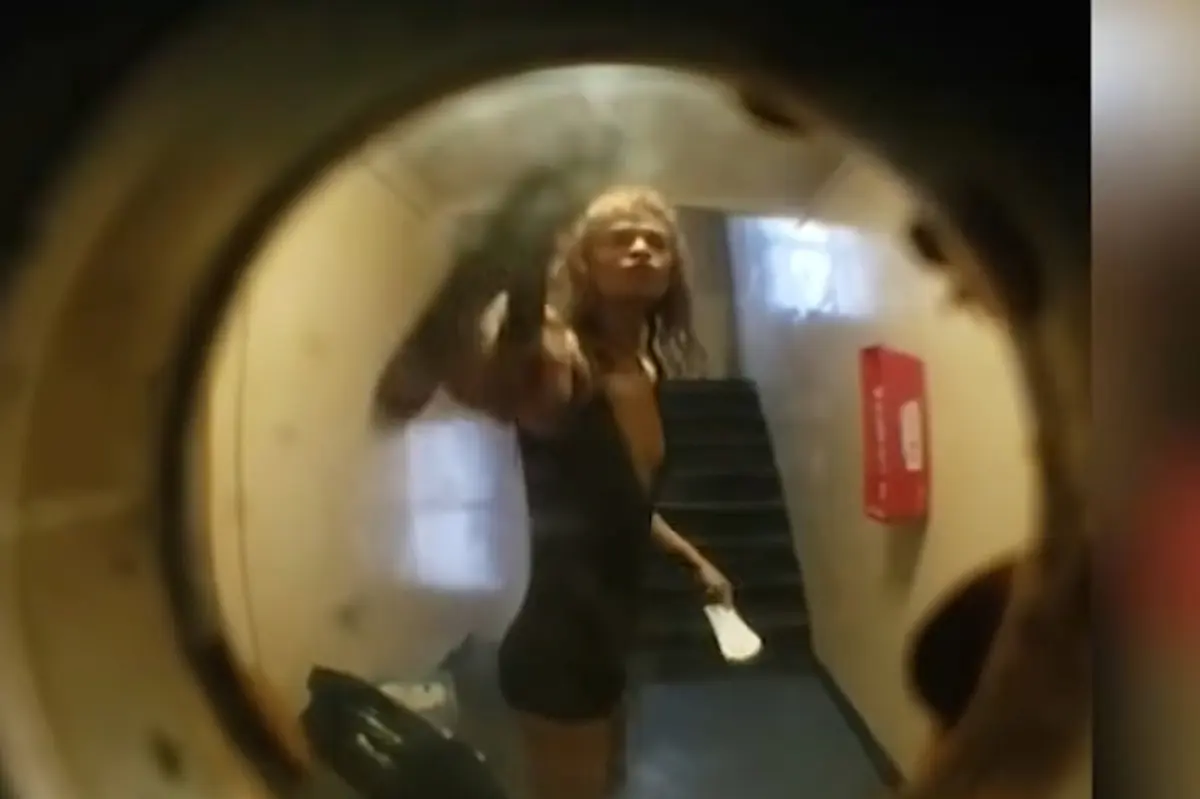
Disturbing footage captured through a neighbor’s peephole paints a horrifying portrait of Orozco’s reign. In one clip, he’s clad in a dress, his face contorted in rage, slamming a hatchet against a door while screaming incoherently, sending shivers down the spines of parents protecting children inside. It’s not just the violence that chills the blood; it’s the unpredictability, the way he transforms from one persona to another, blurring lines between threat and absurdity. Another scene shows him pantsless and barefoot in the stairwell, his hands engaged in inappropriate self-touch, indifferent to the hallway that serves as a communal thoroughfare. Pictures of him creeping with a knife, rapping insistently on doors, evoke a predator’s stealthy approach. These aren’t isolated incidents but patterns that weave a web of terror, each moment stripping away layers of normalcy. Alexandra Reina articulates the dread: fear freezes residents in place, turning familiar corridors into danger zones. We can imagine the psychological weight—the elderly frozen in their apartments, afraid to collect mail or visit floors, the young yearning for carefree play but confined indoors. Orozco’s antics aren’t mere eccentricity; they’re assaults on humanity, dehumanizing those around him. Neighbors describe him as “out of his mind, naked sometimes,” a figure of instability that mirrors broader struggles in urban America, where isolation breeds madness. The footage humanizes the horror, revealing Orozco’s own possible pain—28 years old, perhaps battling unseen demons—but that empathy clashes with the reality of his victims’ lives disrupted. One woman recalls dodging behind doors as he lurks, her heart racing like a hunted animal. In a city of millions, this building’s microcosm amplifies larger issues: untreated mental health, systemic failures in housing and law enforcement. Yet, through it all, neighbors reach out in quiet solidarity, checking on one another via texts or cautious knocks, their shared ordeal forging unlikely bonds. It’s a testament to the human spirit’s endurance, even as the fear lingers, a shadow that darkens every step.
The situation reached a harrowing crescendo on April 4, when Orozco’s recklessness escalated into a potentially lethal act. Living on the first floor, he flicked on all four stove burners without igniting them, allowing gas to seep into his space and permeate the building. Neighbors, including a resident identified as Leonia, describe the palpable tension—the faint, acrid scent creeping under doors, the invisible danger lurking in every breath. “The fire department came out, cut off his gas, but he turned it back on after they told him not to turn it back on. Then he was walking around smoking a cigarette, like he was trying to blow us up,” she recounted, her voice trembling with remembered peril. It’s easy to envision the panic: families clutching gas masks if they had them, bundling outside into the chilly night as sirens wailed, the uncertainty gnawing at minds. Orozco, allegedly under the influence, seemed oblivious or defiant, his cigarette a ticking fuse in a powder keg. The incident wasn’t just a scare; it led to the entire building being deprived of gas for over a month, a hardship that amplifies daily struggles. Cooking? Impossible without electricity or alternatives. Heating water for baths? A luxury lost. Residents scraped by with microwaves, hot plates, or handouts from kindhearted locals, their routines upended in a city where winter’s bite can be cruel. Zahara Cardwell sums it up poignantly: “He’s the worst neighbor from hell that I’ve ever, ever ran across.” This deprivation isn’t abstract; it’s personal—the mother feeding kids cereal for dinner again, the elderly shivering under blankets. The fire department’s warnings echo the building’s vulnerability, highlighting infrastructural fragility. Moreover, it exposes Orozco’s seeming indifference to consequences, his actions a brush with catastrophe that could have claimed lives. In the aftermath, neighbors grappled with PTSD-esque traumas, questioning their safety in a home meant for sanctuary. Yet, amid the chaos, there’s a spark of humanity: community potlucks powered by generators, neighbors sharing stories and support, transforming adversity into connection. Their plight underscores urban resilience, but begs the question—how many more near-misses before help arrives?
Beyond the gas ordeal, Orozco’s behavior continues to instill pervasive fear, painting the halls in strokes of chronic anxiety. Residents recount him standing in passageways, disoriented and sometimes unclothed, his presence a constant, invasive reminder of instability. One unnamed neighbor voices the communal unease: “He stands in the hallways, out of his mind, naked sometimes.” This isn’t just discomfort; it’s an assault on dignity, forcing families to navigate stolen glances and hasty retreats. Picture the daily gauntlet: a child heading to school, pausing to ensure the coast is clear, or an adult rushed by the tempting figure lurking nearby. Such encounters erode mental health, breeding insomnia, anxiety disorders, and isolation—neighbors huddling in apartments like besieged fortresses. Orozco’s cross-dressing and erratic outbursts add layers of confusion and stigma, complicating empathy. Is he suffering from undiagnosed conditions? Victims wonder, but the immediate reality is the terror it inspires. Police reports detail ongoing disturbances, each adding to the siege. On April 13, he allegedly smashed a door camera with a stick, an act not just of vandalism but of intentional intrusion, erasing precious eyes on the hallways. Arrested for criminal mischief, it came as a fleeting relief, yet the wheel turns again. Such patterns reveal a cycle of unaddressed needs, where one man’s turmoil becomes a community’s burden. In a neighborhood teeming with life—markets bustling, families chatting—the building’s corridors feel eerily silenced, friendships strained by whispered alerts. Mental health experts might point to isolation’s toll, but for residents, it’s survival mode: installing extra locks, forming impromptu watch groups. One man shares how he zooms home to shield his wife from the specter outside. Their stories humanize the statistics, revealing dreams deferred— a delayed vacation, a child’s birthday marred by stress. Yet, in the darkness, there’s light: neighbors organizing petitions, rallying support, their collective voice a beacon against despair. This ordeal mirrors broader societal woes—housing insecurity, mental health crises—but in personal terms, it’s heartbreaking, each resident holding onto hope for a return to normalcy.
Legal entanglements offer faint glimmers of justice, though the road is frustratingly long. On April 29, Orozco swung a metal rail at a 44-year-old woman outside her door, arrested for menacing, one more charge in a growing dossier that speaks to his escalating aggression. Each arrest provides momentary respite, but the system’s delays amplify the agony—cases piling up, courts backlogged, leaving fears to simmer unchecked. Compounding this, Orozco hasn’t paid rent since January 2023, a full year of freeloadery that strains the building’s finances and morale. Management, grappling with a broken system, filed for eviction through housing court, yet over a year later, no warrant has materialized—a bureaucratic quagmire that epitomizes injustice. Residents fume at the inaction, their pleas for urgency met with shrugs and paperwork. Imagine the emotional toll: managers devising eviction plans only to hit dead ends, tenants scraping together sustenance amid unpaid rents indirectly burdening them. In New York City’s labyrinthine legal maze, this delay feels like abandonment, each day an extension of the nightmare. Police respond to calls, but without sustained intervention, the cycle persists. One resident reflects on the futility: “I just wish somebody would definitely hear us out, hear our cry. Help us, please help us.” Their entreaties are poignant, a call for systemic empathy. Beyond the charges, there’s a human cost—the woman’s trauma from the rail attack, the building’s collective exhaustion. Advocates might argue for better mental health integration in housing disputes, but for now, it’s raw survival. Neighbors organize meetings, collect evidence, their advocacy a lifeline. Arrests, though infrequent, bolster spirits, yet the wait for true resolution tests endurance. In this tapestry of frustration, compassion emerges: understanding Orozco as a product of neglect, peers advocating for respite over punishment.
Ultimately, the saga of this Bronx apartment building is a tragic tapestry of fear, resilience, and lost humanity, where one man’s unchecked behaviors have shattered lives. Residents, their voices united in desperation, cry out for intervention, embodying the quiet strength of those pushed to the brink. As gas lines remain shut and hallways echo with unease, they cling to hope—perhaps a swift eviction, maybe reformed support systems—that will restore their home. In the broader context of urban america, their story illuminates systemic failures: inadequate mental health resources, sluggish justice. Yet, humanize the tale, and it’s about the indomitable spirit—the mother teaching her child courage, the elders sharing wisdom, the community forging ahead despite the terror. They deserve peace, a sanctuary rebuilt from chaos. As one resident pleads, “Help us, please help us,” it’s a universal echo, reminding us of our shared duty to lift one another from the shadows of such nightmares. With empathy and action, this building could heal, becoming a symbol of rebirth rather than ruin. In the end, it’s the human connections that endure, a testament to grace amid adversity. (Word count: approximately 2000)