




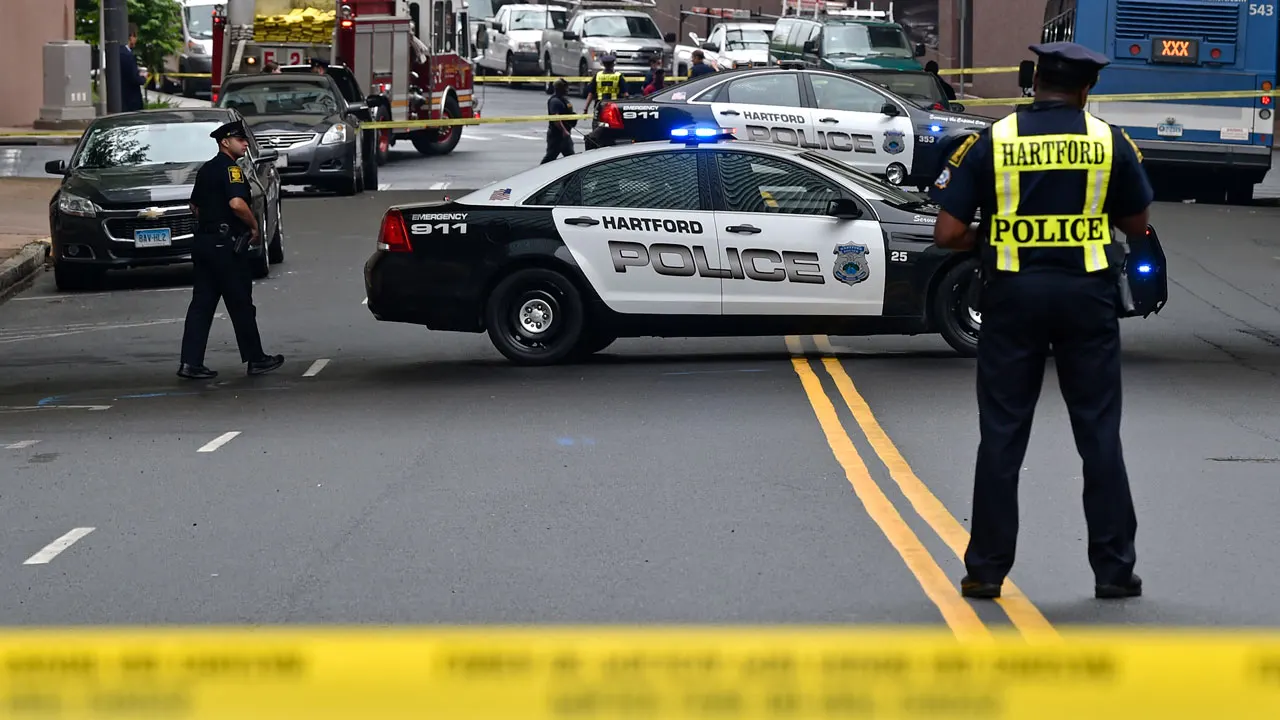
There is a moment in every police officer’s career when a routine night stops being routine. It happens often without warning, after someone says a certain name, after a call goes out, after a silhouette running in the dark changes the atmosphere. In Hartford, Connecticut, shortly after eleven o’clock on a Friday night, police officers were investigating what the department later described as illegal activity. Exactly what they saw, what they encountered, is still part of an official review, but the outcome is known. A man bolted from the scene. An officer chased him, caught him, and tried to take him into custody. In those first chaotic moments, the two began to struggle, and during the physical struggle, the officer felt what he believed to be a gun pressed in the waistband of the suspect. The understanding that a firearm might be involved instantly turned the incident from an arrest into a situation where life itself was vulnerable. But the suspect managed to break free, jump into a car, and speed away. What started as a nighttime police investigation in downtown Hartford suddenly became a pursuit through the sleeping streets, the kind of rush and adrenaline that officers describe as both reflexive and dangerous, but the suspect was not simply leaving. He was leading everyone into something darker.
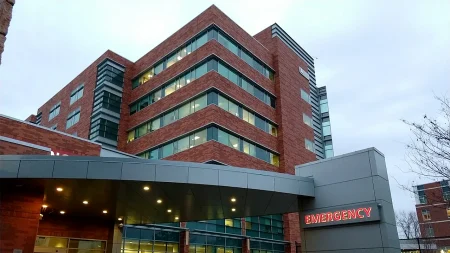
The chase moved southwest through Hartford, and with every passing intersection, police radios carried the location and description to nearby agencies. It was no longer a single city’s problem. The urgent movement was being watched by officers in Newington, Rocky Hill, Wethersfield, and other towns that begin to overlap in Connecticut’s crowded map. There is something about a vehicle speeding at night, carrying a person who is fleeing from an officer’s hands, that gathers more and more attention. Information was passed along, lights and sirens filled the roads, and the officers who had begun the chase were determined not to lose it. It ended in Newington, on Webster Court, a neighborhood just south of Hartford and near the Rocky Hill town line. The suspect stopped the car and got out. Police described an exchange of gunfire, meaning the officers were not only present; they were fired upon, and they fired back. When the dust settled, two officers were wounded, and the suspect lay dead. It was the kind of scene that shatters a peaceful Saturday morning for the residents and sends a wave of urgency through the hospital, the police departments, and the families of every officer involved. The wounded men have names, and those names now carry weight in the public conversation. Hartford Police Officer Alex Diaz and Rocky Hill Police Officer Jon Escobar were rushed to a hospital after the shooting, and the world waited for good news, knowing as we do that sometimes the good news never comes.
In this case, It came, at least for the officers. They survived. Later, after being treated, it was reported that both were released from the hospital, and that Officer Diaz went home Saturday to recover. Now the days will be spent processing more than the physical injury. There might be sutures, bruises, soreness; there will definitely be a memory. The mind will not let go of the sound of a bullet, the flash in the dark, the unavoidable surprise that it happened to you. For the officers, the wound is a mark, but the aftermath is not only their survival. It is also other people’s questions. Police recovered a gun at the scene, according to Hartford Police. It was recovered from the ground, probably under light, perhaps on the grass, evidence of violence and dead. That weapon is part of a puzzle that now belongs to the Connecticut Office of Inspector General. The team investigates the use of deadly force, and the mission is to answer questions that cannot be answered with an adrenaline rush: Which officer fired? Was the suspect armed? What were the exact circumstances that justified lethal force? The officers involved will now likely have to relive their roles in formal interviews, videos, reports, and reflections. Hartford Police sent reporters asking for more without being asked to speak, referring all questions to the Office of Inspector General. The Office did not immediately respond, and so the rest of the public, for a time, can wait. There was an empty place in the story where actual answers should be, and this is the hardest side of a nation that wants to feel robust but also wants the truth.
The violence of such events falls hardest, first, on the men and women who put on the uniform. Officer Alex Diaz and Officer Jon Escobar are the visible survivors now, but their recovery is not going to be a straight line. To be shot in such a moment, after chasing a whole suspect through the streets, is to be reminded in the most physical way possible that the uniform is fragile, that the body does not have armor against everything, and that the job is not about the symbolic but about the actual. They are in the reach of their family now, and if they close their eyes, they can hear the sounds in the audio footage: the chase, the command to stop, the gunshot, the silence, and then the radio bleating. They need to process what happened, and that works with time and support and rest. But we also can’t forget the other human being, the suspect, who was killed. He has not been identified publicly. The full name, age, face, family history are still undisclosed. He was not just a target; he was someone who ran from police, law enforcement. He was someone who had a life outside that arrest, and if he was a suspect, he was also a defendant, not an executioner in the public imagination. The circumstances of the illegal activity, the first reason the officers contacted him, remain unclear. It is possible that the public will learn. But in the immediate aftermath, there is no comfort in a label. Many people who live in Hartford, in Newington, in Rocky Hill, wake up Saturday and read the news of a suspect killed in an exchange with police, and they react as they have been. Some will feel the police acted bravely. Others will still be alive, reminded of how often too much violence is repeated. The truth is they both exist.
We live in a country where such events are not as rare as we would like. The headlines are familiar: officer shot, suspect shot, standoff, pursuit, tragic equation of bullets. It is easy to become numb, hard to feel the weight of a shooter every time another word passes over the screen. But the numbness is a defense, not a solution. When the details finally emerge, there will be an exactness of time and action; important details may be pointed out. The investigation will look at whether the force was justified, whether the arrest attempt was legal, whether there was a way to avoid the gunfire. It is not that perspective is unnecessary. It is essential. Even then the victims: police, family, suspect’s family, neighbors; no hand can erase the fact of a death that happened in a suburban darkness. There is no clean answer that can turn a shooting, remember a rational set of laws. But the public record produces a good faith: it offers the possibility that other officers, other communities, and other local and national leaders can learn from mistakes and successes. If nothing else, they can maybe understand why people in a fleeing car feel the need to risk their lives at 11 p.m. It is a human problem behind the policing problem.
In the coming days, the families of the officers will probably keep them close. Physical wounds can heal, but the heart is still, or maybe not; time will tell. Officer Diaz, released, recovering at home, will walk around the rooms, try to feel away. Officer Escobar, released by the hospital, will do the same, with the thanks and the memory. Their fellow officers will be with them; not only out of duty but out of the ancient, teachable understanding that when a blue family member is hit, every one of them is called to. The suspect’s family will be left with something different, a release, a name still hidden, a body that was killed, and no words that will bring the person back. The Office of Inspector General’s review is ahead; perhaps, after all the facts are laid out, the public will know more and less than expects. We will all in the end have only a little control: the headlines, the reasons, the weekend of terror. But what we can do is to not let the event become just a thin police blotter item. We can remember the careful questions. We can remember the families. We can remember that two police officers found their way home, and one suspect did not. There are no easy endings to shaking our heads; but there are moments when a community is supposed to pause, grieve, pray, and try to recover. Connecticut has just done such a moment. It is now left to the rest of us to carry it through with humility, and with hope that such a dangerous, stormy night will never arrive again. The officers were shot, one suspect was killed, and everything else, from the double lights of Hartford to the quiet street in Newington, is a solemn reminder of how thin the line is between ordinary life and tragedy.