


A Flashpoint of Fire and Feud in the Congo
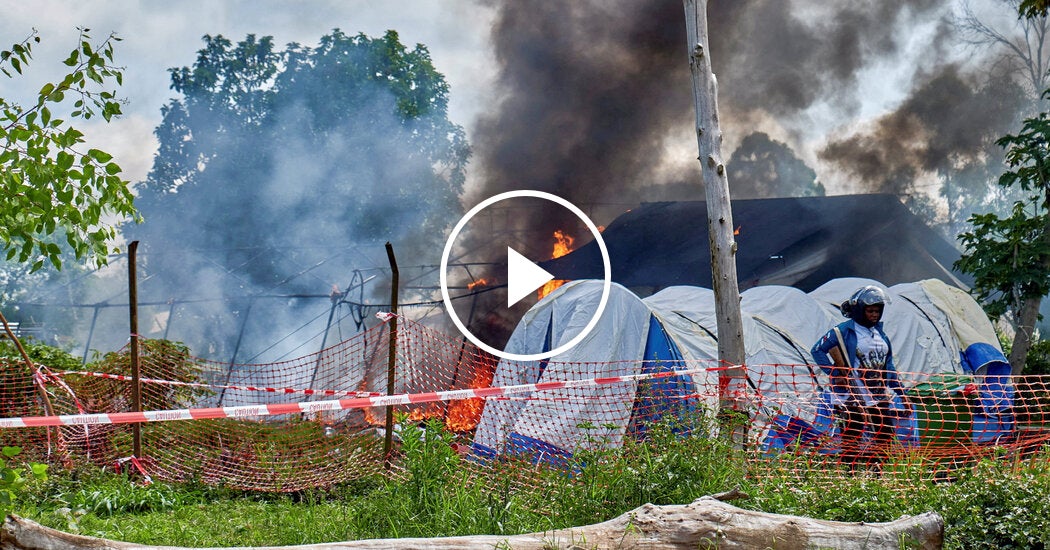
The plumes of thick, black smoke that billowed into the sky over the Democratic Republic of Congo on May 22, 2026, carried with them more than just the physical debris of a destroyed medical facility; they symbolized a profound and catastrophic breakdown in trust between a vulnerable population and the global health apparatus. On that afternoon, an outraged crowd converged upon a localized Ebola treatment center, reduced its temporary wards and vital medical equipment to ashes, and forced medical staff to flee for their lives. According to direct reporting from Axel Boada, the immediate catalyst for this destructive confrontation was a bitter, emotionally charged dispute over the body of a deceased individual suspected of having succumbed to the highly lethal Ebola virus. Local health authorities, bound by strict international medical protocols designed to curb the transmission of one of the world’s most feared pathogens, repeatedly refused to release the corpse to the family, triggering a rapid and violent escalation. As the flames consumed the clinic, the incident laid bare a recurring, tragic reality of the Democratic Republic of Congo Ebola outbreak: the volatile collision between the clinical, uncompromising mandates of modern epidemiology and the ancient, deeply revered ancestral traditions of the communities caught in the crosshairs of an epidemic.
The Sacred Obligation: Why Traditional Burials Defy Clinical Mandates
To dismiss the crowd’s actions as a simple act of lawlessness or scientific denialism is to catastrophically misread the cultural landscape of the region. In many Congolese communities, death is not merely a biological endpoint, but a sacred spiritual transition that requires meticulous, active participation from the living to ensure the deceased successfully enters the ancestral realm. Traditional burial customs dictate that family members must physically wash, touch, shroud, and bid farewell to their loved ones through communal viewings and physical contact—rituals believed to prevent the deceased’s spirit from lingering in a state of unrest or bringing misfortune upon the surviving family. When international humanitarian teams and local health workers arrive clad in alienating, white personal protective equipment (PPE)—resembling what locals often describe as “astronauts”—and swiftly seal a relative’s body in an opaque plastic bag to be buried in an unmarked, sterile grave, it is not perceived as an act of saving lives. Instead, it is felt as a profound violation of bodily state, a cosmic desecration, and a cruel, state-sanctioned kidnapping of the dead, which naturally breeds intense indignation and fuels the exact desperation that led to this latest Ebola treatment center attack.
The Lethal Science of Ebola and the Necessity of the Sterile Barrier
From the perspective of public health officials standing on the frontlines of containment, the refusal to yield the body to the family is an absolute, non-negotiable scientific necessity. The Ebola virus is a hemorrhagic fever of unmatched virulence, and its biological profile dictates that the viral load in a human body peaks at the precise moment of death, making the corpse of an Ebola victim exceptionally contagious. Every surface of the deceased’s skin, as well as all bodily fluids, are teeming with active viral particles; consequently, traditional practices like washing the body or performing familial embraces are among the most efficient vectors for super-spreader events, often decimating entire extended families in a matter of weeks. To prevent these catastrophic chains of transmission, global entities like the World Health Organization (WHO) have established rigorous safe and dignified burials (SDB) protocols, which mandate that trained, protected teams handle the interments. However, when clinical staff are forced to negotiate these protocols on the fly with grieving, uncomprehending families, the sterile barrier of the clinic becomes a psychological barrier of alienation, transforming a well-intentioned medical sanctuary into a site of immense trauma and hostility.
A Legacy of Skepticism: Decades of Conflict and Medical Distrust
This outbreak of violence cannot be analyzed in a vacuum, as it is deeply rooted in a history of socioeconomic neglect, armed conflict, and systemic medical distrust in Africa’s Great Lakes region. For decades, communities in the eastern provinces of the Democratic Republic of Congo have endured relentless violence from rebel factions, extreme poverty, and a near-total absence of basic state services, leading to a pervasive, logical skepticism toward any sudden governmental or foreign intervention. When millions of dollars in international aid, high-tech vehicles, and foreign specialists suddenly flood a long-neglected region solely to combat Ebola—while preventable killers like malaria, cholera, and local militia violence continue to claim lives unchecked—unfounded rumors and conspiracy theories naturally flourish. Local populations begin to question the true motives of the medical teams, sometimes viewing the Ebola outbreak as a manufactured crisis designed for financial gain, population control, or organ harvesting, a toxic skepticism that turns every quarantine measure and diagnostic test into a potential spark for civil unrest.
The Dangerous Vacuum: How Violence Cripples Ebola Containment
The immediate physical destruction of the treatment center leaves behind a devastating epidemiological vacuum that threatens to accelerate the spread of the virus far beyond the immediate community. When a treatment center is burned down, active patients under isolation often panic and escape back into the surrounding populace, carrying highly infectious viral strains straight into homes and crowded market centers where contact tracing becomes nearly impossible. Furthermore, the threat of violence forces international non-governmental organizations (NGOs) and local medical personnel to suspend operations and evacuate the area, leaving vulnerable populations without access to life-saving therapeutics, vaccines, or basic maternal and pediatric healthcare. This disruption not only dismantles the fragile ring vaccination strategies that are critical to halting the transmission of the virus, but it also discourages other symptomatic individuals from seeking early treatment out of fear of being caught in the crossfire of community violence or being forcibly isolated in a targeted facility.
Bridging the Chasm: The Indispensable Role of Cultural Humility in Global Health
Ultimately, the tragedy of the burned treatment center in the Democratic Republic of Congo serves as a stark reminder that epidemics cannot be defeated by scientific efficacy alone; they require cultural diplomacy, empathy, and active listening. Future public health interventions must prioritize cultural humility over clinical dominance, integrating local leaders, traditional healers, and religious figures directly into the design of emergency response protocols from day one. Significant strides have been made in developing modified, collaborative burial practices that allow families to view their loved ones through transparent body bags, sprinkle soil from a safe distance, or participate in spiritual rites alongside protected medical teams, but these adaptive strategies must become the baseline standard of care rather than an afterthought. Only by dismantling the patronizing barriers of top-down clinical mandates and treating local traditions with the dignity they deserve can global health agencies hope to dispel the fog of medical distrust, rebuild community partnerships, and ensure that the vital tools of modern medicine are embraced rather than burned.