





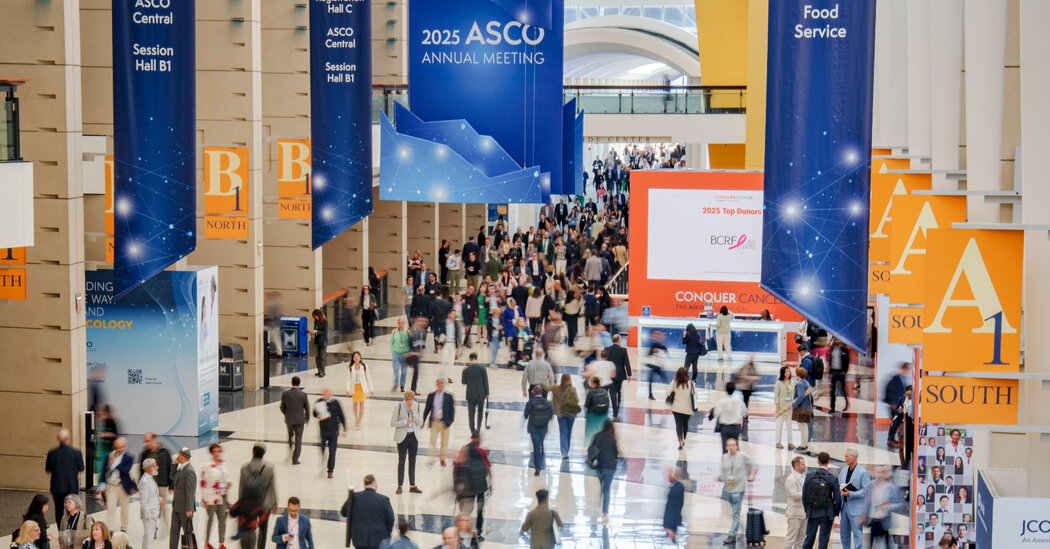
For over half a century, the annual meeting of the American Society of Clinical Oncology (ASCO) has served as the undisputed global stage for major breakthroughs in cancer therapy, historically dominated by elite medical institutions and drug trials from the United States and Europe. This year, however, a profound paradigm shift swept through the convention halls in Chicago, signaling the unstoppable rise of China as a dominant force in oncology innovation and biotech development. In a historic milestone that surprised veteran attendees, one of the event’s five highly coveted plenary sessions featured a clinical trial conducted entirely within China—marking the very first time a single-country Chinese trial has achieved such premier billing. This watershed moment highlights the dizzying evolution of China’s biotech infrastructure, which has transformed in less than a decade from a quiet industry mimicking Western formulas into an inventive juggernaut capable of developing, testing, and scaling cutting-edge cancer therapeutics. Medical pioneers, such as Dr. Otis Brawley, a prominent professor at Johns Hopkins who has attended the prestigious conference annually since 1989, observed that this milestone signifies the official, undeniable arrival of the Chinese biotech sector on the global stage. As oncologists from every corner of the globe gathered to dissect the trial results, the atmosphere was a mix of scientific awe and geopolitical intrigue, reflecting a broader realization that the center of gravity in lifesaving medicine is shifting.
While scientific progress is theoretically universal, this rapid shift has triggered intense anxiety among American policymakers, industry executives, and medical experts who fear that the decline of domestic biotech dominance carries severe risks. As political tensions between Washington and Beijing escalate, leaders on both sides of the congressional aisle have voiced growing concerns about America’s systemic reliance on foreign countries for critical medical supplies, ranging from basic generic ingredients to advanced treatments. Lawmakers and public health officials argue that the migration of high-tech clinical research to Chinese laboratories undermines domestic innovation, drains capital from American startups, and poses long-term security threats to patient safety and clinical independence. Dr. Robert Califf, a former commissioner of the Food and Drug Administration (FDA), warned that the threat to American biotechnology is both valid and deeply concerning, noting that the United States is being seriously challenged in a domain it once completely controlled. High-ranking U.S. health officials have characterized this pharmaceutical rivalry as a quiet but high-stakes conflict over patent leadership, laboratory innovation, and economic security, with some warning that the United States is actively losing its competitive edge. By positioning themselves at the vanguard of oncology research, Chinese firms aren’t just filing patents; they are challenging the very foundation of American soft power, technological leadership, and domestic job security in the highly lucrative life sciences sector.
At the heart of the debate lies a critical, deeply human question: Can life-saving cancer drugs tested almost exclusively on patients in China be safely and effectively administered to diverse populations in the United States? Researchers have long struggled to understand subtle biological differences between ethnic groups, particularly in oncology, where clinical trials suggest that Asian patients with lung cancer frequently respond more favorably to certain immunotherapies and experience longer survival rates compared to patients of other backgrounds. Compounding these physiological puzzles are distinct cultural and systemic lifestyle differences, such as the exceptionally high rates of smoking in China, contrasted with a healthcare network where standard baseline cancer drugs differ markedly from those routinely utilized in Western clinics. Dr. Peter Marks, a former FDA official who recently transitioned to a leadership role at Eli Lilly, expressed deep reservations about the clinical applicability of overseas data, noting that treatment outcomes often look inexplicably better in trials conducted within China. These variations create a complex puzzle for regulators, who must determine if a therapy’s stellar performance in a Beijing hospital translates to an equally miraculous outcome for a patient in Chicago or Houston. Consequently, U.S. clinical authorities are left walking a tightrope between welcoming breakthroughs and protecting patients from therapeutic mismatches that could inadvertently compromise cancer survival rates.
This scientific uncertainty has not deterred the world’s largest multinational pharmaceutical corporations, which are increasingly bypassing American laboratories to shop for pipeline products directly from Chinese developers. Seeking to slash operational budgets and accelerate clinical timelines, big pharma giants like Merck, Pfizer, and Bristol Myers Squibb are snapping up the Western rights to experimental Chinese drugs at a fraction of what it would cost to build such therapies from scratch at home. This trend has radically altered the investment landscape; in a stunning reversal, nearly half of all major pharmaceutical acquisition deals this year have featured drugs originating in China—a statistic that was virtually nonexistent just a decade ago. While Chinese creators retain lucrative domestic distribution rights, global pharmaceutical conglomerates acquire the license to market these treatments in the West, effectively isolating American biotech startups that are struggling to pitch comparable, albeit more expensive, home-grown solutions. This commercial shift was epitomized at the ASCO conference by ivonescimab, an experimental lung cancer therapy developed by China’s Akeso Biopharma and bought by Florida-based Summit Therapeutics. Critics point out that this licensing frenzy incentivizes a pattern of defensive copycatting, driving some American startups to adopt defensive operational protocols, enforce strict confidentiality, and decline to present early results at global forums to protect their intellectual property.
The potential consequences of this foreign reliance have sparked warnings of a national security crisis, with some experts raising the alarming prospect of a medical “Strait of Hormuz” where access to life-or-death oncology drugs could be cut off during a geopolitical dispute. Concerned lawmakers, including Representative John Moolenaar of Michigan, have proposed harsh measures, including blocking the FDA from reviewing clinical trials conducted solely in China and banning partnerships between American pharmaceutical giants and Chinese contractors. Historically, regulators like Dr. Richard Pazdur have rigorously resisted approving cancer therapies based strictly on foreign clinical evidence, arguing that foreign-only testing excludes the very American taxpayers who subsidize pharmaceutical development through commercial premiums. However, the sheer efficacy of emerging Chinese therapies is forcing a painful regulatory reckoning, with officials openly acknowledging that the FDA must prepare for a future where major breakthrough therapies might only be tested within China’s borders. The agency now faces the delicate task of balancing rigorous scientific standards with the moral imperative to grant American patients access to highly effective medicines, even if those medicines were developed by a strategic opponent. Public health advocates worry that if political posturing outpaces pragmatic regulatory oversight, patients suffering from late-stage terminal cancers will ultimately pay the price, denied access to superior treatment options under the banner of national security.
As the industry navigates these turbulent waters, the human side of clinical trials remains the ultimate indicator of success, highlighting the reality that for a terminal cancer patient, the origin of a medication matters far less than its ability to extend life. The spotlight on ivonescimab—a dual-action drug that simultaneously unleashes the immune system and starves tumors of blood supply—reveals both the immense promise and the steep hurdles of global drug integration. While the Chinese study published in the Lancet showed notable survival improvements, American oncologists are still trying to parse the results, pointing out that the drug was compared to therapies not widely used in Western markets rather than the current gold-standard U.S. treatment, Keytruda. Furthermore, Summit Therapeutics’ recent disclosure that its Western-based clinical attempts struggled to meet early fast-track criteria sent shockwaves through Wall Street, underscoring the high volatility and scientific unpredictability of transferring clinical success across borders. Ultimately, the debate surrounding China’s scientific ascendance transcends corporate earnings and geopolitical posturing, forcing the global medical community to confront a fundamental ethical question. As researchers eagerly await more robust, diverse global data later this year, the tension between safeguarding domestic innovation and embracing global, lifesaving collaboration continues to define the future of oncology—reminding us that in the relentless war against cancer, humanity’s best hope still relies on the triumph of evidence over borders.