





Diplomatic Maneuvers in Beijing: China’s Tightrope Walk Amid Iran-Israel Conflict
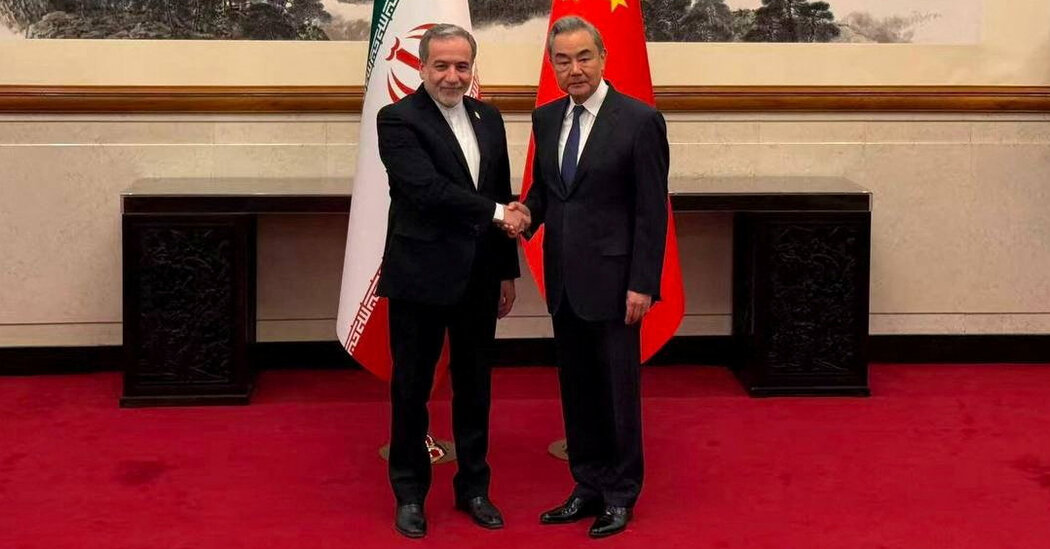
In the shadow of escalating tensions in the Middle East, China’s top diplomat, Foreign Minister Wang Yi, sat down with his Iranian counterpart, Abbas Araghchi, in Beijing on Wednesday for a series of high-stakes talks. This meeting marks the first visit by a senior Iranian official to China since the outbreak of the Israel-Iran war in late February, a conflict that has reverberated across global trade routes and geopolitical alliances. As reported by China’s state news agency Xinhua, the discussions unfolded without immediate details released, but they underscore Beijing’s calculated approach to de-escalate hostilities while steering clear of direct involvement in the fray. At a time when the United States is ramping up pressure on China to influence Tehran’s actions, particularly regarding the blockade of the vital Strait of Hormuz, these talks represent a delicate balancing act for a nation that prides itself on strategic neutrality.
The backdrop of this diplomatic rendezvous is deeply rooted in the Iran-Israel conflict, which erupted after a series of tit-for-tat strikes triggered by a controversial drone attack. Since then, Iran has effectively sealed off the Strait of Hormuz, disrupting the flow of oil and goods through one of the world’s most critical maritime chokepoints. This closure, coupled with a U.S. Navy-imposed blockade on vessels heading to or from Iran, has sent shockwaves through international commerce, with energy prices soaring and supply chains strained. Beijing, a major importer of Iranian oil, has watched this standoff with growing concern, as delays in shipments have compounded economic pressures on its industries. Yet, China’s response has been nuanced, as it reiterates calls for an end to the violence without committing troops or overt military support to any side. By hosting Araghchi, China signals to the world its willingness to mediate, but insiders familiar with Beijing’s strategy note that this is more about protecting its own interests than brokering peace on a global stage.
Transitioning from the immediate Middle East crisis, the talks in Beijing coincide with preparations for a high-profile summit between U.S. President Donald Trump and Chinese President Xi Jinping next week. Analysts expect the agenda to cover a broad spectrum of issues, but the Strait of Hormuz is poised to take center stage. Washington has been vocal in urging China to exert influence on Tehran to reopen the strait, allowing commercial ships and oil tankers—many of them crucial for China’s energy needs—to pass unhindered. On Tuesday, U.S. Secretary of State Marco Rubio, speaking to reporters in Washington, pointedly appealed to Beijing’s self-interest. “It is in China’s interest that Iran stop closing the straits. It’s harming China as well,” he stated, emphasizing that Tehran’s actions are isolating it internationally. Rubio’s comments reflect a broader American strategy to leverage China’s economic vulnerabilities, drawing on intelligence reports that suggest Beijing has quietly facilitated some concessions from Iran in the past, including the fragile April ceasefire that paused fighting but left underlying tensions intact.
Even as pressure mounts from the United States, China’s pushback has been steadfast, revealing the complexities of its foreign policy. Despite allowing select Iranian oil shipments through the strait—particularly those destined for Chinese ports to alleviate domestic supply shortages—the nation has resisted Washington’s sanctions regime. Notably, after the U.S. Treasury Department targeted an independent Chinese refinery for purchasing Iranian crude, Beijing instructed its companies to disregard the penalties, prioritizing economic ties over diplomatic coercion. This defiance highlights China’s growing assertiveness in global affairs, a shift that observers attribute to Xi’s vision of a more multipolar world where Beijing can challenge U.S. dominance without sparking direct confrontation. Foreign diplomats have speculated that China played a behind-the-scenes role in Iran’s acceptance of the ceasefire terms, using backchannel communications to nudge Tehran toward restraint. Such moves, while pragmatic, have not quelled the economic fallout; surging global energy costs continue to bite into China’s GDP, forcing policymakers to weigh short-term gains against long-term stability.
Amid this intricate web of diplomacy, President Trump’s decision on Tuesday to temporarily suspend a fledgling U.S. naval operation escorting ships through the strait adds another layer of intrigue. He cited “progress toward an agreement” with Iran, though details remain opaque. This pause suggests that, despite the blockades and closures, negotiations are bubbling beneath the surface, potentially with China acting as an intermediary. For Beijing, maintaining balance is key: it must appease Washington ahead of the Trump-Xi talks while nurturing its strategic partnership with Iran, which spans from arms deals to infrastructure projects like the Belt and Road Initiative. Iranian officials, for their part, have signaled openness to dialogue, with Araghchi’s visit perhaps indicating Tehran’s eagerness to diversify alliances beyond its traditional foes. Yet, critics warn that any deal could unravel, as historical precedents—such as past ceasefires in the region—demonstrate the fragility of Middle Eastern detentes. For global markets, the stakes are high; a reopened strait could stabilize oil prices, benefiting economies from Tokyo to New York, but protracted deadlock risks broader disruptions, from inflation rises to potential escalations involving other players like Russia or Saudi Arabia.
As the dust settles on China’s diplomatic engagements, the long-term implications for international relations are profound. This episode illustrates how the Iran-Israel conflict has morphed into a proxy battlefield for great-power rivalries, with the Strait of Hormuz emerging as a flashpoint that tests alliances and exposes vulnerabilities. China’s measured approach—urging peace while safeguarding trade interests—positions it as a pivotal player in shaping the outcome, far from the sidelines. Meanwhile, U.S. policymakers grapple with the reality that sanctions and blockades alone may not sway Tehran, especially with China shielding key aspects of Iran’s economy. Looking ahead, as the Trump-Xi summit looms, world leaders will be watching closely to see if these talks yield tangible progress or merely delay the next flare-up. In a world increasingly defined by interconnected crises, events like Araghchi’s Beijing visit remind us that diplomacy’s art lies not just in confrontation, but in the subtle navigation of mutual dependencies. Reduced to its essence, the story is one of nations dancing on the edge of conflict, where every handshake could either mend frayed ties or ignite new fires.