


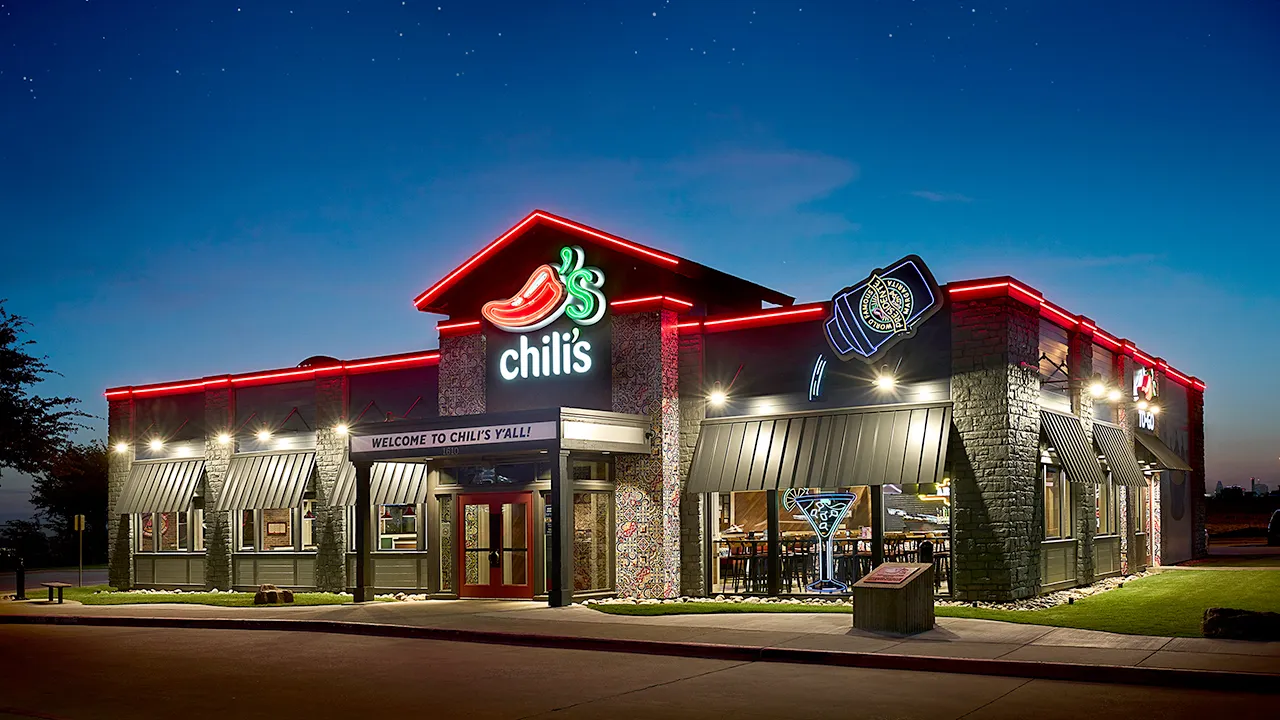
It was supposed to be an unremarkable Wednesday lunch at a Chili’s Grill & Bar in Forest City, North Carolina—a familiar stop for burgers, sizzling fajitas, and, for many, a frosty margarita to brighten the middle of the week. But what should have been a refreshing moment quickly turned into a health scare that no one expects when sitting down to eat. According to the Foothills Health District, three customers at the restaurant were served margaritas contaminated with an industrial cleaning chemical, and they immediately experienced chemical burns in and around their mouths. The beverage, which should have been a balance of tequila, citrus, and sweetness, had instead become a vehicle for a dangerously caustic substance. What happened next unfolded with terrifying speed: customers alerted staff, two employees tasted the same substance out of curiosity or concern and felt the same burning effects, and the restaurant found itself at the center of a public health investigation. It is a story that reads like a nightmare for anyone who trusts that the safe, simple rituals of dining out—ordering a drink, lifting a glass, taking a sip—will be just that: safe.
How did such a basic act go so wrong? The answer, according to preliminary findings, lies in a seemingly small but disastrous lapse in food safety. On Monday, an employee at the restaurant received an industrial degreaser from a contracted worker. The cleaner, meant for heavy-duty kitchen grime, was placed into an unmarked container—a decision that would prove fateful. That container was then brought inside the restaurant and left in the bar area, where it sat unnoticed for two days. On Wednesday, as the restaurant prepared for the lunch rush, an employee setting up the bar found the unlabeled container. To anyone looking at it, the contents might have looked like ordinary sugar or salt, both common ingredients used to prepare the rims of margarita glasses or to sweeten drink mixtures. Acting on that assumption, the employee used the chemical to prepare the margarita station. It was not an act of carelessness born of malicious intent, but a simple, tragic misidentification—one that illustrates how fragile the boundary can be between a properly run kitchen and a dangerous one when established protocols break down.
The human impact of that mistake was immediate and visceral. Shortly after the restaurant opened for lunch, three customers consumed the contaminated margaritas and began to feel a burning sensation in and around their mouths. These were not subtle symptoms. Chemical burns are painful, often startling, and can cause swelling, peeling, and lasting tissue damage depending on the substance and exposure. The customers did what anyone would do: they told the staff, and in the moments that followed, two employees also tasted the substance to see what was wrong. They, too, reported similar symptoms. In a statement to Fox News Digital, Chili’s acknowledged the incident and expressed a desire to make things right. “We are aware of an isolated incident at our restaurant in Forest City, North Carolina that resulted in injuries to two of our guests and Team Members,” the company said. “Our team took immediate action to support those affected and avoid any further injuries. We are actively investigating the circumstances related to this incident as the health and wellbeing of our guests and Team Members remain our top priority.” The company’s phrasing mentioned two guests, while the health district’s preliminary findings said three customers experienced chemical burns. Such discrepancies are common in the chaos of an unfolding emergency, but they do little to ease the anxiety of those who were harmed or the broader community trying to understand what happened.
Regulators did not hesitate to step in. The Foothills Health District launched an investigation and immediately suspended the restaurant’s food service permit. For a restaurant, a suspended permit is the equivalent of a stop sign on a busy highway: it halts operations and sends a signal that something serious has gone wrong. The suspension, however, was short-lived. By Thursday, after specialists from the health district determined that the restaurant met all other food safety standards, the permit was reinstated. That quick resolution suggests that the contamination was an isolated event, rather than a symptom of systemic neglect. But it doesn’t erase the gravity of what occurred. The health district used the moment to issue a clear warning to all food service establishments in North Carolina: chemicals must be properly labeled and stored away from food-handling areas. Jason Masters, health director of the Foothills Health District, underscored the point in a statement: “This incident highlights the importance of proper chemical labeling, storage, and handling in food service establishments, as required by the North Carolina Food Code, to prevent chemical contamination and protect public health.” It is a sentence that may sound bureaucratic, but its meaning is deeply human. Labeling is not just paperwork; it is the line between a margarita and a cleaner that can burn.
This incident is far from an isolated reminder of why food safety rules exist. Every day, in thousands of restaurants across the country, employees work under intense pressure, balancing speed, volume, and hospitality. They wash dishes, wipe counters, refill containers, and prepare drinks, often without thinking twice about the substances around them. In most restaurants, the systems in place prevent tragedies: bright labels, color-coded bottles, storage separation, and training. But when a chemical leaves its original container and finds its way into a familiar-looking unlabeled bottle, the potential for catastrophe lurks. That is why the North Carolina Food Code and similar regulations are so emphatic about labeling and storage. A degreaser is meant to break down grease, not to line the rim of a cocktail glass. Yet in a busy back-of-house environment, a moment of distraction, a missing label, and a mistaken assumption can turn a routine task into a public health emergency. This incident is a reminder that food safety is not just the responsibility of health inspectors or corporate executives. It is carried out by the hands that prep the limes, pour the tequila, and set up the bar—and those hands deserve systems that protect them and the people they serve.
What happened in Forest City should prompt more than a sigh of relief that the injuries were not worse. It should invite empathy for all involved. The customers who walked into a Chili’s expecting a pleasant meal left with burns and a story they will likely replay with unease. The employees who tasted the contaminated substance were trying to make sense of a confusing situation, and they, too, suffered real harm. And the worker who mistook a cleaning chemical for a baking ingredient—whether the same person who placed it in the unmarked container or someone else entirely—is living through a nightmare of unintentional injury, a reminder that mistakes happen to people who are often just trying to do their jobs. The restaurant itself has taken responsibility, cooperated with inspectors, and moved quickly to correct the issue. But the larger lesson lingers: no one expects a drink to harm them, and no one goes to work planning to hurt a customer. The battle against such accidents is fought with small, mundane actions: a marker writing the word “degreaser” on a container, a shelf that keeps chemicals far away from food, a few extra seconds of inspection before using a mysterious substance. Those unglamorous details are the silent guardians of public health. If this incident makes even a few restaurants tighten their protocols, and makes even a few of us more mindful of how easily trust can be betrayed in the ordinary moments of life, then the pain of what happened in that North Carolina bar will not have been entirely in vain. In the meantime, one can only hope that the affected customers and employees recover fully, and that the memory of a bad margarita is slowly replaced by a renewed faith in the people and systems whose job it is to keep every glass safe.