





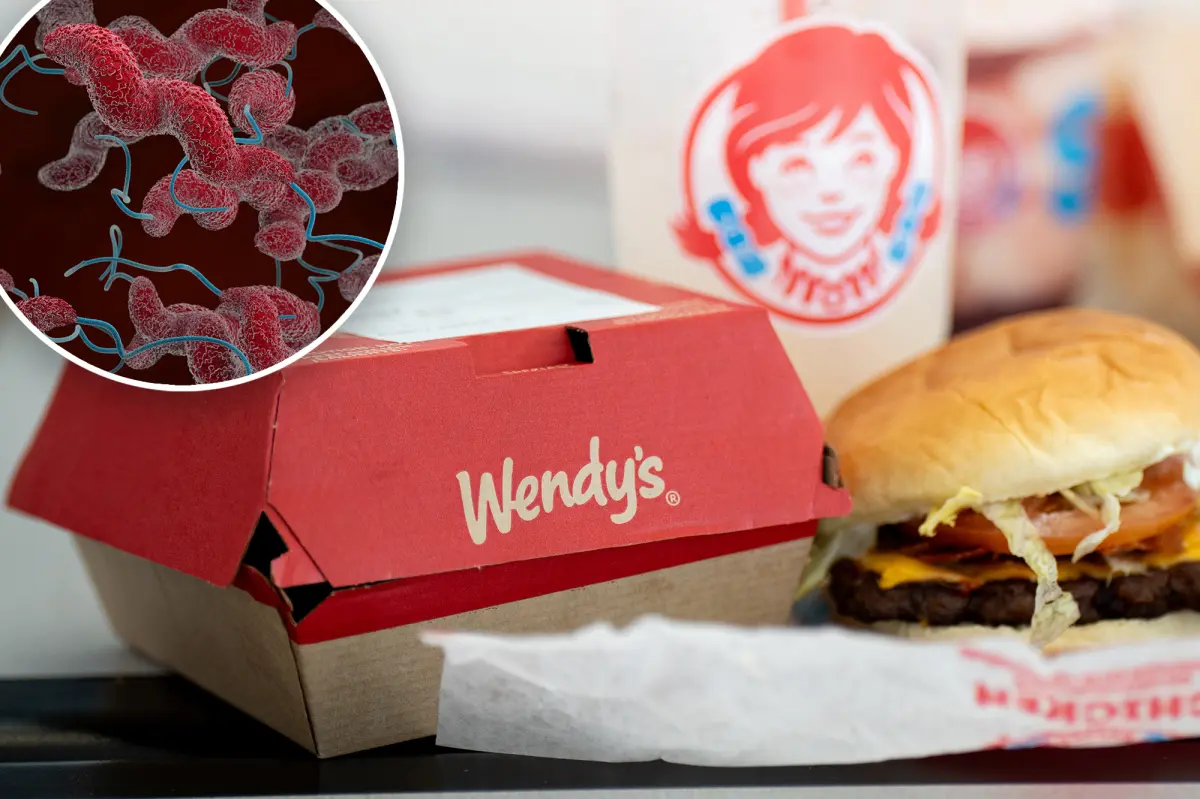
A simple dinner, meant to be a moment of convenience and satisfaction, transformed into a harrowing medical nightmare for a 68-year-old Chicago woman. What began as an ordinary online order for a double cheeseburger from a local Wendy’s would soon unravel into a devastating cascade of health crises, multiple hospitalizations, and financial ruin. Roxie Ellis Douglas, a senior citizen who made the seemingly innocuous decision to have a meal delivered to her home, found herself at the center of a legal battle against a fast-food behemoth, armed with a laundry list of medical ailments and a mountain of hospital bills, all stemming from what she claims was a contaminated dinner that arrived at her doorstep.
The ordeal began on an unforgivingly hot date, August 5, 2025, when Douglas sought the comfort of a reliable fast-food meal to her place on Chicago’s South Stony Island Avenue. Not parting with the details, her lawsuit describes her engaging DoorDash to deliver a meal from a nearby Wendy’s. The delivery arrived as expected—a sealed, unopened bag, a comforting sight assuring her the food had traveled untouched from the store. She had no reason to be suspicious of the seemingly benign double cheeseburger and baked potato sitting before her. Nothing about its appearance hinted at the microscopic danger festering within. She expected flavor, sustenance, and the simple pleasure of a meal prepared by someone else, but instead she was served a mysterious, invisible enemy that was about to engulf her health and peaceful life.
But by the next morning, her world began to crumble. The simple act of eating a burger rapidly triggered a cascade of severe gastrointestinal distress that would not subside. What started as discomfort escalated with alarming speed into a severe medical emergency, sending her to the hospital in the throes of a serious health crisis. The doctors at Advocate Trinity Hospital would ultimately diagnose her with Campylobacteriosis, a relentless bacterial assault that wreaked havoc on her intestinal system. The symptoms were brutal and extensive: her medical records would document acute infectious colitis, an inflammation of her intestines marked by dehydration, gastroenteritis, an elevated white blood cell count as her immune system waged war, and a dangerously low potassium level, known to cause kidney issues and neurological problems. The ambulance ride that carried her there was just the first step in a long and difficult journey.
The initial hospital stay lasted a harrowing three days, its cost a staggering $24,434, and involved a medical team trying to stabilize her and identify the root cause of her sudden, catastrophic condition. But it was far from over. Just a week after being discharged, Douglas found herself back in the hospital, her body reeling from the recurrence of Battle against the bacteria. Her second admission would prove even longer and more severe, lasting five days and costing a monumental $42,857. The financial damages for health care were mounting like a storm, and her life had become an endless cycle of doctors, tests, and treatments to turn a routine burger into a debilitation. The very idea of that simple meal now felt like a poison, a corrupted object filled with a “deadly pathogen.”
The physical and mental strain of those months was immense, but the financial burden added a new level of despair. By the time she had tackled the immediate aftermath, her medical expenses were breathtaking. The bills included a $2,848.50 ambulance ride to the ER, the two hospital stays, and the long-term follow-up care. In a final attempt to understand the lasting toll the infection had taken on her gastrointestinal system, and to rule out other issues, Douglas underwent a colonoscopy in January 2026, a procedure that cost her nearly an additional $13,000. That trip brought her total medical expenses to a shocking $93,578.24. The numbers, meticulously documented in court exhibits, paint a terrifying picture of how a single tainted meal could devastate a life, leaving physical and financial wreckage in its wake.
The legal fight that followed is more than a simple demand; it’s a mission to have her suffering acknowledged by proceeding to claim that the restaurant failed her. Douglas’s lawsuit, initially filed in state court and later moved to federal court in Chicago, is a comprehensive attack on Wendy’s standard of care. She alleges that the burger that sickened her was “contaminated with Campylobacter and other illness-producing bacteria,” at the moment it left the restaurant’s control. She maintains that it was “unreasonably dangerous and in a defective condition” upon arrival, holding the restaurant accountable for the state of the food they produce. Her legal team is arguing that Wendy’s had a duty to provide safe food, and that a failure to properly inspect, prepare, and serve its food products is what ultimately caused her ethereal suffering.
Douglas’s legal claim centers on the principle of product liability, arguing that the burger was unsafe for human consumption. The suit alleges failures on the part of the chain to use safe and proper inspection practices, including failure to notify consumers about the dangers of consuming their double cheeseburger meal. By attributing her health crisis to a failure to provide adequate warnings, she is making a legal statement that such a burger comes with inherent dangers that a customer shouldn’t have to anticipate. Her demand of $50,000 in damages, a contrast to the $93,000 in bills, underscores the principle that her suffering merits compensation for the pain and disruption of her life, rather than mere financial restitution.
As of yet, Wendy’s, the multinational fast-food giant with headquarters in Dublin, Ohio, has not publicly ostriced through the media, in a part of the food you eat, the truth. But this lawsuit paints a chilling picture of the balance of public trust and corporate responsibility. Every meal we prepare touches upon an unspoken contract between the restaurant and the consumer—one that guarantees safety and well-being. For 68-year-old Roxie Douglas, that contract was broken in the most brutal way. She now faces the long, slow process of recovery, both physical and financial, while wrestling with the lingering memory of an ordinary dinner that turned into a life-altering threat. The case, however, is more than just a search for compensation; it is a demand for responsible food safety, serving as a vivid reminder of the invisible dangers that can lurk behind the label of any meal and the devastating impact and human consequences, the proceedings of a businessman’s mind.
In the aftermath, the simple act of asking for a burger has become a fight for justice and a clarion call for stronger accountability in food service. The case moves forward in a Chicago federal court, a place where a single housewife’s meal holds a multinational corporation to account, for the safety and integrity of what it serves to the public. At the heart of this case accepts her absent claim of a corporate ‘failure’—not just a failed culinary choice but the problem of a larger systemic failure to stand, and the physical, mental, and financial aftermath of one.