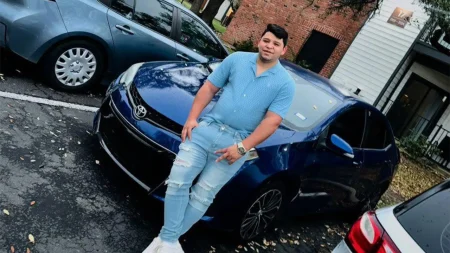






On a quiet Friday, a Nevada man lost the anonymity he had carefully hidden behind for years, standing before a federal judge and acknowledging a dark double life that reached across the border and deep into the machinery of organized crime. Luis Alberto Osorio, from the small northeastern Nevada town of Elko, pleaded guilty to a sweeping set of federal crimes that, in the eyes of prosecutors, made him an indispensable but silent intermediary between American firearms markets and brutal Mexican drug cartels. For years, the authorities said, he had been living an unassuming existence in the rugged high-desert country, running a mining company, and perhaps appearing to the outside world as just another entrepreneur making his way in the American West. But beneath that ordinary surface, prosecutors traced an intricate money trail, a network of under-the-table workers, and a series of suspicious gun purchases that led all the way to violent cartel-affiliated organizations operating south of the border. When the plea ended, Osorio’s story was no longer about business deals and mining claims; it was about how easily the tools of war can travel unnoticed from a quiet American town to the nightmare landscape of a drug war that continues to claim thousands of lives each year.
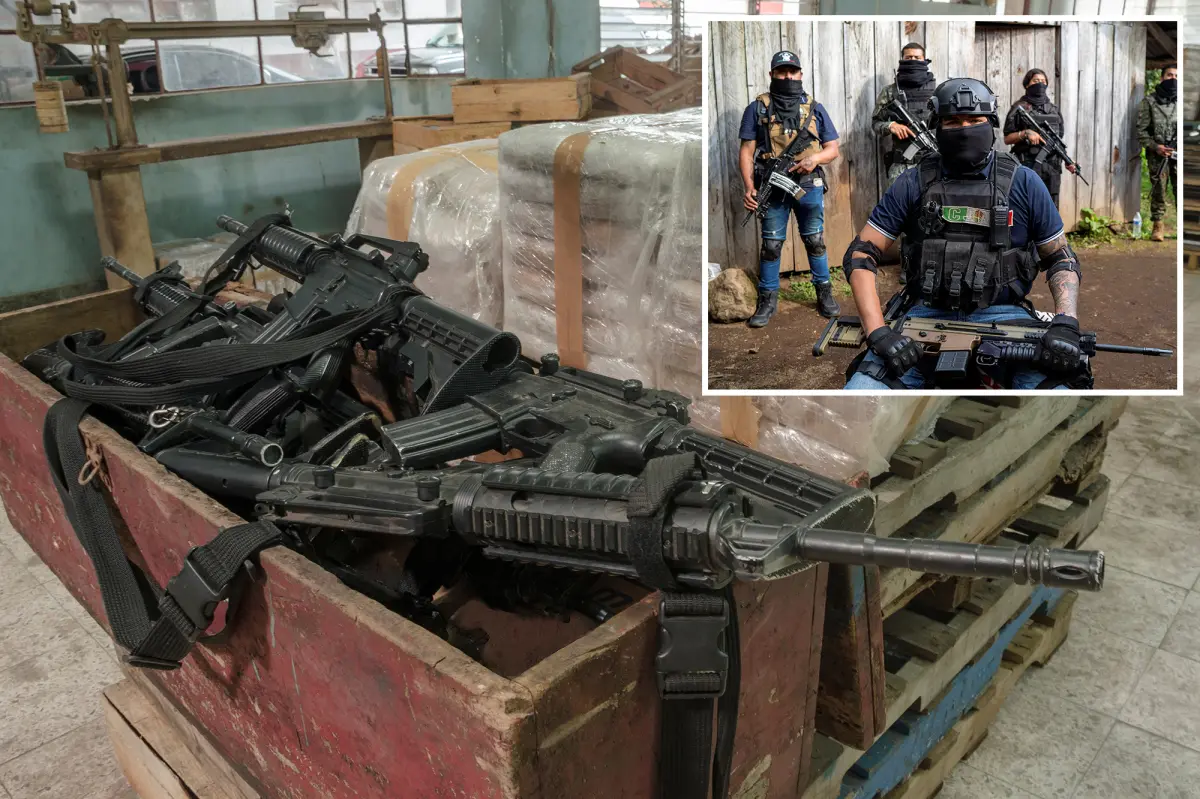
The heart of the case is one of those grim stories that reveal just how global an illegal gun can be, and how many ordinary steps can lie between a legal counter in a store and a battlefield. Court records say that between April 2020 and September 2024, Osorio allegedly conspired with co-defendants to buy 140 firearms, along with magazines and ammunition, sensing that these weapons would end up in the hands of people linked to violent Mexican drug trafficking organizations. The plan was simple and cynical: acquire high-quality, high-powered guns legally in the United States, then sell them profitably to criminal organizations south of the border, where the demand is endless and the prices are high. These were not typical handguns or shotguns hidden in a car. The weapons they generally preferred to move were among the most dangerous that the civilian market offers, including large caliber and long-range rifles built for serious damage. Among the guns detailed in filing court court documents were the Ohio Ordnance Works M2-SLR .50 BMG, a powerful anti-material rifle that uses the heavy machining gun projectiles capable of piercing armor and reaching targets far beyond the range of ordinary hunters; the Barrett M82A1 and M107A1, both of legendary .50 BMG rifles often associated with military forces and special operations; the FN Herstal M249S 5.56×45mm, a semi-automatic version of belt-fed light machine guns that have been used on battlefields for decades; and the FN herstal SCAR 17S 7.62×51mm, a modern tactical rifle now representation that the difference between commercial firearms in America and military-style weapons in cartel packs is sometimes simply a matter of willingness to ignore the law.
That willingness to ignore the law did not end at the border. Osorio also admitted that he intentionally hired and harbored people who were living across the United States without legal authorization at a Nevada mining operation, giving them legitimate wages, perhaps a sense that they were safe, while he knew that they were among the millions of people who too often find it difficult not to come to the country. The two parts of his life were actually much closer connected than they first appeared. The guns brought in cold cash or banknotes that had to be hidden, and legal employment in the mining operation was a means to feed money into his financial life, to create the appearance of regular income, to raise no alarm at money supply reports, and to keep a flow of cash that could be moved across states and across the border. When federal agents were finally able to assemble the pieces, they charged him with one count of straw purchasing of firearms, describing the crime of buying weapons on someone’s behalf — buying to a known, for a hidden owner, using a background check that fails to name the ultimate controller. He was also charged with one count of trafficking in firearms, carrying those weapons into another country and for the purpose that federal laws are entirely designed to stop. In addition, he faced one count of harboring aliens and one count of conspiracy to launder money, a formal legal phrase that, in this case, meant that he had worked with others to turn illegal profits into something that look like regular money.
Whatever the legal labels, the prosecutor counted the human cost of the gun and drug trade. Osorio had effective methamphetamine, a far deeper web that began with whom one walked into a gun store and ended with roadblocks, bullet-ridden roads, streets and families balancing on each side of the river. In announcing the guilty plea, First Assistant US Attorney Sigal Chattah of the District of Nevada did not adhere to the impersonal language of the law. She spoke directly about the communities that are forced to live with the consequences of this kind of Trafficking, saying, “Trafficking’s arms trafficking networks feed the violent cartels that terrorize border communities and pump illicit drugs into our neighborhoods.” Her words were not a bureaucratic speech but an attempt to make the obvious something: the gun bought in Nevada may be an offer to kill a family in a small village, and the drug that crosses the border may be the same trip that has killed a teenager thousands of miles away. To reinforce that point, she said that cutting off the supply chain and holding the defendant accountable, the Department of Justice is actually disturbing the operational capabilities of dangerous criminal organizations. In legal terms, Osario is facing up to seventy years in federal prison if the judge across all counts chooses to run the sentences consecutively, and that is a sentence that can last a lifetime for an old man, but no sentence has brought back a life.
On the same day of the guilty plea, federal officials with a long history in this case wanted to explain that they did not in a small town court. It was the result of a network of investigators and agents who had begun with a suspicious purchase and then followed the trail for more than four years. Jonathan Sherwin, deputy special agent in charge of Homeland Security Investigations for Las Vegas, called the case a success more than a number and a matter of national security. He described the personnel involved — Homeland Security Investigations, a task force consisting of federal, state and local partners — as working without Vision and repeating a Soul in the same business: “Trafficking military-style rifles and ammunition to drug trafficking organizations in Mexico fuels violence, strengthens criminal networks and threatens communities on both sides of the border.” For those who care about the border, he said, a victory is often unnoticed except in a press release, but it has a real impact on not letting this case erode safety on both sides. Sherwin’s words are reminders that busts are not actually happening in dark, and The criminals are caught in the usual places — movie golf records like the bills, the deposits and bank records, the phone records, the tipped-off federal agents, and those who eventually decide to do wrong before a judge.
This case is more than one man’s story; it is part of a much larger federal effort on the southern border and in the interior that increased after President Donald Trump signed an executive order on his first day in office. The creation of the Homeland Security Task Force was designed to bring federal agencies together, combining the tools of law enforcement, intelligence, homeland security, and the DEA, to focus border security and dismantle transnational criminal organizations that profit from the hateful arms race. David S. Olesky, special agent in charge of the Drug Enforcement Administration, whose Los Angeles Field Division also covers Nevada, stressed that in the world of organized crime and drugs, guns and drugs are inseparable. He said that as part of the task force, the DEA and its partners would draw on all resources and agency expertise to hold accountable individual and groups that pose a public health and safety threat to communities through the trafficking of drugs and firearms. The horror of the Osorio case is not the extraordinary: it is the ordinary. A man in a small American town, a mining company, a warehouse full of guns, a group of workers without papers, a function before the district, a cartel somewhere south of the border — all of these pieces of a single criminal picture. The investigation was built on and told by communities on both sides of the room, and the place of this guilty plea is not a final truth but a rare moment of crisis darkened by a system that kills too many to count. By making it six years, the government is used to the case as a warning: it would be followed by a bundle of cases to clip as if it were moving no matter how long it had taken, how far the arms had run, and how far the human lives had already been weighed down. It is not just a certainty that it has at one last hold to make this case; it is an attempt to make the border itself less lethal, less buyable, and less silent, bringing into the daylight the men who turn a business into a weapons highway.