




The tragic loss of a young life is a heavy burden for any community to carry, but when that grief is compounded by senseless digital hostility, the pain ripples outward in unexpected and terrifying ways. Nolan Wells was a vibrant eighteen-year-old with his entire life ahead of him, a dedicated student-athlete who played as a wide receiver for Southwest Mississippi Community College. With a deep passion for football and a relentless work ethic, Nolan harbored bright aspirations of taking his talents to the Division I collegiate level, a dream that motivated his every academic and athletic pursuit. However, this promising trajectory was abruptly cut short during what was meant to be a joyful Fourth of July celebration. Nolan embarked on a holiday boat trip with a group of close friends to Horn Island, a serene and undeveloped barrier island nestled off the Mississippi Gulf Coast. What began as a routine summer excursion turned into an unimaginable nightmare when Nolan went missing on the island. For two agonizing days, emergency crews, local volunteers, and law enforcement agencies combed the coastal waters and sandy terrain in a frantic search for the teenager. The devastating climax of the search came on July 6, when a National Parks Service ranger discovered Nolan’s remains on the northwestern tip of the island. The sudden death of a young man so full of promise left his family, teammates, and the broader Mississippi community in a state of profound shock and mourning, leaving behind a void that could never be filled.
In the wake of such a sudden and mysterious tragedy, the collective desire for answers can easily morph into a chaotic search for blame, particularly in the hyper-connected era of social media. Among the friends who accompanied Nolan to Horn Island on that fateful Independence Day was Warren Hudson. According to records from the Mississippi Department of Marine Resources, Nolan had made the personal choice to remain behind on the barrier island rather than return to the mainland with the rest of the group. Despite the official documentation suggesting no foul play or immediate wrongdoing on the part of his companions, the court of public opinion on the internet began to churn with speculation, rumors, and misdirected anger. This digital toxicity soon found a target in Warren’s mother, Ashlee Cole, who serves the community as a Jackson County Chancery Court Judge. While Judge Cole was already navigating the collateral emotional stress of a tragedy that deeply affected her son and his peer group, she suddenly found herself thrust into a secondary nightmare. The boundary between public service and private vulnerability dissolved as online onlookers, completely disconnected from the actual events in Mississippi, began to project their anger and unsubstantiated theories onto her, transforming a grieving community’s search for peace into a volatile landscape of harassment.
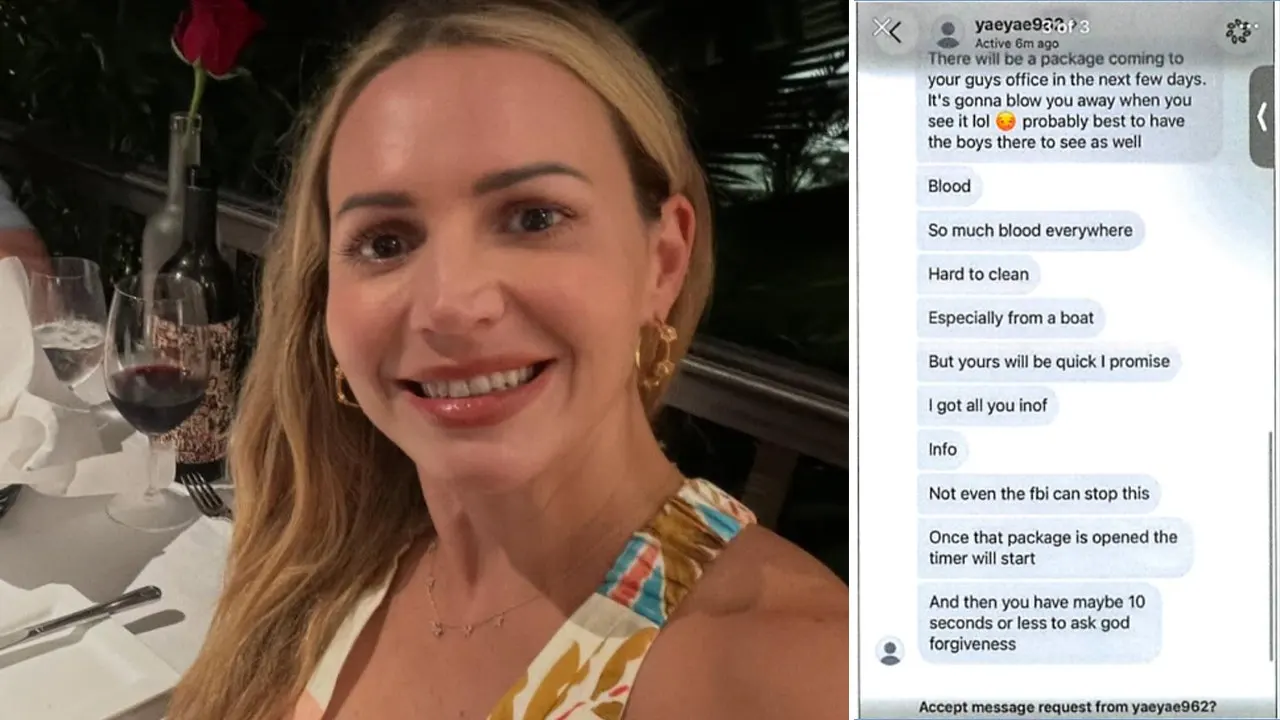
The most extreme and terrifying manifestation of this digital hostility came from thousands of miles away in Sacramento, California, where twenty-seven-year-old Joseph Alfredo Vasquez Dumarce decided to interject himself into the tragedy. Armed with nothing but a keyboard and a complete detachment from the human reality of the situation, Dumarce launched a campaign of graphic and highly violent threats against Judge Cole. Using Facebook Messenger, Dumarce sent a series of chilling messages to the judge’s account, beginning on July 11 with a cryptic warning about a package arriving at her office that would “blow you away,” punctuated by a callous “lol” that underscored the sender’s malice. The messages quickly escalated into visceral, stomach-turning descriptions of violence, with Dumarce writing of “blood everywhere” that would be “hard to clean,” and offering a horrifyingly casual promise that her death would be quick. In an attempt to maximize the psychological torment, he boasted that not even the Federal Bureau of Investigation could protect her, warning that once the package was opened, a ten-second countdown would begin, leaving her with barely enough time to pray for God’s forgiveness. This psychological warfare was not confined to written text; Dumarce also placed late-night phone calls to the Jackson County Chancery Court, shattering the peace of the late-night hours and leaving Judge Cole and her staff in a state of acute terror, wondering if a distant internet stranger was planning an imminent physical attack.
The illusion of online anonymity often emboldens individuals to commit heinous acts, but the reach of federal law enforcement quickly dismantled Dumarce’s sense of invincibility. Recognizing the severe and immediate danger posed by these explicit bomb and death threats, federal authorities initiated a swift and thorough investigation. Despite Dumarce’s arrogant assertions that he was beyond the reach of the law, investigators were easily able to trace the hostile Facebook account back to his personal email address, linking the digital terror directly to his physical identity in California. On a Thursday following the threats, federal agents arrested Dumarce in Sacramento, charging him with the interstate transmission of a threatening communication. This federal offense carries a heavy penalty, reflecting the gravity of using communication networks to terrorize public servants and private citizens alike; if convicted, Dumarce faces up to five years in a federal penitentiary and a substantial fine of up to $250,000. The arrest provided a measure of physical security to Judge Cole and her family, serving as a sobering reminder that the federal justice system will actively pursue and prosecute those who weaponize the internet to inflict fear and chaos on families already reeling from tragedy.
While the legal system moved to address the immediate threat posed by Dumarce, the central, heartbreaking mystery of how Nolan Wells lost his life remained unresolved, leaving his family in a painful state of limbo. Seeking clarity amidst the confusion, the Wells family retained the services of prominent civil rights attorney Ben Crump to help them navigate the investigation and seek the truth. During a press conference held on July 22, Crump revealed that an independent autopsy had been conducted by renowned forensic pathologist Dr. Roger Mitchell. The preliminary findings of this independent examination revealed an area of “red discoloration” on Nolan’s head, a physical detail that raised questions but did not provide immediate answers. Dr. Mitchell maintained a strict professional boundary, stating that he could not reach a definitive conclusion regarding the cause or manner of Nolan’s death pending further comprehensive investigation. With the official state autopsy results still unreleased to the public, the Wells family has been forced to endure the agonizing process of waiting, suspended between the raw grief of their loss and the quiet, methodical search for medical and legal facts, refusing to let the noise of outside controversies distract them from honoring their son’s memory.
Ultimately, this painful saga serves as a poignant reminder of the fragile human lives that exist behind every headline, autopsy report, and court filing. The tragedy of Nolan Wells is not a public spectacle to be exploited by online vigilantes, nor should the grief of his friends and family be weaponized by strangers seeking a target for their misplaced rage. Behind the legal jargon of federal indictments and the clinical language of medical examiners are real people—a devastated family mourning a promising young athlete who had his whole life ahead of him, and a mother and public servant who had to endure the terror of violent threats while trying to support her son through a traumatic loss. True justice for Nolan lies in a quiet, rigorous, and unbiased investigation into his passing, free from the toxic interference of digital harassment and sensationalism. As the legal proceedings against Joseph Dumarce move forward in a federal court, the hope remains that the communities of the Mississippi Gulf Coast can find a path toward healing, grounded in empathy, mutual support, and a shared respect for the dignity of those who have been touched by this profound tragedy.