




The Battle for Downing Street: Can Andy Burnham’s Populist Appeal Rescue a Fractured Labour Party?
A Tale of Two Cities: The Starmer-Burnham Divide and the Soul of British Labor
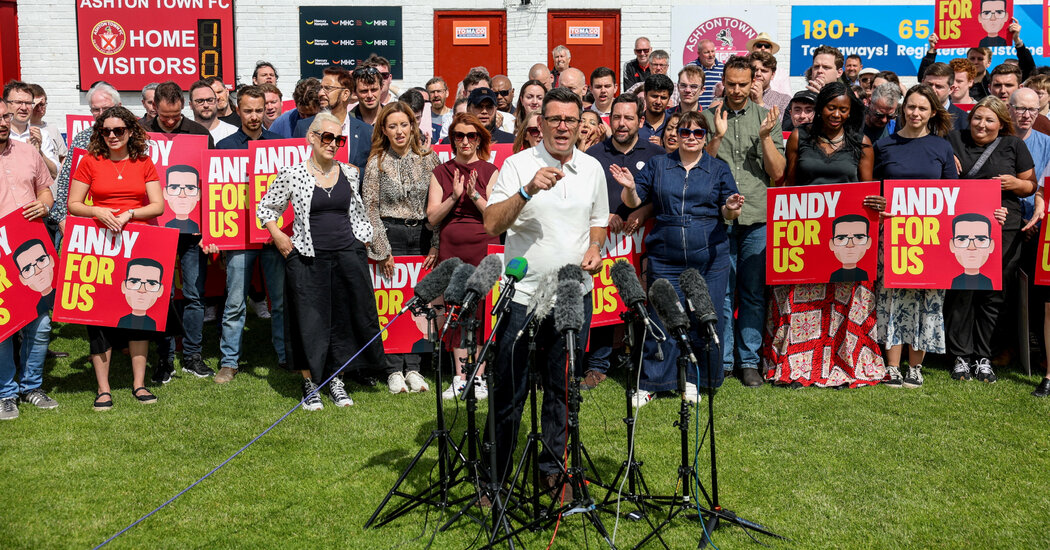
In the cold, clinical light of a Friday morning in London, Prime Minister Keir Starmer stood before the press with the rigid, defensive posture of the high-ranking crown prosecutor he once was, striving to project an aura of unshakeable authority. Speaking in deliberate, measured tones, Starmer was quick to remind the public that no formal challenge to his leadership had yet been registered under party rules, pledging with clinical composure to fight to retain his tenancy at 10 Downing Street. Yet just two hundred miles to the north, in the historic industrial heartland of Greater Manchester, a radically different political drama was unfolding. There, his formidable Labour rival, Andy Burnham, addressed a jubilant, roaring crowd of supporters who had just propelled him to a spectacular victory in a high-stakes special election. Declaring a vibrant new era of national optimism, Burnham—whose triumphant return to Westminster finally makes him eligible to challenge the prime minister—issued a stark, unequivocal warning to his colleagues in London: the Labour Party is currently facing its absolute “last chance to change,” and he openly intends to lead that transformation. This dramatic, geographical contrast in both style and substance illustrates why a growing, vocal coalition within the party now believes Starmer, who has plummeted to become one of the most unpopular prime ministers in modern British polling history, must be replaced if the government is to survive the next general election. As the public’s frustration with administrative stagnation deepens, Westminster is rapidly waking up to the reality that Starmer is facing an existential crisis of legitimacy, with internal pressure mounting on the prime minister to negotiate a dignified timetable for his departure rather than dragging the party into a ruinous, civil war for the soul of British social democracy.
Rise of the ‘King of the North’: Andy Burnham’s Bold Path Back to Westminster
ELECTION RESULT: MAKERFIELD SPECIAL ELECTION
┌────────────────────────────────────────────────────────┐
│ Andy Burnham (Labour) ███████████ 55.0% │
│ Robert Kenyon (Reform UK) ████░░░░░░░ 22.0% │
│ Others (Restore Britain, etc.) ████░░░░░░░ 23.0% │
└────────────────────────────────────────────────────────┘
For Burnham, a seasoned political operator who has twice run for the Labour leadership only to be thwarted by the party’s internal factions, this moment represents the culmination of a long, calculated journey back from the political wilderness. Since stepping away from frontline Westminster politics to serve as the highly visible Mayor of Greater Manchester—a role in which he earned the affectionate moniker of the “King of the North” for his fierce defense of regional interests—Burnham has made no secret of his burning ambition to lead both his party and the nation. His striking victory in the Makerfield special election, where he secured a commanding majority of approximately 55 percent, serves as a powerful validation of his political strategy and a direct challenge to the caution of Starmer’s inner circle. By recapturing a crucial constituency that had become dangerously vulnerable to right-wing populism, Burnham has demonstrated that he possesses the rare, preternatural charisma and retail political skills required to win back the disillusioned, working-class voters who have increasingly abandoned mainstream parties. While Starmer’s legalistic, heavily scripted style has left vast swaths of the electorate feeling alienated and uninspired, Burnham’s authentic, empathetic communication style offers a compelling alternative, proving that he can effectively engage with the very socioeconomic anxieties that have fueled the dramatic restructuring of the British electoral landscape.
Shattering the Populist Illusion: How Reform UK is Reshaping the Electoral Landscape
The urgent necessity of finding a leader capable of neutralizing the populist right has become the central, overriding obsession of modern British politics, particularly as Reform UK continues to terrorize the Westminster establishment under the guidance of Nigel Farage. Farage, a key architect of the Brexit movement and an influential ally of former U.S. President Donald Trump, has spent the last two years systematically dismantling the traditional voting coalitions of both the Conservatives and Labour, tapping into deep-seated public anger over immigration, economic decline, and centralized metropolitan power. Until recently, Reform’s formidable ascent in national opinion polls—which peaked at nearly 30 percent last year before settling into a formidable 25 percent—had left center-left strategists paralyzed with fear that the working-class “Red Wall” was permanently lost. However, Burnham’s overwhelming victory in Makerfield, a seat that Reform UK’s candidate Robert Kenyon had boldly predicted would become a populist stronghold, has shattered this narrative of right-wing invincibility. Despite the presence of Restore Britain, a rival far-right faction that analysts feared would split the progressive vote and hand an easy victory to the right, Burnham’s personal popularity allowed him to completely surpass the combined vote share of both populist parties. This stunning victory suggests that when presented with a charismatic, plain-spoken champion who genuinely understands regional grievances, voters will readily reject Farage’s polarizing rhetoric in favor of constructive, compassionate governance.
The Labyrinth of Party Rules: Triggering a Coup in Modern Westminster
HOW A LABOUR LEADERSHIP CHALLENGE WORKS┌─────────────────────────────────────────────────┐
│ Challenger must be a sitting Member of MP │
│ (Burnham cleared this hurdle via Makerfield) │
└────────────────────────┬────────────────────────┘
│
▼
┌─────────────────────────────────────────────────┐
│ Secure formal backing of 20% of Labour MPs │
│ (Requires ~80 nominations from colleagues) │
└────────────────────────┬────────────────────────┘
│
┌───────────────┴───────────────┐
▼ ▼
[ Contested Election ] [ Unopposed Transition ]
• Starmer fights on. • Starmer stands down.
• Fee-paying members vote. • Burnham crowned leader.
• Risk of party division. • Orderly handover.
Despite the unmistakable shifting of the political winds, the precise constitutional mechanisms required to execute a leadership transition within the Labour Party remain exceptionally complex and fraught with institutional danger. To initiate a formal challenge against a sitting prime minister, an aspiring leader must first be a sitting Member of Parliament—a vital hurdle that Burnham has now successfully cleared—and must subsequently secure the written backing of at least 20 percent of their fellow Labour lawmakers, which currently equates to approximately 80 MPs. Under the formal rules of the Labour constitution, the party’s vast, fee-paying membership would hold the final, binding vote in a prolonged national campaign, a scenario that party elders desperately wish to avoid due to its potential to expose deep ideological rifts. Political analysts like Steven Fielding, an emeritus professor of political history at the University of Nottingham, suggest that Burnham is highly sensitive to the optics of this process, noting that he does not want to be perceived as a ruthless assassin executing a bloody political coup against a sitting prime minister. Instead, the preferred strategy among Burnham’s allies is to orchestrate a “managed transition” wherein Starmer is quietly persuaded to stand aside—perhaps in the run-up to the party’s high-profile annual conference in September—in exchange for a unified shadow cabinet where potential rivals, such as former Health Secretary Wes Streeting, are offered senior, prestigious portfolios in exchange for refusing to force a divisive public vote.
The Lessons of History: From Boris Johnson’s Fall to Starmer’s Hartlepool Crisis
WESTMINSTER DEPARTURES: A COMPARATIVE STUDY┌─────────────────────────────────┬─────────────────────────────────┐
│ BORIS JOHNSON (2022) │ KEIR STARMER (POTENTIAL) │
├─────────────────────────────────┼─────────────────────────────────┤
│ • Faced relentless Cabinet pressure│ • Vulnerable to shifting polls │
│ • Severely damaged by scandals │ • History of self-reflection │
│ • Resigned after wave of │ • Contemplated resigning in 2021│
│ ministerial departures │ • Could opt for a managed exit │
└─────────────────────────────────┴─────────────────────────────────┘
The success of this delicate political maneuver will depend heavily on Keir Starmer’s personal psychology and his historical preoccupation with institutional duty, honor, and his own political legacy. While Starmer has publicly projected a posture of defiance, history reveals that he is uniquely susceptible to the argument that a leader must put the collective welfare of the party ahead of personal ambition. In 2021, following a devastating special election defeat in the working-class constituency of Hartlepool, Starmer privately came incredibly close to resigning, later admitting to broadcasters that he was prepared to step down because he firmly believed he should never be bigger than the movement he led. Should Starmer choose to ignore this precedent and dig in his heels, history offers other, more brutal methods of forcing an unpopular leader from office, most notably the coordinated cabinet rebellion of 2022 that brought an end to the premiership of Boris Johnson through a rapid, unstoppable wave of ministerial resignations. If a critical mass of Starmer’s own cabinet ministers conclude that keeping him in office guarantees defeat at the next general election, they could easily coordinate a series of high-profile resignations that would render his administration entirely untenable. By controlling a commanding block of parliamentary support, Burnham is now in a position to present Starmer with a stark, uncompromising choice regarding his legacy: cooperate with an orderly, dignified handover of power, or face a public and humiliating rebellion that would permanently tarnish his political record.
The Inevitability of Change: A Critical Juncture for the Future of Britain
As Westminster begins to process the profound implications of the Makerfield bypass, it is increasingly clear that British politics has reached a decisive, irreversible turning point. The scale and nature of Andy Burnham’s victory have fundamentally altered the national conversation, exposing the strategic limits of both Keir Starmer’s technocratic caution and Nigel Farage’s divisive brand of right-wing populism. Even Farage was forced to concede his deep disappointment with the result, candidly admitting that his party was “hoist with our own petard” after running a campaign centered on removing Starmer, only to watch local voters turn out in droves to support Burnham as the most effective tool to accomplish that exact goal. This tactical voting pattern suggests that a weary British electorate, exhausted by years of public sector decline, crumbling infrastructure, and economic stagnation, is desperately searching for a dynamic leader who can move beyond the sterile dogmas of the past. For Burnham, who risked his entire political future on a high-stakes return to parliament, the gamble has paid off in spectacular fashion, establishing an aura of inevitability around his candidacy that may prove impossible for his rivals to arrest. With the Labour Party’s electoral prospects hanging in the balance, the coming days will test the mettle of its leadership, deciding whether the party will choose to slide quietly toward a historic electoral defeat under Starmer, or courageously embrace the sweeping, urgent change that Burnham has promised to deliver.