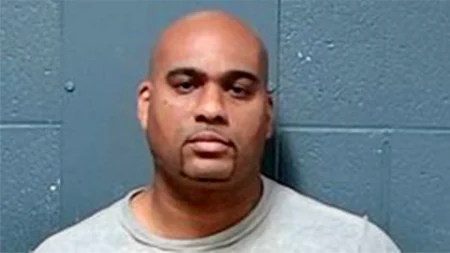






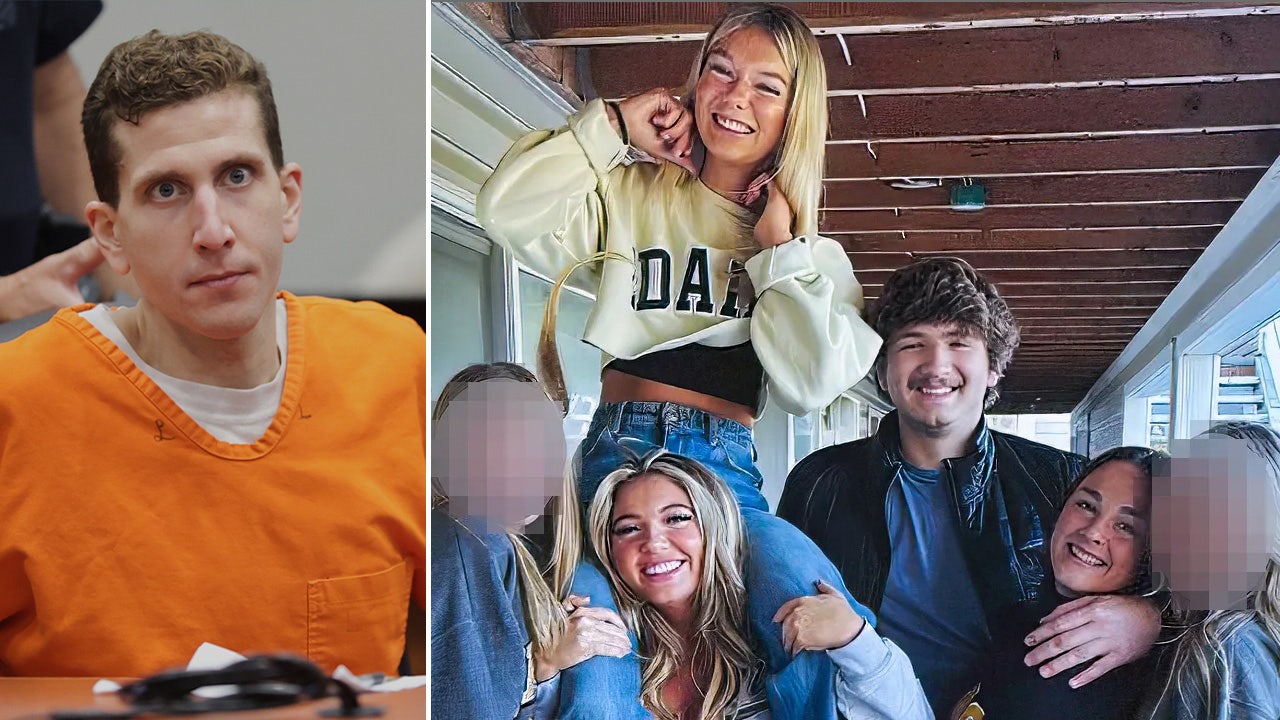
The devastating loss of four young lives in Moscow, Idaho, remains one of the most chilling chapters in recent American history, leaving an entire nation grappling with the terrifying randomness of violence. At the center of this tragedy lies a profound mystery that the perpetrator, Bryan Kohberger, has taken with him to his prison cell: the question of his motive. For Skye Borgman, the director of the insightful Netflix documentary series “The Idaho Murders: College Nightmare,” the key to understanding this horrific event lies not in some elaborate criminal grand design, but in the specific nature of the home Kohberger chose to target. The off-campus rental house on King Road was a vibrant, bustling hub of college life, a sanctuary of hope and youthful energy where five young women lived, studied, and planned their futures. On the tragic night of the murders, Xana Kernodle’s boyfriend, Ethan Chapin, was staying over, but the residence was fundamentally known as a home filled with young women. Evidence reveals that Kohberger stalked and monitored this specific house for days, weeks, and months leading up to the attack, suggests Borgman, indicating that his focus on this particular group of women was highly deliberate. This obsessive surveillance points to a deeply disturbing psychological undercurrent—a profound, simmering resentment, if not an outright hatred, toward women. While criminal investigators and FBI profilers noted that there was no direct digital evidence linking Kohberger to the formal online “incel” movement, his real-world actions spoke louder than any internet forum posts. He seemed to struggle immensely with his relationships with women, harboring a dark, toxic frustration that ultimately manifested in unspeakable violence. By refusing to explain his actions, Kohberger continues to deny the victims’ families the closure of a clear answer, leaving the world to wonder what dark impulse drove him to destroy so much beauty in a single, silent night.
Long before he became a household name synonymous with horror, Kohberger exhibited a series of behavioral red flags that alienated those around him and left a trail of deep discomfort. Former classmates, such as Lilly Karaban, remembered him as a highly rigid individual who operated in his own isolated world, possessed by a stubborn, arrogant “his way or the highway” attitude. This abrasive personality was particularly pronounced in his interactions with women, whom he frequently spoke down to, subjected to aggressive “mansplaining,” and confronted with an unsettling intensity. In the academic halls of Washington State University, where he was pursuing a graduate degree in criminology, his behavior escalated from merely awkward to genuinely alarming. Fellow students and university staff described him as “creepy,” noting that he seemed to relish making women feel uncomfortable and off-balance during everyday social interactions. The former Washington State University Police Chief, Gary Jenkins, recalled a deeply troubling account from a female student who felt physically cornered and intimidated by Kohberger during an aggressive encounter. She also reported a disturbing suspicion that he was following her to her vehicle after hours, a pattern of behavior that eventually contributed to his termination from his position as a teaching assistant. While university officials and campus police noted that none of these individual incidents quite crossed the legal threshold of a prosecutable crime at the time, they collectively painted a picture of a man who was rapidly spiraling. He was someone who viewed women not as equals, but as targets for his intellectual arrogance and physical intimidation, laying a psychological foundation for the horrific events that would soon unfold in the neighboring town of Moscow.
The disturbing pattern of Kohberger’s behavior was not confined to his time in the Pacific Northwest; a trail of alarming encounters stretched back to his home state of Pennsylvania, revealing a long-standing history of predatory tendencies. Legendary author James Patterson, who conducted extensive research for his book on the case, uncovered multiple chilling accounts of Kohberger’s interactions with women at local businesses. At the Seven Sirens Brewing Company in Bethlehem, Pennsylvania, Kohberger was notorious for pushing his way into unwanted, aggressive conversations with female bartenders and patrons, even going so far as to demand their home addresses. Staff members grew so uncomfortable with his behavior that they complained to the brewery’s owner about the “creepy guy with the bulging eyes” who seemed entirely detached from normal social cues. Patterson noted that Kohberger possessed a bizarrely distorted self-image, completely out of touch with how others perceived him; he was a man who struggled to make normal eye contact, yet when he did look at someone, his gaze was so intense and predatory that it left people wishing he had looked away. Even more terrifying was an account from an exotic dancer at a club roughly two hours from his family home, who remembered a man she believed to be Kohberger visiting the venue in 2019. During a performance, he coldly remarked that he wanted to kill people, and when she jokingly asked who, he replied with a flat, unsettling tone, “Whoever I want.” At the time, she dismissed it as a shocking bid for attention and had bouncers watch him, but his face on the news years later brought the chilling memory back with horrifying clarity, suggesting that his violent fantasies had been quietly brewing for years.
In a shocking twist that reopened raw wounds for the victims’ families, the 31-year-old Kohberger recently attempted to undo his own legal fate by launching a desperate bid to withdraw his guilty plea. In 2025, Kohberger had pleaded guilty to four consecutive life sentences without the possibility of parole, a deal carefully struck to avoid the prospect of the death penalty. During that solemn courtroom proceeding, he had looked the judge in the eye and affirmed that his decision was made “freely and voluntarily,” confirming that he fully understood the consequences and was not under any duress. However, just two days before the high-profile Netflix documentary was set to premiere in July, Kohberger filed a dramatic request to stand trial instead, claiming that his legal team had pressured and coerced him into the plea deal. He argued that his attorneys had used scare tactics regarding death row and made unkept promises about his future prison conditions to force his hand, asserting that his plea was not truly voluntary. Film director Skye Borgman and legal analysts view this sudden reversal not as a genuine claim of innocence, but as a calculated, narcissistic maneuver designed to reclaim control over his narrative. By dragging the legal process back into the spotlight, Kohberger seeks to ensure that the public’s attention remains fixed squarely on him, extending his psychological grip over the families and the media. His silence regarding the actual events of that tragic night, coupled with this erratic legal maneuvering, showcases a man who refuses to relinquish control, preferring to keep the world guessing and the families suspended in a state of perpetual legal limbo.
The psychological fallout of Kohberger’s crimes extended far beyond the walls of the courtroom, inflicting deep and lasting trauma upon the peaceful community of Moscow, Idaho. In the agonizing weeks between the murders and Kohberger’s arrest, a profound, suffocating fear paralyzed the town, turning a safe haven of academic pursuit into a landscape of dread. Students refused to walk alone, lock installations surged, and many fled the university campus early, unable to sleep with the terrifying knowledge that an unidentified killer was still on the loose. This intense atmosphere of terror left deep psychological scars, not only on the residents but also on the law enforcement officers who were tasked with investigating the carnage. Borgman revealed that the sheer horror of the crime scene and the immense pressure of the high-stakes investigation were so overwhelming that several key investigators ultimately chose to resign from their police forces entirely, unable to carry the heavy emotional burden of what they had witnessed. The trauma of confronting such pure, inexplicable malice broke the spirits of seasoned professionals, serving as a stark reminder of the immense human cost that violent crime inflicts on those who stand on the front lines of justice. Yet, in the face of this overwhelming darkness, the community of Moscow demonstrated an extraordinary capacity for resilience and solidarity. The shared experience of fear and grief ultimately brought people together, fostering a deep, protective network of mutual support that helped heal the fractured town and proved that unity could triumph over the isolating terror Kohberger sought to instill.
Ultimately, the true legacy of this tragedy does not belong to the killer or his dark mysteries, but to the four vibrant young souls who were taken too soon: Kaylee Goncalves, Madison Mogen, Xana Kernodle, and Ethan Chapin. After years of searching for answers that may never come, their families have made the brave and deliberate choice to stop waiting for a confession or an explanation from the man who destroyed their lives. They recognize that trying to understand the mind of a predator is a futile endeavor that only prolongs their suffering, and they refuse to let their lives be permanently defined by a senseless act of hatred. Instead, these families are actively focusing on the future, channeling their immense grief into beautiful, lasting tributes that honor the legacies of their children. From establishing scholarship funds and safety foundations to advocating for victims’ rights, they are working tirelessly to ensure that other families facing similar unimaginable tragedies have the support and resources they need. As Borgman observed, the families are making the conscious choice to carry love forward, choosing to remember the laughter, the dreams, and the boundless potential of Ethan, Maddie, Kaylee, and Xana rather than the violence that ended their lives. By refusing to carry the corrosive weight of hatred, they have reclaimed their power and ensured that the final victory belongs to love, community, and the enduring memory of four remarkable young people who will never be forgotten.