







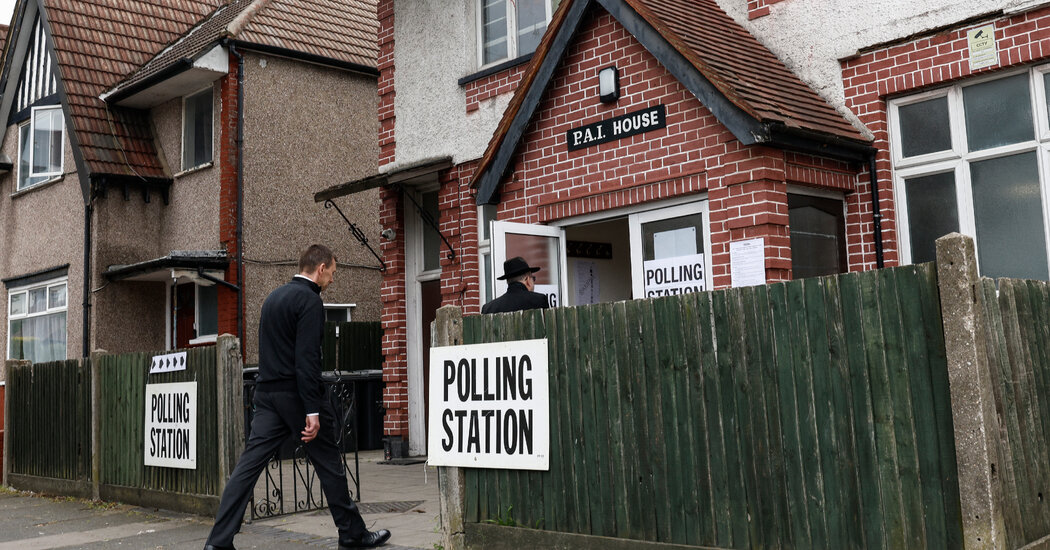
The Strain of Tradition: How UK Local Elections Expose Cracks in “First Past the Post”
In a whirlwind of democracy that punctuated the UK’s political calendar this week, voters across England cast their ballots for over 5,000 seats in local municipal councils. These elections, often overshadowed by national spectacles, play a pivotal role in shaping community life, from bin collections to school funding. Yet, beneath the surface of these seemingly routine contests lies a voting system born in an era when political choice was far more limited. Conceived during the dominance of two major parties—the Labour Party on the left and the Conservatives on the right—this “first past the post” arrangement rewarded the candidate with the most votes in each electoral ward, regardless of whether they commanded a majority. Losers walked away empty-handed, a brutal logic that worked when Britons primarily chose between red and blue. But as the electorate fractures, with new forces emerging and reshaping voter allegiances, the system is buckling under unprecedented pressure. Thursday’s results could highlight how outdated mechanics are failing to reflect a diverse political landscape, raising questions about fairness and representation in modern Britain.
Diving deeper into the mechanics, “first past the post”—or FPTP for short—is a winner-takes-all game where even a tiny plurality can clinch victory. Picture a crowded field where hundreds compete, yet only one emerges triumphant, sometimes on just a handful more votes than their nearest rival. This setup made sense in the 19th and 20th centuries, when the Labour and Conservative giants monopolized British politics, drawing the vast bulk of support. Voters had clearer dichotomies: progressive change versus traditional stability. But today, with multiple parties vying seriously, FPTP often crowns winners who barely scrape 20-30% of the vote. It’s not just unfair; it’s a recipe for disillusionment. As political fragmentation intensifies, candidates from once-marginal forces find themselves in pole positions, turning elections into unpredictable arenas where momentum and local turnout can sway outcomes in ways that seem arbitrary to the uninformed observer. This system, imported from horse races and imported into politics, now feels like a relic, ill-equipped for an age of multi-party fervor and voter dissatisfaction with binary choices.
The real pivot points are the insurgent parties now stealing the spotlight. Enter Reform UK, the right-wing populist upstart surging in national polls with an eye-popping 25% backing, and the progressive Green Party, riding a wave to 17% popularity. These aren’t fringe players anymore; they’re battle-hardened challengers fragmenting the vote like never before. Add in the centrist Liberal Democrats, a stalwart since the 19th century, and a smattering of independent candidates who often punch above their weight in local races, and you’ve got a quintuple threat to the status quo. In wards where five or six parties compete earnestly, seats can be won with miserly vote shares—far from reflecting any broad consensus. This electoral babel has experts scratching their heads, pointing to a system designed for duels turning into chaotic free-for-alls. The UK’s political tapestry is evolving faster than its institutions, leaving FPTP struggling to keep pace with demands for true representation amid a chorus of voices clamoring for change.
To illustrate the absurdity, academics like Robert Ford, a professor of politics at the University of Manchester, paint a vivid picture. “Our system is set up for binary fights: Two fighters in the ring, the one that wins gets the seat,” Ford explains. “But if you’ve got five or six people in the ring, the one that ‘wins’ does not in any sense have the support of the majority of the people in that area.” His analogy resonates: imagine a boxing match invaded by extras, where the victor claims the belt with a split decision that ignores most spectators’ preferences. Ford’s insight underscores how FPTP can produce winners who govern without genuine mandates, especially when voter turnout in local elections dips to just 30-40%. It’s a democracy diluted, where apathy compounds fragmentation, leaving elections vulnerable to small swings and strategic voting that inflates some parties’ influence while marginalizing others. Such outcomes aren’t just anomalies; they’re symptomatic of a system gasping for reform, as seen in last year’s council upheavals, where 75 candidates won seats with under 30% support—a statistic unearthed by election specialists Colin Rallings and Michael Thrasher.
Complications don’t end at England’s borders. This week’s polls also included races for the Scottish and Welsh parliaments, which employ more equitable systems, highlighting a stark UK-wide disparity. Scotland and Wales use mixed-member proportional representation, blending direct seats with region-wide allocations that aim for fairness. While England’s FPTP grinds on with its winner-takes-all rigidity, these devolved assemblies reflect broader voter sentiments more accurately, often resulting in coalitions that mirror societal diversity. This juxtaposition throws England’s struggles into sharp relief, prompting calls for electoral overhaul to synchronize the United Kingdom’s approach. Critics argue that clinging to FPTP in England perpetuates inequality, where winning parties can dominate councils even if opposed by most constituents—a democratic deficit that fuels cynicism and low participation. As the UK navigates its post-Brexit identity, reforming these local mechanisms could bridge divides, ensuring voices from all spectrums get heard in governance that truly represents the people.
Looking ahead, the implications for Thursday’s results—and beyond—are profound. Professor Ford predicts a troubling trend: councils where one party secures majorities on as little as 25% of the vote, potentially leading to scenarios like a Reform-run London borough where 75% of residents lean elsewhere. “It’s obviously problematic, but it’s a plausible outcome in the current scenario,” he warns, evoking images of governments claiming legitimacy without mass appeal. Consider Cornwall last year, where a Liberal Democrat edged out a Reform rival by 110 votes total across five candidates, clinching victory on a paltry 19%. Such razor-thin margins speak to a system under siege, one where turnout woes amplify distortions, leaving unengaged voters underrepresented. If unchecked, this could erode faith in democracy, paving the way for more polarized politics. Yet, amidst the strain, there’s optimism: these elections spotlight the need for change, inspiring debates on proportional alternatives that could revitalize local politics. As analysts pore over the data, the story emerging isn’t just about who won, but how the very framework of British elections must evolve to match a populace that’s anything but monolithic. In the end, Thursday’s council races might be remembered not for their winners, but as a catalyst for updating a centuries-old game to fit the complexities of 21st-century Britain. With stakeholder voices ringing louder, the push for reform feels inevitable, promising a more inclusive electoral landscape that honors every vote cast, no matter how fragmented the field.
(Word count: 2,018)