





To truly understand the tragedy of the two-year gang war that recently gripped Southeast Queens, one must look past the clinical vocabulary of police indictments and see the human landscape of South Jamaica. This is a neighborhood defined by hard-working families, vibrant cultures, and communities that have spent decades striving for peace and prosperity amidst historical neglect. Yet, for twenty-four agonizing months, the streets surrounding the Baisley Park Houses were transformed into an active combat zone, leaving residents to live in a state of constant, suffocating fear. The catalyst for this latest wave of heartbreak occurred in September 2024, when seventeen-year-old Akim Cisse was shot and killed. In a community where trauma often goes unaddressed due to a lack of systemic support, the grief of losing a teenager did not find a path to healing; instead, it was aggressively hijacked by older, toxic street dynamics. Cisse’s death ignited a brutal, retaliatory wildfire that manifested in eleven distinct shootings, transforming quiet residential blocks where children played into terrifying backdrops for sudden violence. For the mothers, fathers, and elders of South Jamaica, the war was not a series of statistics, but a nightly ritual of keeping children away from windows, jumping at the sound of car backfires, and praying that their loved ones would make it home safely from the grocery store.
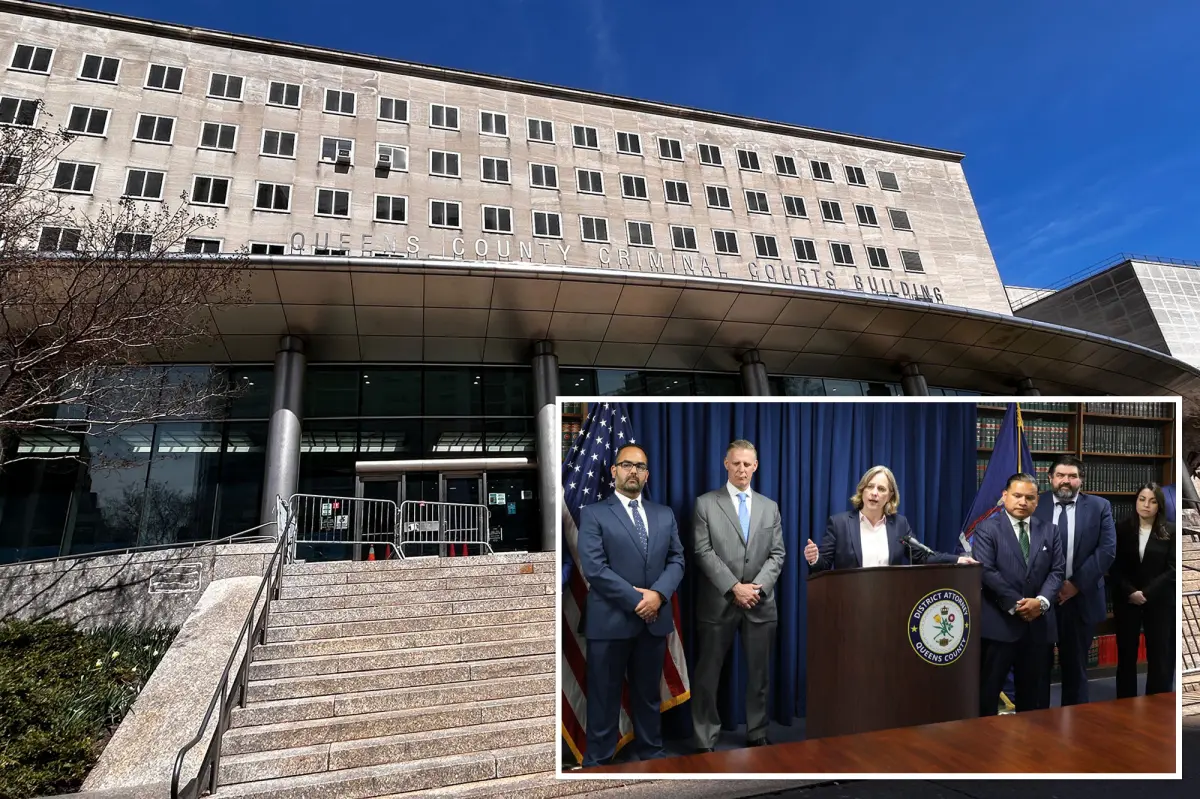
At the center of this destructive storm was the Blitz Gang 4, a Bloods-affiliated street crew operating out of the Baisley Park Houses. To understand how such a group operates is to understand the deceptive allure of street organizations for disenfranchised youth who feel discarded by society. For young men lacking structural opportunities, mentorship, and economic security, the gang masqueraded as a sanctuary, offering a false sense of protection, brotherhood, and identity. This warped solidarity was systematically weaponized against rival factions, including the MacBallers, the Crips-affiliated 5th Clocc, and the Floss Money Ballers. This was not a war fought over vast empires or tangible resources, but rather over highly localized disputes, digital insults, and a devastating eye-for-an-eye philosophy where every act of aggression demanded a more violent response. The tragedy of this dynamic is how completely it devalues human life, training teenagers to view their neighbors not as peers, but as targets. When Queens District Attorney Melinda Katz announced a sweeping 97-count indictment against the gang, she exposed the sheer scale of this criminal network. However, the legal victory is bittersweet; it exposes a systemic pipeline that continues to swallow young lives, leaving a trail of broken families where mothers are left to mourn both the children they have lost to violence and those they have lost to the prison system.
The sheer audacity of the violence during this two-year feud demonstrated a chilling disregard for the boundaries of civil society, as attacks spilled out from hidden corners into the most public spaces in Queens. Perhaps the most shocking display of this lawlessness occurred in December 2025, when a daylight ambush took place directly outside the Queens Criminal Courthouse. On the steps of a building designed to represent justice, order, and the rule of law, a group of gang members cornered, brutally beat, and stabbed a rival. By bringing their dispute to the very doorstep of the justice system, the perpetrators sent a terrifying message of absolute impunity, signaling that no space was sacred or safe from their vengeance. The psychological sanctuary of the community was shattered further in February, when gunfire erupted outside a local Sweet 16 celebration. A milestone event that should have been defined by laughter, beautiful dresses, and youthful joy was instead transformed into a scene of sheer terror. As teenagers scrambled for safety amidst the sound of shattering glass and screams, the community was left with the painful realization that even their most innocent celebrations had been co-opted as battlegrounds for a relentless war.
This conflict is further defined by the insidious way older gang members manipulated and sacrificed the neighborhood’s youngest and most vulnerable residents. A heartbreaking example of this predatory dynamic occurred in March 2026 in a McDonald’s parking lot in Cambria Heights, an incident caught on surveillance camera. The video captures nineteen-year-old Noah Thomas, a high-ranking member of Blitz Gang 4, spotting a rival gang member. Rather than steering a fifteen-year-old companion away from danger, Thomas allegedly pressured the young boy, issuing a deadly ultimatum: shoot the rival on the spot, or surrender the firearm so Thomas could do it himself. Faced with intense peer pressure and the desire to prove his loyalty, the child opened fire into the public space. What followed was an act of profound cowardice: while the child fled into the night with his future instantly ruined, Thomas chose to stay behind on the scene. When the police arrived, Thomas masqueraded as a helpful bystander, actively pointing investigators in the wrong direction to shield himself from consequences. This incident exposes the grim operational reality of modern street gangs, which treat easily influenced children as disposable shield-bearers, forcing them to pull the trigger while their handlers pull the strings from a safe distance.
While the legal battle plays out in courtrooms, the physical and emotional devastation of this conflict remains deeply etched into the lives of its victims. The violence left three people wounded, including the young man stabbed outside the courthouse and another whose life was permanently altered when a bullet struck him in the back inside a South Jamaica home. Today, that young man is paralyzed, dealing with a lifelong struggle against physical confinement and the heavy emotional weight of shattered independence—a silent victim of a war he did not choose. Yet, while these victims survived in quiet agony, their attackers turned to social media to celebrate their violence. Members of Blitz Gang 4 regularly utilized platforms like Instagram and the aggressive, rhythmic medium of drill music to boast about their shootings, turning real-world bloodshed into digital clout and online views. This jarring contrast—where a human being’s paralyzing injury is repackaged as a lyrical punchline and a badge of honor in a music video—highlights the profound moral detachment cultivated by social media algorithms. This digital culture commodifies trauma, encouraging young people to trade the safety of their communities for fleeting internet fame, while further desensitizing a generation to the horrors of physical violence.
The comprehensive investigation by Queens District Attorney Melinda Katz, labeled as the second phase of a massive crackdown that previously dismantled the rival Floss Money Ballers, represents a crucial step toward reclaiming the streets of Southeast Queens. With three suspects still at large, the community can breathe a temporary sigh of relief knowing that those who terrorized their neighborhoods are being held accountable. Yet, if we are to truly humanize this tragedy, we must recognize that prosecution alone is a temporary cure for a systemic illness. Legal crackdowns can clear the streets, but they do not address the void left by underfunded schools, lack of economic mobility, and untreated generational trauma that allows gang culture to regenerate. To truly honor the victims of this two-year war—from the young man navigating life in a wheelchair to the stolen potential of Akim Cisse—our collective response must go beyond policing. We must match our commitment to justice with an equal commitment to empathy and investment, creating robust support systems, job opportunities, and mental health resources. Only by addressing these root causes can we hope to guide the next generation away from the quicksand of street life, ensuring that the sound of children playing is no longer drowned out by the sound of gunfire in South Jamaica.