




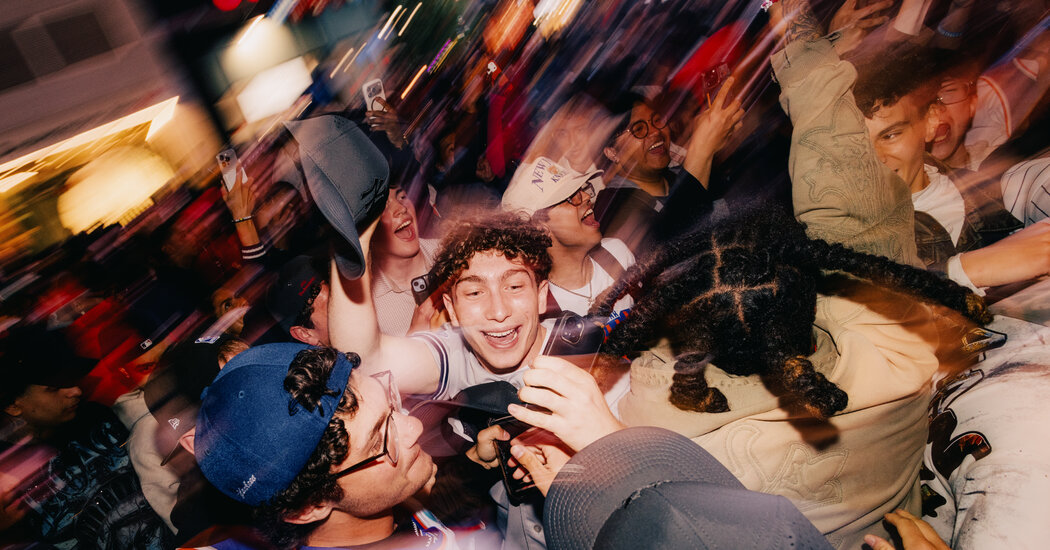
Inside the glowing, circular crown of Madison Square Garden, the basketball mecca of the world, a long-dormant magic has finally returned to the hardwood. The New York Knicks are currently riding an extraordinary wave of success, having secured ten consecutive postseason victories, a miraculous feat that has positioned them on the precipice of returning to the N.B.A. Finals for the first time in over a quarter of a century. For a fan base that has endured decades of heartbreak, draft-lottery disappointment, and management dysfunction, the current run feels like nothing short of a religious awakening, turning the arena’s interior into a deafening cauldron of blue-and-orange ecstasy. Yet, as the final buzzer sounds and the joy spills over the threshold of the arena, the atmosphere on the concrete streets of Midtown Manhattan has curdled into something far more volatile. Following a dramatic home victory on Thursday evening, the celebration outside the Garden devolved into chaos as an estimated crowd of six thousand people swarmed Seventh Avenue, resulting in six arrests. Fans scaled traffic lights, vaulted over police barricades, and shattered glass bottles on the pavement, transforming a traditional demonstration of civic pride into a public safety hazard. Over-the-top postgame celebrations are as old as professional sports themselves, but the raucous, occasionally violent scenes outside the arena have grown progressively worse, forcing city officials to take drastic measures. In a decisive move that has heartbroken the team’s most loyal supporters, New York City administrators have officially canceled all future outdoor watch parties and postgame gatherings surrounding the Garden. This sudden shutdown has left genuine fans to mourn the loss of a beautiful, organic tradition that they believe has been thoroughly ruined by the modern sports world’s greatest antagonist: fake fans and clout-chasing influencers who have weaponized the raw energy of New York streets to generate viral content for social media.
The transformation of the Garden pavement from a spontaneous gathering space into a highly staged internet set can be traced back five years to the emergence of a cross-platform media phenomenon. Sidetalk, an ultra-popular, fast-paced “man-on-the-street” video show specializing in capturing New York’s rawest, most eccentric personalities, filmed a video outside the arena following a dramatic double-overtime victory against the Boston Celtics. The footage was filled with fans celebrating so crudely, frantically, and emphatically that it pushed the boundaries of what mainstream outlets could publish, yet its defining moment was remarkably brief and innocent: an ecstatic young fan named Jordie Bloom looked directly into the camera lens and shouted, “Bing Bong.” Before the age of the social internet, this phrase—a vocal imitation of the chime heard when the doors close on the New York City subway system—might have remained a localized shibboleth, a secret handshake traded between die-hard fans on their train rides home to the outer boroughs. Instead, the video caught the digital wind, amassing over six million views across YouTube and Instagram, turning “Bing Bong” into a global catchphrase and transforming postgame celebrations outside the Garden into a high-stakes digital gold rush. Longtime observers and N.B.A. insiders agree that the unexpected viral success of this single video effectively supercharged the atmosphere outside the arena, shifting the crowd’s motivation from collective celebration to performance art. Danny Safdeye, a thirty-three-year-old footwear executive who appeared in that original landmark Sidetalk clip, noted that the phrase “Knicks for clicks” has become the defining rule of the street, with crowd members now acting wildly in the hopes of securing their own viral moment. While Safdeye remains proud of the cultural shift he helped initiate—noting that the early creators “walked so these people could run” and transform their lives through internet fame—other early participants long for a simpler time. Comedian and actor Desus Nice, whose real name is Daniel Baker and who also starred in that first video, insists that their original energy was pure, authentic, and completely uncalculated, representing a stark contrast to today’s heavily staged, meme-hungry crowds who have distorted the public’s perception of the average New York sports fan.
This modern street-level volatility is part of a larger, highly concerning trend in which New York’s historic love of spontaneous crowds is being systematically hijacked by digital algorithms. Throughout its long history, Gotham has been defined by the physical massing of its citizens, with people naturally spilling into streets, parks, and plazas to share moments of political protest, artistic expression, or athletic triumph. However, the rise of TikTok and Instagram has turned this natural urban instinct into an incredibly volatile force, where a single screen-bound post can instantly gather thousands of unpredictable bodies in a confined space. Just last year, a chaotic “giveaway” event organized by a popular Twitch streamer in Union Square resulted in at least sixty-six arrests and widespread property damage, while a winter snowball fight haphazardly promoted by Sidetalk ended with crowds pelting the police. Even a bizarre social media invitation to smoke a cigarette in Washington Square Park with a seventy-five-year-old internet star named Bob Terry managed to draw more than a thousand onlookers, demonstrating the terrifying ease with which digital platforms can manipulate physical space. The Knicks’ playoff run has become the ultimate lightning rod for this brand of digital opportunism, turning “Bing Bong” from a localized rallying cry into a significant logistical nightmare for the New York City Police Department. During last May’s playoff push against the Celtics, ecstatic crowds completely commandeered Seventh Avenue, tossing beer cans and heavy metal traffic cones into the air, lighting flares, and forcing transit officials to shut down subway entrances to avoid a catastrophic crowd crush. When this season arrived with the most promising team in a generation, social media influencers quickly jumped on the bandwagon, recognizing that the performative chaos of Knicks fandom was a guaranteed formula for drawing massive audiences. This influx of digital tourists has sparked deep resentment among the team’s working-class fan base, with online forums like Reddit filled with complaints from genuine supporters who feel that half the crowd outside the Garden is simply mugging for cameras rather than actually celebrating the game, rendering the entire experience painfully artificial.
For many observers, however, the digital performativity of the crowd is a small price to pay for the incredible career opportunities and cultural exports it produces. Johnny Gaffney, an actor and digital content creator who witnessed the chaotic watch party on Thursday, acknowledged that while the manic energy of “Bing Bong” culture can feel somewhat overdone, it remains New York’s most bankable commodity. He points to his friend, Luke Manley, whose animated appearance in a Sidetalk clip caught the attention of acclaimed filmmaker Josh Safdie, directly leading to Manley being cast in the high-profile feature film “Marty Supreme.” Yet, despite these individual fairy-tale endings, city administrators and law enforcement officials decided they had reached their limit following Thursday’s dangerous escalation. The morning after the brawls, representatives from the Police Department formally advised the Street Activity Permit Office to deny all future applications for public watch parties outside the arena’s footprint, effectively shutting down the open-air assemblies for the remainder of the postseason. This decision has drawn sharp criticism from civil liberties advocates who argue that the city’s blanket ban is a classic example of governmental overreach and collective punishment. Norman Siegel, a celebrated civil rights attorney and former director of the New York Civil Liberties Union, has loudly condemned the policy, stating that it is fundamentally wrong to penalize thousands of peaceful, passionate citizens because of the reckless actions of a few bad actors. Siegel points out the tragic irony of silencing the streets just as the city’s beloved basketball team is poised to compete for its first championship in over half a century, depriving working-class New Yorkers—many of whom cannot afford the exorbitant ticket prices inside the Garden—of their only opportunity to experience this historic moment together.
In an effort to keep the democratic spirit of the sport alive, Siegel has actively championed a series of alternative compromises, writing letters to city leaders to propose the creation of decentralized, state-sanctioned viewing zones. He has urged the Mayor and members of the City Council to install large projection screens at City Hall and around municipal plazas across the other four boroughs, ensuring that the collective joy of the postseason remains accessible to everyday citizens who are currently locked out of Midtown. Thus far, City Hall has declined to comment on Siegel’s progressive proposal, choosing instead to focus on promoting alternative, highly controlled indoor viewing locations managed by corporate partners. The Knicks have announced plans to host ticketed watch parties at historic venues like Radio City Music Hall, Brooklyn Bowl, and the outdoor SummerStage pavilion in Central Park, where police and security forces can easily regulate attendance and behavior. While these official alternative venues offer a safer, more predictable environment, critics argue they lack the raw, unscripted, asphalt-driven magic of the actual Madison Square Garden steps, replacing a historic public ritual with a sanitized, corporate-approved experience. This tension between institutional control and organic street passion has left local leaders walking an incredibly delicate tightrope as the city moves deeper into the high-stakes final rounds. Even the players themselves seem acutely aware of the complex cultural politics surrounding their success, with star guard Jalen Brunson carefully avoiding the controversy when asked by reporters if the city should reconsider the street ban, taking a long, contemplative pause and an audible exhale before choosing to defer his answer.
Yet, despite the bureaucratic crackdowns, the corporate compromises, and the frustrating presence of clout-chasing internet opportunists, there is a widespread sense that the true soul of New York sports fandom cannot be so easily managed or contained. Daniel Baker, reflecting on the current state of the metropolis, firmly believes that the city administration is fighting a losing battle against a force of nature, insisting that there is simply no way to contain the explosive, generational energy currently surging through the five boroughs. The true, long-suffering fans—the working-class New Yorkers who endured twenty-five years of empty winters, public ridicule, and empty arenas—do not require a corporate permit, a Sidetalk microphone, or a viral TikTok filter to legitimize their devotion. For them, the concrete steps of the Garden are holy ground, and when the Knicks finally secure their long-awaited triumph, the streets will inevitably shake with or without the blessing of city hall. As the team marches forward, the ongoing clash between authentic passion and virtual performativity serves as a vivid metaphor for modern urban life, proving that while technology and gentrification can easily alter the landscape of public celebration, they can never completely silence the genuine, raw, and roaring heartbeat of New York City.