


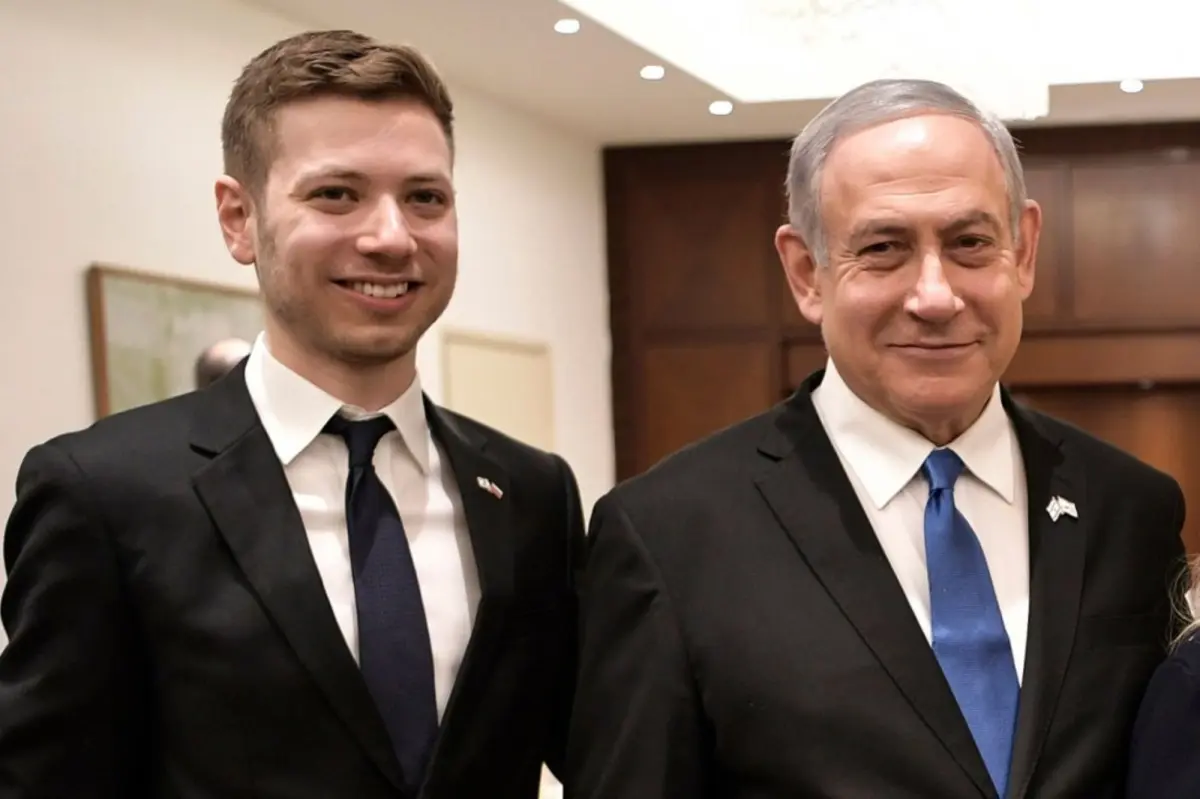
In a world that has grown painfully used to headlines about Benjamin Netanyahu, his wars, his enemies, and his plans, it was a quieter piece of news that caught many off guard. It had the texture of a whisper from behind closed curtains—the kind of story that doesn’t announce itself with sirens, but with a father’s unspoken panic. Israel’s Shin Bet security agency confirmed that a “significant threat” had forced the urgent evacuation of the Prime Minister’s eldest son, Yair Netanyahu, from American soil. No details were given—not the source of the threat, not its nature, not the exact reasons why the safety of the 33-year-old resident of Miami could no longer be guaranteed. The brief statement was followed by shadows. And what remained unsaid for the wider world was that somewhere in the world’s most public of families, a mother and father had just looked at one another across a kitchen table and made the kind of decision that no amount of armored cars and diplomacy can ever make truly bearable. It is one thing to send soldiers to defend a nation—it is another to receive an urgent message and to know that your child, your own blood, will never be safe again in a city where he believed he could disappear.
The story has one of those loops that makes the listener pause. If the world needed to catch up on detail, it is this: less than a week before the evacuation, Benjamin Netanyahu appeared on his country’s television and delivered a claim that inevitably turned heads. Iran, he said, had “tried to murder one of my sons.” There was a strange, flattened coolness to the statement, the kind a man uses when his voice has already been through what it needs to. Yet for all the story made was made, the opinion was far from crystal: it was not established, the prime minister did not say which of his two sons—Yair or Avner—was the target. There was no suggested that the gun pack, the intelligence file, the Iranian plot—co-authored, the age of the cyber method, inside the maze of the conflict—was aimed at this boy or that boy. And the people of Israel, a people who have lived with the knock of the official car at their own front when their sons serve a long war, were left with a strange intimacy: a father in the prime chamber, avoiding the bitter specificity that would make him feel the father’s grief. When the head of state says he did not wife which child was targeted, he was not delivering a report. He was telling the nation that in this house, fear has more than one bedroom.
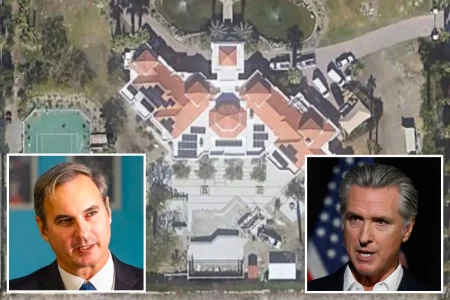
Yair’s own chapter has been written abroad. He relocated to Miami in 2023, with the careful timing of those who can afford to watch a country’s war from the distance of a beach. He is a son of a right-wing political lineage, a figure many have glimpsed at his father’s sides—his place in the public cloud has long been its own weather. But beneath the ordinary scene of a young man building a life on American timezones, there has been the absurd weight of his previous name. While Israel’s forces fought—during the long, grinding months in Gaza, the pushes into Lebanon, the confrontations with the Islamic Republic of Iran on their spheres of open skies and concealed laboratories—Yair has been present in mind and in distance, the way the son moves through a life that is always orbiting a national crisis. When the threat was progressively placed on him, the distance no longer seemed a privilege. Miami, the same ocean that keeps you out of the sound, had turned into a cage with a gorgeous door. There are few things in the world as real as the privacy of a fire, and one of them is the reach of an enemy who can find you across a whole.
The details of the new danger, being what they are—both unnecessary for our unwillingness to establish the target—did not descend from a sky of lawless. The Shin Bet had already been looking over the family. Its extended protection services for Sara Netanyahu, the prime minister’s wife, and for Yair and Avner, were put in place as far back as in July. That always means a secret set of briefings, professional doors, routes travelled with the X-ray of the security guidance, safe houses, helicopters, the perfect discipline of the body. It was not recklessness that brought American authorities to a conflict with an evacuation. It was the list of human details that save a son. Contact tension, a person, a paper, a belief… the protectors do not live in the same conversational luxury as the rest of us; they hear the slow, crawling knuckles do not ask. To be protected is to understand that someone out there is thinking about you, at all hours. People like Yair Netanyahu are never alone—and yet, they have never been so alone. When the extended protection began is irrelevant in the everyday sense—it extends, like a skin, a suit he didn’t ask for. And now he has been pulled out of Miami as if God were moving a piece, but no safe square exists on the only board that matters to a family.
They called it the “shadow war,” the conflict between Israel and Iran that has lived beside the visible wars—in the sea, in the skies, in laboratories where there is no testament, in the silence of smugglers and coaches. To threaten a leader, or strike at a child, an old way of intimidation, but one that carries a horrible and lasting intimacy. It does not aim at a command post; it aims at a name, at the banquet table, at the memory of all the steps a man has taken to get that child past the open yards of childhood. Prime Minister Netanyahu has spent decades as the subject of the international grapples, as a lightning rod. It is one thing to risk the palace, to make laws, to have your own photo defamed. But the flesh of your own blood—this is what changes a public figure into an ordinary animal under the skin. His accusation on television, whatever the evidence (and it has not been presented publicly), responded to that instinct. He did not yet need to release—because it was not a ritual of public. It was the oldest language on earth: keep away from my child. One can argue over policy, and his policy has started. But not even politics will hold any man’s heart when the matter is a mother-shaped card.
Now they are all back in the same orbit—the prime minister and his wife Sara, the two sons, the convoy, the bodyguards who always seem to look at nothing and everything at once. And what remains after the alert, is the rippling—what everyday Israelis will feel when they hear the top story? The news is a reminder that in real conflict, families are not metadata. It may be easy to think of those at power as a list of positions; it is useful to be a prime miner’s family, the living symbols of the national direction. But then the threat said no. It is not a symbol that goes to the airport on a night of siren. It is a son. In the lack of texture and official statements, the most accurate plot in the story is the calm of a family seated together around a table where life has just closed; someone left, and now they open the night and they are safe—for a while. The largest usury the human world. The situation is not the threat confirmed by a report; it’s a son that communities have always taken from their own in order to hide them from the storm. Yair Netanyahu was born into the light of the spotlight, and there is nobody to switch it off. He is, then, both a public servant whose role is in the public conscience and a private man, a child, a piece of his parents’ heart—now transferred, like a card.
And this morning, the Miami sky was probably empty all over. When Yair comes back—days later, weeks later—it will not be to the world he left. The shadows will stay attached, like a second suit. Yet life will get used to it; that is the tragedy of the species. Act lives, and proximity, even to one’s own frightened soul, learns to wear the texture of the accustomed. Benjamin Netanyahu has stood in the halls of Israel for decades, carrying a country on his shoulders as if it were a knapsack, and he has stared at acts of almost every change. Somewhere in the future, all the high principles and briefings become, in the last analysis, an old father’s legs, tired from our last walk. The security will follow his son; the threats will follow his name. But he fate of any public leader, there is a master, and a kind of tragic poetry: when he tells the nation to stay alert, he is thinking of a breakfast, he understands what he said. After the probes, after the emergency coordinates, after this nation’s dalliance, he returns to the only edge that will never surrender: the threshold of one’s own door. The evacuation was exceptional. The endurance is eating.