






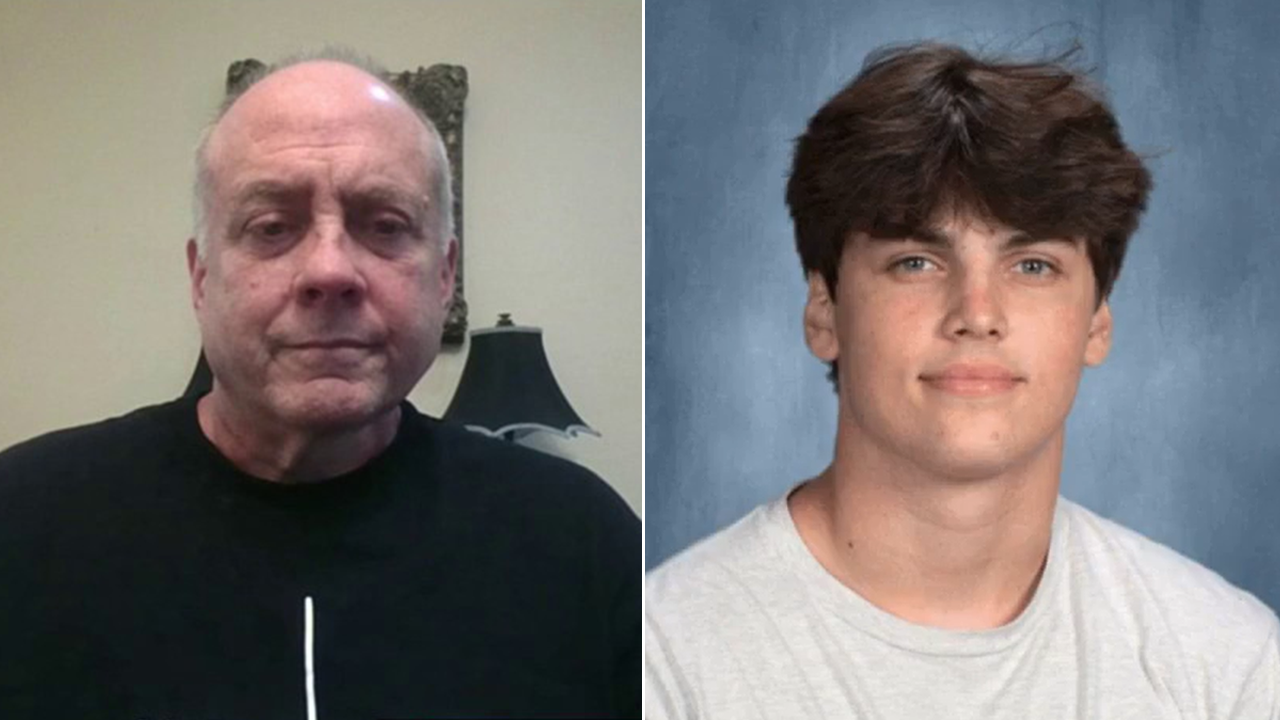
For any parent, the loss of a child is an unimaginable, catastrophic tear in the fabric of existence, but for Jeff Metcalf, the pain is compounded by a deep, burning sense of institutional injustice that refuses to subside. In April 2025, his seventeen-year-old son, Austin Metcalf, was a young man full of life, promise, and youthful ambition, whose entire future was violently stolen in a single, senseless moment at a high school track meet. What should have been an afternoon of athletic camaraderie, cheering crowds, and vibrant school spirit transformed into an absolute nightmare when Karmelo Anthony fatally stabbed Austin. Though a Texas courtroom eventually delivered a measure of legal justice—convicting Anthony of murder and sentencing him to thirty-five years behind bars—the verdict did little to heal the gaping wound in the Metcalf family’s hearts. The dramatic courtroom victory, which quickly went viral as the public watched the tragedy unfold, did not mark the end of Jeff Metcalf’s fight; rather, it catalyzed a desperate, highly personal quest to hold those in power accountable for what he perceives as a profound systemic betrayal. In the bittersweet days following the trial, Jeff has courageously stepped into the public spotlight, channeling his immense grief and anger into a fierce critique of the school administrators who were supposed to protect his teenage son. He has voiced deep frustration not only over the physical security lapses that allowed a deadly weapon onto school grounds but also over the administrative decisions made in the horrific aftermath of Austin’s murder. To Jeff, this tragedy was not just the random act of a single violent individual, but the devastating result of a school district that failed in its sacred duty of care. This failure left a grieving father to pick up the shattered pieces of his life while demanding transparency and morality from community leaders who chose bureaucracy over compassion.
At the absolute center of Jeff Metcalf’s outrage is Dr. Mike Waldrip, the former superintendent of the Frisco Independent School District, who was at the helm of the school system when the tragedy occurred. For a grieving father, the superintendent’s response to his son’s murder was not just inadequate; it was an act of profound cowardice and moral failure. Jeff has publicly accused Waldrip of “folding like a cheap tent” under the immense pressure applied by supporters of Karmelo Anthony, who actively pushed the school district to allow the young killer to graduate despite the horrific allegations hanging over him. The decision to permit Anthony to receive his high school diploma after he had committed a brutal murder sent shockwaves of betrayal through the Metcalf family. To Jeff, the administration’s actions felt like a slap in the face—a bureaucratic validation of a murderer over the innocent life that had been snatched away. The thought of Austin’s killer being awarded the milestone of graduation, a privilege his own son would never get to experience, is a source of agonizing pain. Jeff believes that Waldrip and the Frisco ISD school board prioritized avoiding administrative controversy and pleasing vocal advocates over standing up for basic human decency and the memory of a slain student. This controversial decision highlighted a disturbing disconnect between school leadership and the community they are sworn to serve, showcasing a willingness to compromise ethical standards when faced with loud external pressure. By allowing Anthony to walk away with a diploma, the school system, in Jeff’s eyes, diminished the gravity of Austin’s death, turning a eye to a heinous crime in order to preserve administrative peace and check off bureaucratic boxes. This lack of moral fortitude from the school’s highest office has left an indelible stain on the family’s grieving process, making them feel as though Austin’s life was treated as mere collateral damage.
To understand the depth of Jeff Metcalf’s anger, one must examine the specific school policies that he argues were blatantly ignored or manipulated to accommodate Austin’s killer. In interviews, Jeff has pointed out the sheer absurdity of allowing Karmelo Anthony to graduate when he had not stepped foot in a classroom since the day of the stabbing on April 2. Even if Anthony possessed the necessary academic credits or passing grades prior to the assault, Jeff insists that the school district absolutely retained the legal and moral authority to deny him a diploma based on his actions and subsequent lack of attendance. According to TMZ, Jeff has cited the official Frisco Independent School District student handbook, which allegedly explicitly outlines that committing murder constitutes clear and mandatory grounds for expulsion. Instead of enforcing their own written codes of conduct, school leadership chose a path of passive compliance, allowing a student accused of a capital offense to quietly complete his graduation requirements. For Jeff, a high school diploma is not merely a mathematical calculation of grades and credits; it is a sacred symbol of achievement, community citizenship, and moral character. By granting this honor to a teenager who had just cut down another young life, the school district stripped the diploma of its meaning and showed a complete disregard for the safety of the student body. The refusal to expel Anthony under the mandatory guidelines of the student handbook remains a glaring point of contention, highlighting a system more concerned with legal technicalities and avoiding lawsuits than protecting the integrity of its environment and validating the loss of the Metcalf family. This selective enforcement of rules suggests a deeply flawed administrative culture where policies are treated as optional suggestions rather than binding commitments. To Jeff, this was a clear demonstration that the district’s bureaucracy valued the academic outcomes of a violent offender over the memory of the innocent child they failed to protect.
Unable to stay silent in the face of what he views as a massive institutional cover-up and systemic cowardice, Jeff Metcalf has taken his message to various public platforms, expressing his raw, unfiltered grief. During a recent and deeply emotional interview on the Rumble podcast “JinxedSip,” Jeff did not hold back his venom for the former superintendent, labeling Mike Waldrip as “the most spineless, coward piece of trash I’ve ever met in my entire life.” His words, while harsh, reflect the unedited, agonizing pain of a father who has been pushed to the absolute brink by administrative coldness. When a parent loses a child, society often expects them to grieve quietly and decorously, but Jeff’s public outcry challenges this expectation by refusing to let the public forget how the school system handled his son’s tragedy. His anger is not a detached intellectual critique; it is the primal scream of a dad who expected his community’s leaders to stand up for his murdered son and instead watched them cower behind PR statements and legal shields. This unfiltered public crusade has resonated with thousands of parents across Texas and the nation who are increasingly disillusioned with how modern school districts handle student violence and safety issues. By publicly confronting Waldrip, Jeff is exposing a widespread culture of administrative self-preservation that often overshadows empathy for victims. He is forcing a conversation on whether school leaders should be held personally and professionally accountable when their decisions fail to protect children or respect the families of those who have been lost. His refusal to keep silent serves as a powerful reminder that behind every statistic and court case is a grieving family whose life has been permanently altered, and who will not allow their loved ones to be forgotten. His vocal presence on media platforms has successfully shifted the narrative surrounding Austin’s death, ensuring the focus remains on administrative failures.
Beyond the post-tragedy graduation scandal, Jeff Metcalf’s crusade also targets the systemic security vulnerabilities that allowed the fatal stabbing to happen in the first place. He argued passionately that the Frisco Independent School District demonstrated gross negligence in securing the high school track meet where Austin was murdered. In his view, a sporting event of that scale—drawing students, families, and athletes from various schools—should have had robust safety protocols, including metal detectors at athlete entrances and a visible, properly trained security presence. Instead, the venue was left vulnerable, allowing a student to easily smuggle in the deadly weapon that would claim Austin’s life. School athletic events have traditionally been viewed as safe havens, places where communities gather to celebrate youth, talent, and healthy competition, but the lack of basic security measures shattered that illusion of safety. Jeff’s claims highlight a terrifying reality facing modern public schools: the urgent need for comprehensive safety overhauls that prioritize preventative measures over reactive rhetoric. When districts fail to invest in proper security infrastructure, they leave their students exposed to catastrophic violence. For Jeff, the school’s failure to implement proper safety barriers was a form of institutional negligence that played a direct role in his son’s death, making the district’s later administrative moves feel even more defensive and self-serving. He continues to ask why simple safety protocols, which are standard at almost any other public gathering, were completely absent at a high school event where the stakes are highest, and why no one has taken ownership of this fatal oversight. This lack of accountability has forced the Metcalf family to relive the trauma of that day over and over again, knowing that a few basic safety measures could have easily prevented the tragedy. By ignoring these obvious security lapses, the district demonstrated a reactive approach to safety, a choice that ultimately cost a bright and promising teenager his life.
The aftermath of this tragedy has left a lingering cloud of controversy over the Frisco community, especially following Mike Waldrip’s sudden announcement of his retirement in November 2025, just over six months after Austin’s murder. While the school district has remained largely quiet, refusing to engage directly with Jeff Metcalf’s public criticisms, the silence only deepens the sense of separation between the administration and the grieving family. For Jeff, Waldrip’s retirement looks less like a graceful exit from a long career and more like a convenient escape from the mounting public backlash over his handling of the graduation and security issues. In the end, Austin Metcalf was not just a name in a tragic news report; he was a beloved son, a loyal friend, and a young man whose life was full of unrealized potential. Jeff’s relentless pursuit of answers is his way of ensuring that Austin’s memory is preserved with the dignity and respect he was systematically denied in his final school days. By humanizing his son’s story and refusing to let school leaders hide behind policies and impersonal legal language, Jeff is fighting for a safer, more compassionate future for all students in Texas public schools. He hopes that his public struggle will serve as a definitive wake-up call to school boards everywhere, forcing them to realize that their highest duty is not public relations management, but the genuine safety and moral care of the children placed in their trust. Until systemic changes are made and true accountability is achieved, this grieving father will continue to speak out on every platform available, keeping Austin’s memory alive as an unyielding force for change and justice. His journey remains a poignant testament to a father’s enduring, unbreakable love—a love that refuses to let a tragedy be minimized by cold, corporate-style bureaucracy.