






On a Thursday morning in a federal courtroom in Atlanta, Walter Lee Muhammad walked in as a man whose life had come full circle—not in a hopeful way, but in a deeply troubling one. Muhammad, 46, stood before a judge in the Northern District of Georgia facing charges of possession with intent to distribute controlled substances, according to federal prosecutors. The charges allege that he had once again become involved in the drug trade, less than two years after former President Joe Biden commuted his ten-year prison sentence for a February 2020 federal conviction for possession with intent to distribute fentanyl. It would be easy to call this a pardon, and some early reports did, but a commutation is different: it shortens or ends a prison sentence while leaving the conviction on the record. Pardon or not, the emotional weight is the same. Muhammad had been handed an extraordinary second chance—a rare opportunity to step out of prison, find steady work, reconnect with family, and leave behind the deadly business that had already consumed so much of his adult life. Instead, prosecutors say, he returned to fentanyl, the synthetic opioid responsible for tens of thousands of American deaths each year. The courtroom scene, routine for some, was heavy for those who understand the stakes. A federal prosecutor outlined the government’s case. A judge considered whether Muhammad should remain in custody. And Muhammad himself stood at the center of a story about mercy, responsibility, addiction, and the painful reality of recidivism. The charges against him are still allegations. He has not been convicted of anything new. Yet the shadow of his previous conviction, and the clemency that followed, makes this moment more than just another arrest. It raises uncomfortable questions about whether second chances are truly enough when the pull of the streets is so strong, and whether the justice system can do more than punish—or forgive—and actually help break the cycle.
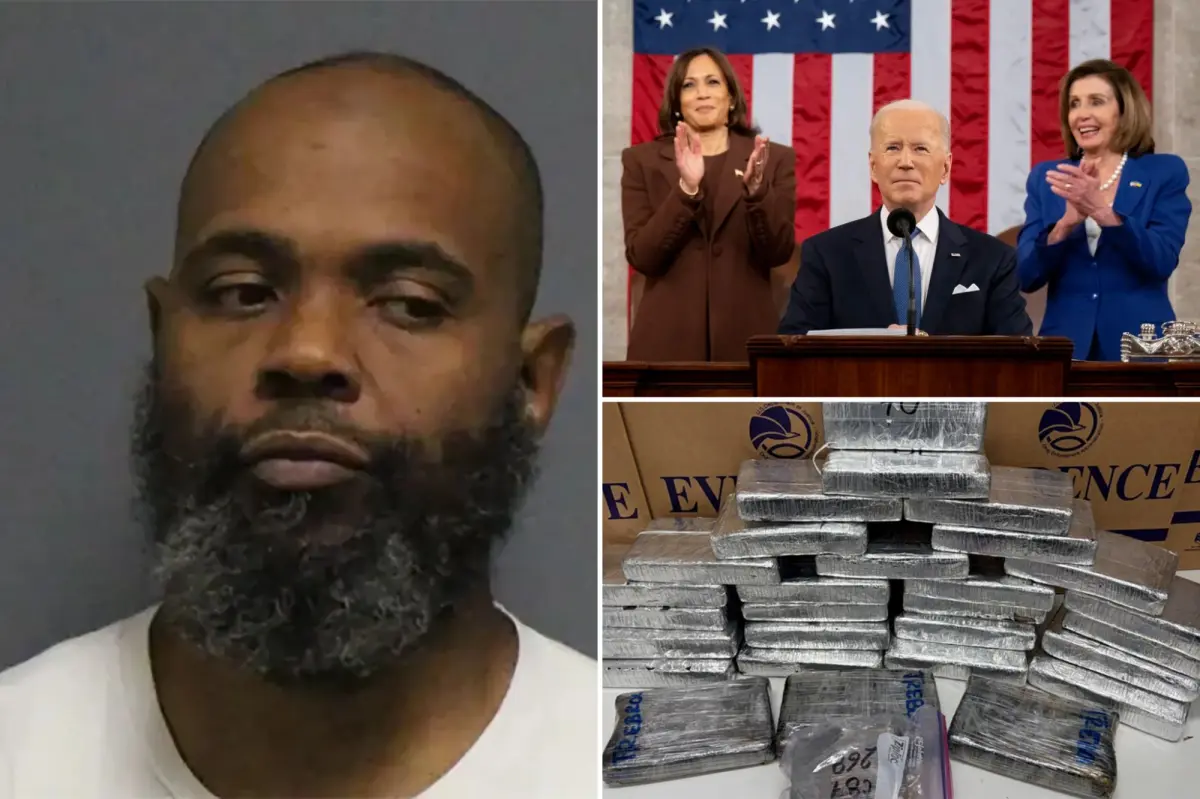
The federal government’s account of Muhammad’s case begins with a decision made far above his world, in the White House. On December 12, 2024, Biden commuted the sentences of 1,498 federal prisoners, one of the largest single acts of clemency in modern American history. Muhammad was among them. For those who advocate for criminal justice reform, that mass commutation was a statement of hope: a belief that lengthy prison sentences, especially for nonviolent drug offenses, had failed to address the root causes of addiction and trafficking, and that many prisoners deserved the chance to prove they had changed. Muhammad’s case now challenges that optimism in a painful way. Jae W. Chung, the Special Agent in Charge of the DEA Atlanta Field Division, did not hide his frustration in the announcement of the arrest. “Despite receiving a second chance, this defendant returned to trafficking fentanyl and putting lives at risk,” Chung said. Those words carry more than bureaucratic anger. They reflect the exhaustion of law enforcement officers who see the same names again and again, who watch the opioid epidemic claim victims, and who wonder what more could have been done to stop someone before he allegedly picked up the gun—or in this case, the drugs—once more. Muhammad’s story is not just a legal case; it is a human one. He was once a man with a future. He now stands accused of taking a path that could send him back to prison for many more years. The DEA’s statement also serves as a reminder that fentanyl is not a victimless crime. Every kilogram of fentanyl seized represents thousands of potentially lethal doses, and every trafficker who puts it on the street is connected to a chain of suffering that ends in overdoses, broken families, and grief.
The latest charges against Muhammad are rooted in a single day of surveillance and a cross-country drive that ended in a police stop far from home. According to federal prosecutors, DEA agents were watching Muhammad in Atlanta on August 5 when they saw him loading multiple bags of suspected drugs into his BMW. Muhammad then got behind the wheel and drove more than 330 miles to Greensboro, North Carolina. It is a distance that suggests a planned deal, a transfer, or a network stretching across state lines. But before he could reach wherever he was going, a deputy with the Guilford County Sheriff’s Office pulled over the vehicle. A K-9 unit was called to the scene, and the dogs gave the signal. A search of the car turned up about 29 kilograms of suspected cocaine, according to prosecutors. Suddenly, what might have been a routine traffic stop became a major drug bust. Muhammad was arrested on the spot. The coordination between Atlanta DEA agents and North Carolina sheriff’s deputies highlights how law enforcement agencies must work together to track drug trafficking that ignores state borders. But the human side of that long drive is harder to visualize. Picture a man behind the wheel for hours, perhaps believing he would get away one more time, perhaps thinking about the money or the risk or the people waiting at the other end. Then picture the flashing lights in the mirror, the dog barking, the doors opened, and the packages pulled out. In that moment, whatever plans he had collapsed. For investigators, it was a victory—30 kilograms of suspected cocaine would not reach the streets. For Muhammad, it was another beginning of a legal battle that would likely end in prison either way. The alleged quantity is enormous, and the penalties that follow such arrests are severe. The man who had been given a second chance in December 2024 now faced a third strike, with the system far less willing to show mercy.
The search did not end in North Carolina. The next day, DEA agents carried out a search warrant at Muhammad’s apartment in Atlanta. What they found there painted an even more alarming picture. In addition to the 29 kilograms of cocaine seized from his vehicle, agents discovered seven kilograms of suspected heroin and two kilograms of suspected fentanyl inside his home. These are not small amounts for personal use; they are quantities consistent with distribution, according to federal prosecutors. Fentanyl, in particular, is a poison of unmatched potency. A dose roughly the size of a few grains of salt can kill an adult. Just one kilogram of fentanyl has the potential to produce hundreds of thousands of deadly doses. Two kilograms, then, could be enough to cause catastrophic damage to an entire community. Heroin, too, has destroyed communities for decades, and the combination of heroin and fentanyl—where fentanyl is often mixed into heroin without the buyer knowing—makes overdose risk even higher. The discovery at the apartment turned Muhammad’s case from a single traffic stop into a wide-ranging investigation of an alleged drug network. Federal prosecutors filed a complaint the following day, charging him with possession with intent to distribute controlled substances. On August 13, he appeared before a federal magistrate judge in North Carolina, where he was formally processed for the case. Since then, he has been held by the U.S. Marshals Service. He is expected to appear again in the Northern District of Georgia at a later date. But the wait is not just procedural. For every day that passes, the accused lives in the uncertainty of detention, separated from family, his future hanging on the decisions of prosecutors and judges. For his family, the heartbreak must be overwhelming. They likely watched him leave prison after the commutation, hoping he would finally change. Instead, they now face the possibility of losing him for decades. The numbers—29 kilograms, 7 kilograms, 2 kilograms—tell a story of scale, but behind those numbers are human choices and failed chances.
Muhammad’s criminal history makes this latest arrest even more difficult to understand. According to federal prosecutors, this is not his first or second run-in with drug charges. In August 1999, he was found guilty of conspiracy to distribute cocaine. In November 2010, he was found guilty of conspiracy to distribute marijuana. And in February 2020, he was convicted of possession with intent to distribute fentanyl—the conviction that led to his decade-long sentence and eventually to Biden’s commutation. That timeline spans more than twenty years. It shows a man who, at times, seemed unable to escape the drug trade. There were likely periods of stability, family life, work, and hope. There were also long stretches in prison, away from his children and loved ones. Each conviction was supposed to be a lesson. Each prison term was supposed to be a deterrent. Yet here he is again, accused of handling enormous quantities of dangerous drugs. Why? That is the question no court filing can fully answer. The reasons may lie in poverty, trauma, financial desperation, pressure from criminal organizations, addiction, or the simple fact that the drug trade sometimes feels easier than a straight life. For those who work in addiction treatment and rehabilitation, cases like Muhammad’s are heartbreaking reminders that long sentences alone do not transform people. Without jobs that pay enough, without emotional support networks, without mental health care and substance abuse treatment, people released from prison can be pulled back into the only world they know. The statistics on recidivism are grim; within five years of release, many prisoners are rearrested. Muhammad was free for less than two years before this alleged offense. Whatever judgment he may face, it is impossible not to wonder what could have been different if more resources had been in place to help him build a new life. At the same time, the alleged choices he made are his own. He is charged with placing lives at risk, and if convicted, he will have to face the consequences.
Muhammad’s case is not just one man’s story. It is a window into the larger crisis of fentanyl and the ruthless economy of addiction that continues to grip the United States. Every day, federal agents seize kilograms of fentanyl, cocaine, and heroin—but for every load that is caught, many more may slip through. The work of the DEA, the U.S. Marshals, and local sheriff’s offices goes beyond making arrests; it is about saving lives from a poison that does not care about class, race, age, or politics. Yet the justice system cannot arrest its way out of the opioid epidemic. Muhammad’s case exposes a painful cycle: arrest, conviction, imprisonment, release, and re-arrest. It also exposes the limits of clemency. The Biden administration’s commutations were meant to fix the wrongs of overly harsh sentencing and give people a second chance. Muhammad, by his alleged actions, has become a symbol of that policy’s risks. But it would be wrong to conclude that all second chances fail. Many people who receive clemency go on to live lawful lives. The tragedy is that Muhammad appears not to be one of them—at least not in this moment. For now, he remains in federal custody, accused of once again trafficking deadly narcotics. His legal representative could not be identified, and it is unclear how he intends to defend himself. The path ahead is difficult: federal prosecutors will seek serious penalties if he is convicted, and the history of prior convictions will almost certainly make the sentence longer. But as the legal process unfolds, the human reality remains. Walter Lee Muhammad is a 46-year-old man, a prisoner of his own choices, and also a reminder that the battle against fentanyl is fought not only on the streets but in the hearts and minds of people who have been given chances they cannot seem to take. The ultimate verdict will come from a judge and jury, but the deeper lesson is for the rest of us: second chances are precious, but they require more than mercy—they require the courage to change, and that is something no court can give.