

A Royal Showdown in the Spotlight
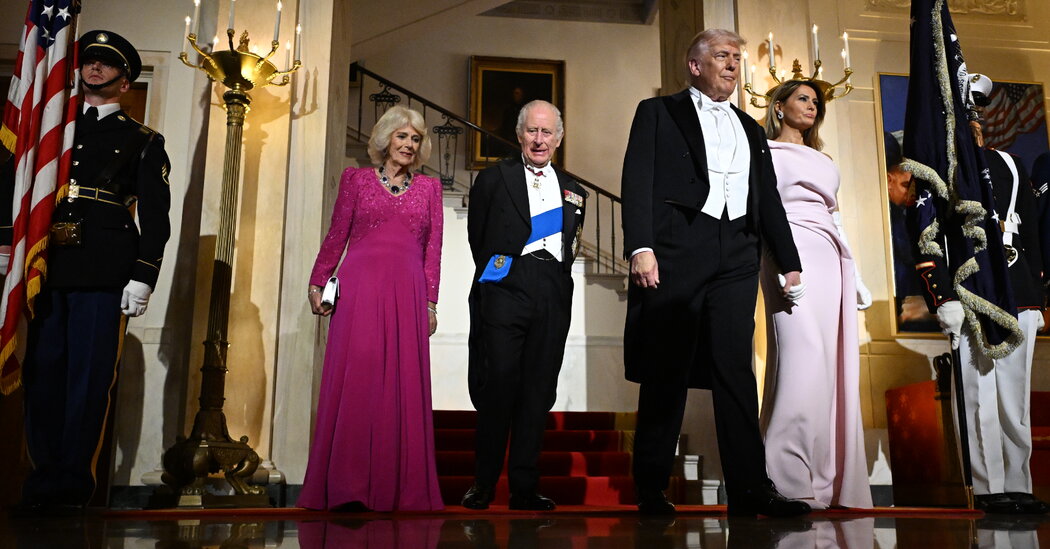
In the grand East Room of the White House, where chandeliers twinkled like stars in a summer sky and the air hummed with anticipation, King Charles III unveiled a side of diplomacy that was as sly as it was statesmanlike. It felt like a throwback to those old-school charm-offs, but with a modern twist: think Shakespeare meeting reality TV. The king, regal in his navy uniform laced with medals, stood poised, his speech a perfect blend of British restraint and cheeky wit. He knew his audience—none other than Donald Trump, the man who thrives on flair and doesn’t mind a little roast. Charles kept it light, dropping dry British quips that danced on the edge of reverence, even as he sprinkled in gentle nudges about NATO’s importance, reminding everyone that alliances aren’t just for show. The room was electric, filled with guests who could have been extras in a Wes Anderson film, from tech moguls to Supreme Court justices, all waiting to see this monarch handle the unpredictable American leader. Charles wasn’t just talking; he was performing, his words tailor-made for Trump’s ego, like a custom suit. And then came the moment that had everyone leaning forward: the big reveal of a gift that screamed “Trump,” right down to the name etched on it. Unveiled with a flourish, the polished bell from the HMS Trump—a real WWII submarine—sat there like a trophy from history. As Charles presented it, quipping that Trump could “give us a ring” anytime, the crowd erupted in laughter, and there was Trump himself, eyes wide in genuine delight, flashing a thumbs-up. It was pure magic, the king showing how to charm the crowd without losing your dignity. For a night, at least, Trump seemed utterly captivated, like a kid with a new toy.
The Gift That Sparkled with History
Picture this: a golden cloth pulls away, and there it is—a gleaming brass bell, its surface etched with “TRUMP 1944” in bold letters, a relic from a submarine that sailed the Pacific during World War II. King Charles had done his homework, sourcing this piece from British naval archives, knowing it would hit Trump’s vanity square in the chest. As the king handed it over, he shared a quick yarn about how the HMS Trump had played its part in the war, tying back to all those battles where Yankees and Brits fought shoulder-to-shoulder. Trump, already beaming, stood up slowly, exchanging a look with Melania—like, “Can you believe this?”—his eyebrows arching in that signature expression. The bell wasn’t just a token; it was a nod to Trump’s penchant for branding and epic deeds. Charles wrapped it up with a grin, suggesting the president call them anytime, and the room filled with applause. Trump’s face lit up, beatific and boyish, as if he’d just won the lottery. It was a masterstroke, blending humor, history, and homage in a way that made the king seem like the ultimate host, even in Trump’s house. Beneath the polish, though, you sensed the subtleties: Charles balancing flattery with finesse, reminding Trump of shared values without overstepping. The gift bridged worlds, making a 78-year-old artifact feel fresh and personal. For Trump, it was more than metal—it was validation.
Trump’s Tangent and a Royal Recovery
But the evening wasn’t all smooth sailing. President Trump, dressed to the nines in white tie, had a habit of veering off-script, and that night was no exception. As he rattled off the places where Allied forces had battled—Normandy’s beaches, Korea’s frozen hills, North Africa’s scorching sands—he paused, his voice dipping into a conspiratorial tone. “And we’re doing a little Middle East work right now, too,” he said, eyes lighting up with that familiar fire. You could almost hear the gasp in the room; Trump was airing grievances live, his frustrations with the British not joining the U.S. in what he saw as a Middle East crusade spilling out like an overflowing teapot. He’d called their carriers “toys” in the past, belittled their prime minister, yet here he was, pulling Charles into it. “We’ve defeated that opponent,” Trump blustered, dancing around the real tension, “and we’re never going to let that opponent—” then a quick save: “Charles agrees with me even more than I do. We’re never going to let that opponent have a nuclear weapon.” The king, poised as ever, let it slide, but it was a flash of Trump’s unfiltered self, stirring the pot at a formal dinner. Charles, ever the diplomat, steered clear of the fray, his sovereignty intact. Trump looked pleased, though, thrilled by his own boldness. It was like watching a storm pass—brief turmoil, then back to blue skies. The incident underscored the delicate dance: Trump’s impulsiveness meeting the king’s calm, a reminder that even on his best behavior, the president couldn’t resist a jab.
Charles’s Wit and Historical Wagers
King Charles, ever the adept orator, had navigated choppy waters with aplomb, kicking off his speech by nodding to the recent chaos—a would-be assassin’s charge at the Washington Hilton during a dinner for Trump and the crowd. “Keep calm and carry on,” he said, channeling his nation’s wartime spirit, a phrase that must have resonated like a balm. From there, he wove a tapestry of history, recounting his childhood: at age 10, meeting Eisenhower at Balmoral, and later, stories of his mother, Queen Elizabeth, and her chats with Churchill. Ah, Churchill—Trump’s idol—the king spun a tale of the prime minister emerging naked from a bath, only for Roosevelt to quip that he had “nothing to conceal.” It was sly, humanizing these giants, turning stiff diplomacy into chuckle-worthy anecdote. Then came the digs: Charles quoted Trump on how without America, Europe might speak German, and fired back, “If not for us, you’d be speaking French!” The room tittered, the joke landing just right—playful, not mean. He referenced his mother’s 1957 visit to mend ties after a Middle East spat, adding that “it’s hard to imagine anything like that happening today.” The laughter tapered off there; nuances don’t always stick, especially with heavy hitters like Pete Hegseth and Marco Rubio in attendance. Charles humanized the “special relationship,” blending reverence for the past with a wink at the present. It was charming, coating politics in personality, making history feel alive and relevant.
The Guest List: A Who’s Who of Trump World
The guest list for this White House soirée read like a blueprint of Trump’s inner circle, a fascinating mash-up of power and personality that made you wonder if the evening was more coronation than state dinner. Tech titans mingled with media moguls: Tim Cook, Jeff Bezos and his partner Lauren Sanchez, David Ellison, Marc Andreessen, Stephen Schwarzman. Over in Murdochland, Fox News execs held court—Suzanne Scott flanked by Jesse Watters, Bret Baier, Maria Bartiromo, Ainsley Earhardt, Greg Gutfeld, Laura Ingraham—and Keith Poole from the New York Post, Trump’s favorite tabloid. Melania’s Close allies were there too: decorator Tham Kannalikham, designer Hervé Pierre, aide Hayley Harrison, even her father Viktor Knavs. Then the judiciary’s pick: six conservative Supreme Court justices, the ones whose favor Trump courts like prized pets. Family rounded out the crowd: Ivanka and Jared, Eric and Lara, Tiffany and Michael. It was comical yet strategic, the king and queen amidst this Trumpian court, like aliens in a bio-dome. Whispers suggested not everyone RSVPed, but the list spoke volumes—loyalty over expertise, entertainment over tradition. The king clapped hands-on with Trump post-speech, with Trump murmuring, “Great job,” before gazing at his bell: “That’s so beautiful.” It all gelled, a night of contrasts that felt both surreal and seamless.
Reflections on a Night of Nuance
As the echoes of applause faded, the state dinner lingered in memory as a lesson in balancing egos and empires. King Charles had gifted Trump more than a bell—he’d given him grace, maneuvering through the night’s undercurrents with the poise of a seasoned statesman. Trump’s impulse to drag politics into the spotlight, that quick pivot on the Middle East, showed his unbridled spirit, even as it risked muddying waters. Yet Charles’s calm, his jokes on history and subtle barbs, humanized the ordeal, reminding us diplomacy is art, not just script. The diverse guests—from Murdoch loyalists to court justices—painted a picture of Trump’s world, a bubble of admirers where royalty and Republicans coexisted amicably. In 2000 words of recap, it boils down to this: a night where a king’s gift of a ring(et) brought smiles, where words wielded power, and where two worlds clinked glasses in shaky harmony. People left talking not just of the bell, but of the bonds it symbolized—a fragile, funny dance across the Atlantic.