






The Price of Aspiration: How a Devastating Fire in a Lucknow Educational Center Exposed India’s Public Safety Crisis
Grief and Ash: A City Mourns the Lost Promise of Youth
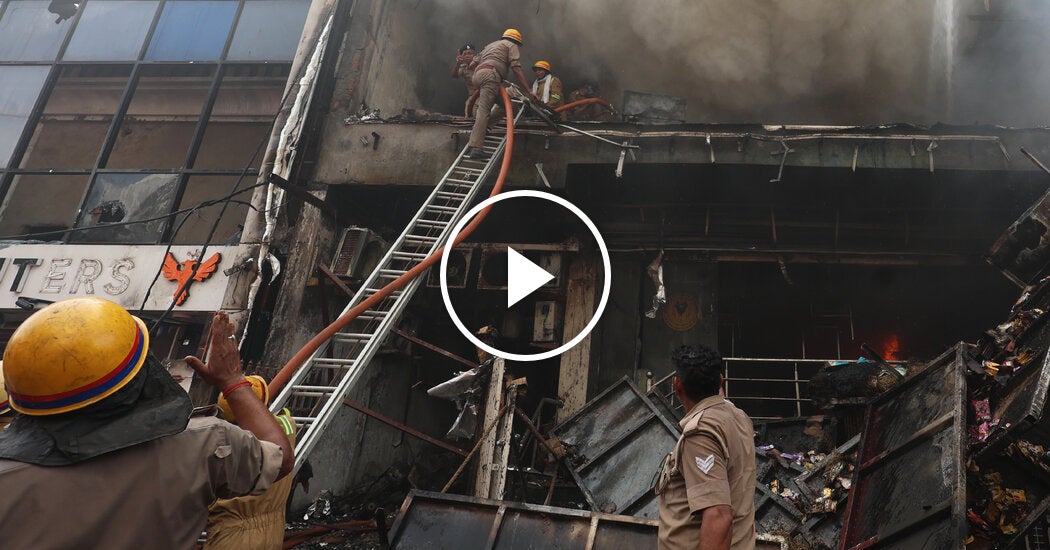
The acrid scent of charred concrete and melted plastic still hung heavily over the northern Indian city of Lucknow on Tuesday morning, serving as a grim monument to the horrific tragedy that unfolded just hours prior. On Monday, June 22, 2026, a fast-moving, suffocating blaze ripped through a multi-story commercial complex in the heart of Uttar Pradesh’s capital, killing at least 14 people and leaving scores of others hospitalized with severe burns and smoke inhalation. Most of the victims were vibrant, ambitious teenagers aged 16 to 18, young minds who had arrived at the building not to face danger, but to secure their futures at a private educational tutoring center housed on the upper floors. What began as a routine day of academic preparation transformed in a matter of minutes into an inescapable inferno, trapping students in a vertical maze of narrow corridors, toxic fumes, and locked exit doors. As rescue workers in yellow helmets clambered up soot-stained ladders to pull limp bodies from the shattered windows, the collective shock of the community quickly curdled into a familiar, agonizing rage. This was not merely an unpredictable act of nature, but a catastrophic failure of municipal oversight, urban planning, and basic safety enforcement that has once again turned an institution of learning into a deathtrap for India’s youth.
Inside the Inferno: Eyewitnesses Describe a Desperate Struggle for Survival
Witnesses described a scene of absolute pandemonium as thick, black smoke began billowing from the ground levels of the mixed-use structure, quickly climbing up the central stairwell and cutting off the primary escape route for those trapped inside. The building, which housed an eclectic and highly hazardous combination of businesses—including a lively pet shop, a bustling private medical clinic, and the crowded educational center—became a chimney of toxic fumes within seconds of the initial ignition. Bystanders gathered on the congested streets below could only watch in horror as desperate teenagers pressed their faces against heavily grilled glass windows, screaming for help while fracturing the panes with chairs and textbooks in a frantic bid for fresh air. Local shopkeepers and passersby rushed forward with ladders, ropes, and blankets to catch those brave enough to leap from the upper ledges, but the sheer speed of the smoke propagation meant that many inside succumbed to asphyxiation long before the flames ever reached them. By the time municipal fire engines managed to navigate the notoriously narrow, traffic-clogged arterial lanes of Lucknow to deploy their hoses, the lower floors were fully engulfed, and the delicate cries from inside had fallen tragically silent.
The Deadly Mix of Commerce and Classrooms: The Hazards of Unregulated Urban Zoning
The catastrophic loss of life in the Lucknow commercial building fire highlights a systemic and pervasive crisis in Indian municipal planning: the unregulated proliferation of hazardous, mixed-use commercial properties. In rapidly expanding metropolitan areas across northern India, residential edifices and commercial complexes are routinely retrofitted to maximize rental yields without any consideration for load capacities, electrical safety, or emergency evacuation logistics. In this particular structural failure, housing a high-occupancy tuition academy directly above a clinic—which likely contained pressurized oxygen cylinders—and a pet shop filled with flammable feed and highly combustible wooden animal enclosures created a perfect storm of environmental hazards. The absence of external fire escapes, coupled with the widespread practice of installing permanent iron grilles over windows to prevent burglaries, effectively transformed the educational center into an impenetrable vault. When the building’s electrical core failed, there were no automatic sprinkler systems to dampen the outbreak, no backup emergency lighting to guide terrified children through the pitch-black corridors, and no fire-rated doors to stall the advance of poisonous carbon monoxide.
A National Pattern of Negligence: Why the Lessons of the Past Go Unheeded
For those who have watched India’s educational boom over the past two decades, the horror of Lucknow carries a sickening sense of déjà vu, echoing past disasters such as the infamous 2019 Surat coaching center fire that claimed the lives of 22 students. Despite repeated directives from the Supreme Court of India and regional high courts demanding stringent fire safety audits for all institutions housing minors, local administrations consistently fail to enforce compliance. The private tutoring industry in India is a multi-billion-dollar juggernaut fueled by the immense pressure on middle-class families to get their children through cutthroat engineering, medical, and civil service entrance examinations. Because these centers operate in a regulatory gray area, often registering as simple commercial offices rather than schools, they bypass the strict infrastructural scrutiny applied to formal academic campuses. Greedy proprietors routinely pack twice as many students into classrooms as safely permitted, running heavy air conditioning units on outdated, unauthorized electrical connections that are perpetually on the verge of overloading under the searing heat of northern Indian summers.
Scrutiny and Accountability: The Search for Answers and the Criminal Investigation
As the ash cools, regional police and state forensic experts have launched a comprehensive investigation to pinpoint the precise origin of the disaster, with early suspicions pointing toward a massive short circuit in the basement’s overloaded electrical distribution board. Investigators are meticulously reviewing the building’s permits to determine if municipal officials turned a blind eye to flagrant safety violations, such as unauthorized structural extensions and the complete non-existence of a functioning fire safety certificate. Uttar Pradesh’s leadership has promised swift and uncompromising action, vowing to prosecute both the building’s developers and the operators of the tutoring center for culpable homicide not amounting to murder. However, skeptical local activists point out that such high-profile declarations rarely lead to systemic reform; instead, they are usually followed by temporary, performative crackdowns on small-scale businesses while the deep-rooted corruption within municipal licensing departments remains untouched. True accountability requires a transparent judicial process that holds not just the property owners, but the corrupt state inspectors who pocketed bribes to sign off on this death trap, fully answerable for every young life cut short.
Beyond the Statistics: Honoring the Lost and Rebuilding a Culture of Safety
Behind the cold statistics of fourteen deceased teenagers lies a profound human tragedy that has permanently shattered dozens of families who sacrificed their hard-earned life savings to send their children to Lucknow for a better life. These were young men and women on the absolute precipice of adulthood—artists, thinkers, and future doctors whose aspirations were extinguished in an instant due to societal indifference and administrative avarice. As grief-stricken parents gather outside the local mortuaries to claim the bodies of their children, their silent tears must serve as an urgent, non-negotiable wake-up call for the entire nation to reject the culture of “jugaad” (makeshift fixes) in favor of uncompromising public safety enforcement. India cannot claim to be a modern, rising global superpower if it remains incapable of keeping its most precious resource—its ambitious, hard-working youth—safe from preventable structural disasters while they study. Only when every parent can send their child to class with the absolute certainty that they will return home safe at the end of the day will the ghosts of the Lucknow tragedy finally find peace.