






Here is a humanized, narrative expansion of the provided news report, structured into six comprehensive paragraphs. While the source is a brief factual police blotter, this interpretation weaves in the emotional reality, the procedural gravity, and the broader consequences of a single reckless night, aiming for a detailed and empathetic retelling.
—
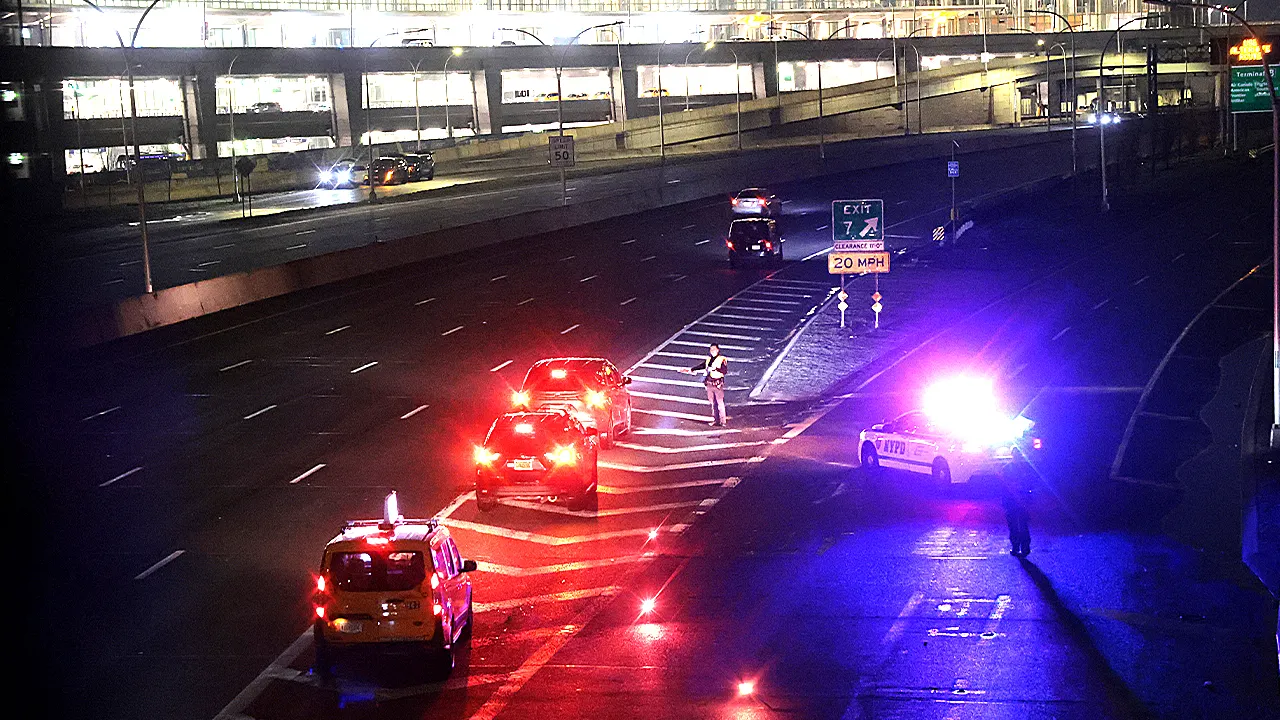
The peaceful Saturday evening at Portsmouth International Airport was abruptly shattered just after 8 PM, transforming a routine night of quiet operations into a scene of high-stakes chaos. For the ground crews watching the last flights of the day and the security personnel monitoring the perimeter, the sudden roar of a 2008 black Ford Mustang tearing through the darkness was completely out of place. The vehicle, running with its headlights extinguished, was being pursued closely by a New Hampshire State Trooper, its emergency lights painting the surrounding neighborhoods in a frantic strobing blue. At the wheel was Wyatt Seely, a 17-year-old from the nearby town of Rochester, whose decision to flee a routine traffic stop was about to escalate from a simple citation into a full-blown breach of a federally regulated aviation facility. The irony of the situation was stark: an airport, a symbol of structured, meticulous safety protocols, was about to be violently invaded by a teenager’s impulsive and impaired judgment.
The genesis of this perilous chase began not at the airport gates, but on the city streets leading up to it. A trooper on routine patrol had observed the black Mustang and clocked its erratic behavior—or perhaps the simple fact that it was driving without its required lights—prompting an attempt to pull the vehicle over on Durham Street in Portsmouth. For most, the flashing lights in the rearview mirror signal the end of the road, a moment to pull over, take a deep breath, and face the consequences. But for Seely, perhaps fueled by panic or the fog of intoxication, the reaction was the opposite. Instead of yielding, he slammed his foot on the accelerator, initiating a dangerous cat-and-mouse game through city streets. The trooper had to make lightning-fast decisions, weighing the risk of a high-speed pursuit through populated areas against the public safety threat posed by the fleeing driver. Seely’s choices were leading him down a path of no return, his adrenaline overriding any rational thought about the potential for injury or death. He was no longer just a teen who had made a bad call; he was a rolling hazard, and the airport’s unassuming fence line was rapidly approaching.
In a terrifying burst of speed and metal, the Mustang left the pavement and plowed directly through the airport’s perimeter fencing, the chain-link and posts yielding like paper to the force of the car’s momentum. The vehicle crashed onto the airport’s secured apron—the area where aircraft are parked, loaded, and maintained—a zone strictly off-limits to unauthorized ground traffic. Here, the young driver’s luck ran out. Still speeding and weaving, he failed to see the heavy-duty Kubota tractor, a critical piece of airport maintenance equipment, sitting in his path. The Mustang slammed into the tractor with a sickening crunch, the impact sending shockwaves through the chassis and immediately compromising the car’s structural integrity. Yet, the chaos was not over. The collision ricocheted the vehicle, or perhaps the driver managed to regain momentary control, only to plow directly into a small, stationary, and unoccupied airplane parked nearby. The sound of tearing aluminum and shattering fiberglass echoed across the tarmac. The fact that no one on the ground was killed or seriously injured was nothing short of a miracle. Airport personnel, who had likely been expecting a quiet night of cargo loading, instead witnessed a catastrophic breach that could have easily turned into a massive aviation disaster.
Once the Mustang finally ground to a halt, surrounded by the twisted wreckage of the fence, the tractor, and the damaged aircraft, the atmosphere changed from a frenetic chase to a somber scene of law enforcement intervention. State troopers, who had been joined by Portsmouth Police, surrounded the vehicle and extracted the 17-year-old driver. The moment they got close, the probable cause for his flight became overwhelmingly apparent. Seely was visibly intoxicated, exhibiting slurred speech, bloodshot eyes, and a distinct odor of alcohol emanating from his person—a devastating reality for a teenager who was several years under the legal drinking age. He was transported to an area hospital for a standard medical evaluation, a procedural step in any DUI arrest, where his blood alcohol content would be tested. The charges stacked up against him like a wall of consequences: a misdemeanor count of Driving While Intoxicated, a more severe charge of Aggravated DWI (often applied in cases involving underage drivers or particularly high blood alcohol levels), plus a misdemeanor for Disobeying a Police Officer, and a charge for Conduct After an Accident. Adding to the list was a violation-level offense for Reckless Driving.
As the police cruisers rolled away and the airport’s security team began the painstaking process of securing the breached perimeter and assessing the damage to the aircraft, the true weight of the evening’s events settled on the Seely family. Wyatt Seely, just a teenager on the cusp of adulthood, had traded a normal weekend for a felony-laden arrest record and a scheduled court appearance in Portsmouth District Court on September 9th. The charges he faces are not mere slaps on the wrist; they carry the potential for significant jail time, hefty fines, a lengthy license suspension, and mandatory substance abuse counseling. His future, once filled with the typical possibilities of a high school graduate—college, a trade, a first job—is now clouded by the stigma of a criminal record and the haunting memory of smashing into a parked airplane while under the influence. The initial reason for the traffic stop, perhaps a taillight out or a minor lane change, seems laughably trivial compared to the wreckage he now faces. For his parents, the phone call from the police station must have been a parent’s worst nightmare, a mix of relief that he was alive and sheer horror at the extent of his recklessness.
This incident serves as a stark reminder of the fragility of secure perimeters and the unpredictable nature of human impulsivity. The airport will undoubtedly review its security protocols, questioning how a civilian car managed to breach the fence so easily, raising concerns that will likely be echoed by Federal Aviation Administration investigators. The collaborative response from the New Hampshire State Police, the Portsmouth Police Department, the Newington Police Department, and the Pease Fire and Emergency Services prevented further catastrophe, but the damage was already done. Beyond the bent metal and the bureaucratic incident reports, there is a very human story of a young man who made a devastatingly poor choice in a moment of panic. His story is a cautionary tale about the dangers of mixing underage drinking with driving, and the sheer stupidity of running from the police. As the airport repairs its fence and the insurance companies calculate the costs of the damaged plane and tractor, Wyatt Seely sits in a cell, contemplating how a single Saturday night in a classic American muscle car became the defining, negative turning point of his young life.