






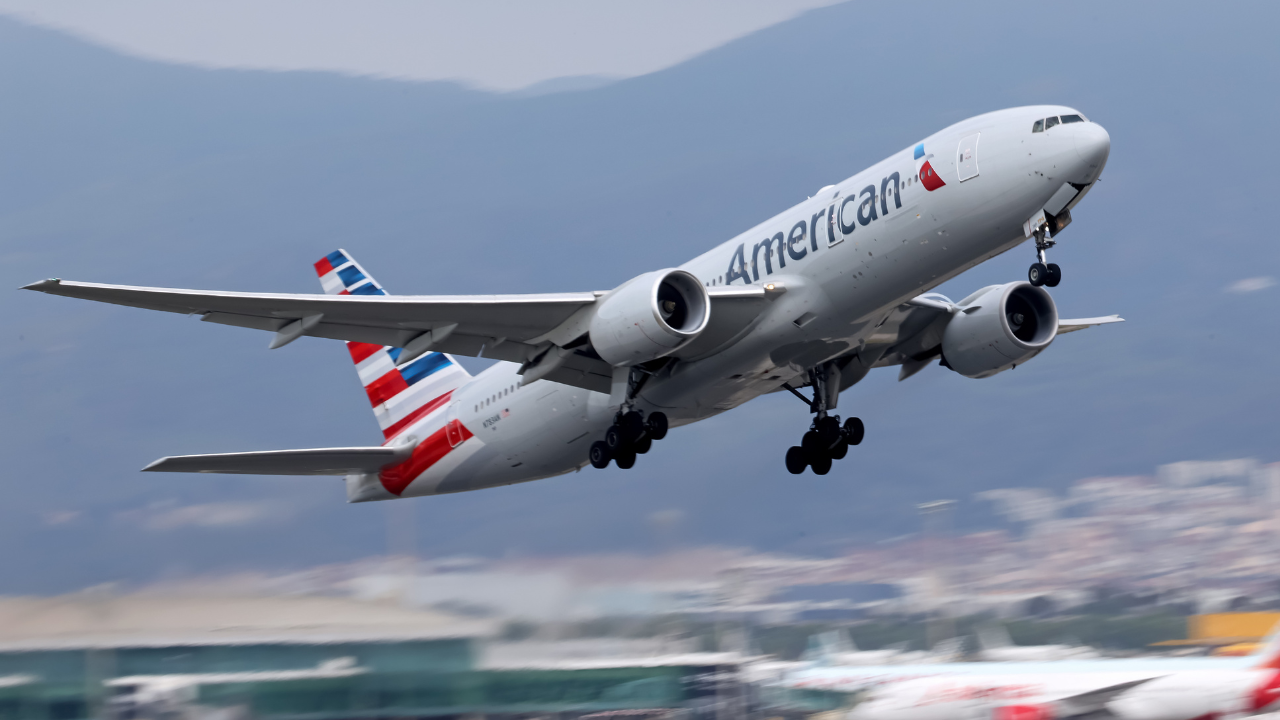
On a quiet Saturday morning at Boston Logan International Airport, the invisible safety margins that govern commercial aviation suddenly shrank to a knife’s edge. At approximately 11:34 a.m. ET, Delta Air Lines Flight 2351, arriving from Dallas with 129 passengers and six crew members, was on its final approach to land. At the exact same time, American Airlines Flight 3161, bound for Charlotte, North Carolina, was powering down an intersecting runway, having been cleared for takeoff just moments earlier. What unfolded over the next sixty seconds was a heart-pounding near-miss that brought two massive commercial airliners within a breathtakingly close 300 feet of each other—less than the length of a single football field. For the pilots in both cockpits and the air traffic controllers in the tower, a routine weekend shift instantly transformed into a high-stakes, adrenaline-fueled race to avert disaster.
The raw human tension of those critical moments was laid bare in archived audio later recovered from LiveATC.net. As the Delta jet descended, the pilots realized they were on a direct collision course with the departing American flight. Demonstrating remarkable poise under immense pressure, the Delta captain made the split-second decision to perform a “go-around”—a routine but highly urgent emergency maneuver where a landing is aborted, and the aircraft climbs rapidly to clear the airspace. “Delta… uhh… 2351 going around because of American,” the pilot status-reported over the radio, his voice steady despite the gravity of the situation. In the tower, confusion briefly reigned as a controller urgently radioed, “American 3161, where are you going?” to which the American pilot responded with defensive certainty, “You cleared us for takeoff 3161.” This brief, chilling exchange highlighted how easily communication gaps can manifest in the complex, fast-paced environment of modern airport operations.
For the passengers aboard the Delta flight, the sudden roar of the engines and the steep climb back into the sky would have been a jarring departure from a standard landing. Following the aborted touchdown, air traffic controllers instructed the Delta crew twice to climb and “maintain 3,000” feet to ensure they remained safely separated from other aircraft. The plane circled the Massachusetts skies for roughly ten more minutes before finally touching down safely at 11:45 a.m. ET. While all 135 people on board disembarked without physical injury, the psychological weight of what almost occurred lingers. Former Boeing safety engineer Todd Curtis, who analyzed the flight data, confirmed just how narrow the escape had been, emphasizing that a 300-foot separation at commercial runway speeds leaves absolutely zero room for error.
Following the incident, representatives from Delta Air Lines praised their flight crew and pointed to the advanced technology that helped prevent a tragedy. During their descent, the cockpit crew received an automatic advisory from their onboard traffic collision avoidance system (TCAS), which acts as an electronic safety net by scanning surrounding airspace and instructing pilots on how to dodge impending traffic when verbal tower instructions fail. A Delta spokesperson emphasized that their flight crews undergo rigorous, continuous simulation training to ensure that reacting to these automated warnings becomes second nature. Meanwhile, the Federal Aviation Administration (FAA) immediately launched an official investigation into the incident, focusing on how and why the air traffic control tower cleared two separate commercial flights to occupy intersecting runways simultaneously.
This terrifying close call at Logan Airport does not exist in isolation; it occurs during a deeply concerning period of increased runway incursions and near-misses across the United States. Just over the past few weeks, the FAA has opened multiple investigations into similar scary incidents, including a high-profile runway close call at New York’s JFK International Airport and another tense situation involving a Southwest Airlines flight. Public anxiety regarding aviation safety has been further exacerbated by tragic recent accidents in the broader aviation community, including a fatal business jet crash in Laredo, Texas, which claimed the life of prominent Austin tech leader Joshua Baer, and a small-plane crash in Bowie, Maryland, that left three people dead. Together, these events have put intense pressure on regulators and raised urgent questions about whether the national aviation system is suffering from systemic staffing shortages, procedural fatigue, or high air-traffic volumes.
Ultimately, the successful resolution of the near-collision in Boston serves as both a testament to modern pilot training and a sobering warning that the aviation industry cannot rest on its laurels. While advanced warning technology and the rapid reactions of a highly trained flight crew prevented a disaster this time, the incident highlights the crucial need for ongoing systemic reforms, improved air traffic controller working conditions, and flawless communication protocols. Flying remains, statistically, one of the safest human endeavors, built on decades of learning from past mistakes and continuously refining safety measures. As federal agencies investigate this latest close call, the industry must recommit to protecting the trust of millions of travelers who step onto airplanes every day, expecting that the invisible safety nets above will always hold.