




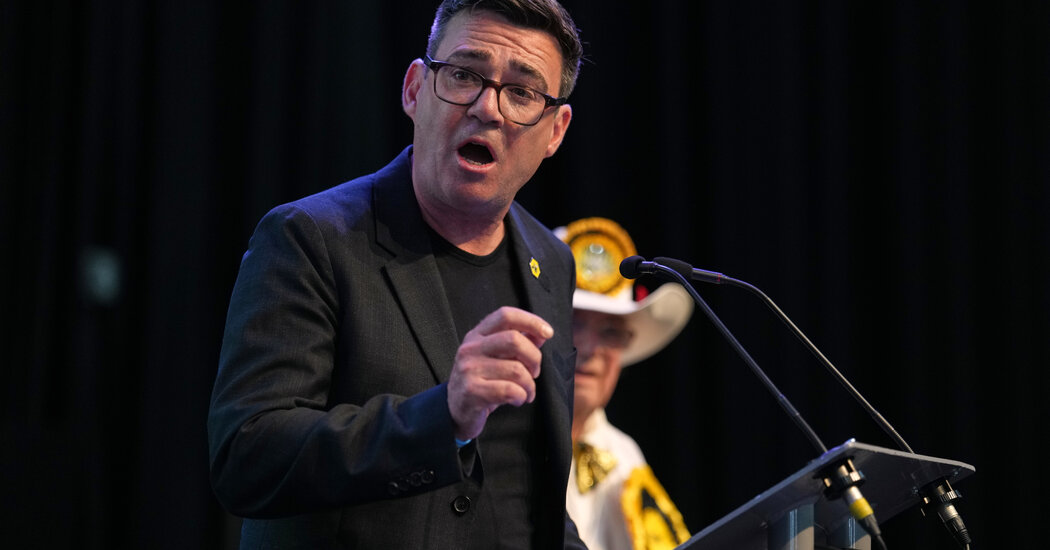
The potential ascension of Andy Burnham to the position of Britain’s 59th prime minister represents a fascinating natural experiment in the chemistry of modern leadership, testing whether the warmth of human connection can triumph over the cold mechanics of policy. At fifty-six, the former Mayor of Greater Manchester stands as a striking contrast to the current Prime Minister, Keir Starmer, despite both men sharing the same Labour Party pedigree and speaking passionately about “Labour values.” Yet, while their policy papers might look remarkably similar on a bureaucrat’s desk, their personal frequencies could not be more different. Starmer has increasingly come to personify a sterile, legalistic technocracy—highly efficient but emotionally distant—which has left a weary electorate feeling thoroughly uninspired and politically abandoned. Burnham, on the other hand, possesses a natural, unforced charisma and a rare gift for authentic communication that has captured the imagination of a nation currently drowning in political apathy. Desperate for a spark of vitality, many Labour members of Parliament are beginning to look to Burnham not because he promises a radical administrative revolution, but because he offers an emotional rescue. As political analyst Tim Bale dryly observed, if the metaphorical policy “sausage” remains largely unchanged, Burnham at least brings a desperate country the irresistible “sizzle” of hope. In an era structured by bleak economic forecasts, many in the political establishment are willing to take that bet, hoping that Burnham’s undeniable, magnetic personality can persuade a skeptical public to look past their deep-seated anger and give the government one more chance.
Yet, no amount of charisma can dry the damp walls of Britain’s crumbling infrastructure or erase the sobering economic mathematics waiting inside 10 Downing Street. Should Burnham successfully navigate the treacherous path to the premiership, he will immediately inherit a nation burdened by decades of systemic stagnation, eye-watering national debt, and public services that are visibly fraying at the edges. The National Health Service, once the proud heart of British social democracy, is currently buckling under historic backlogs and labor strikes, while a severely underfunded defense sector competes fiercely for a dwindling pool of public funds. Meanwhile, everyday citizens are struggling underneath the weight of a growing tax burden that has squeezed middle-class families to their financial limits. This pervasive sense of domestic decline has fueled an angry, nationalist populism led by figures like Nigel Farage, whose Reform UK party has channeled the frustrations of nearly a third of the British electorate. During his brief but intense special election campaign in Makerfield, Burnham dropped small clues about his governance strategy—leaning into local devolution, public ownership of water utilities, business tax cuts, and affordable housing. But his true appeal lay in his ability to speak to voters in sweeping, cinematic themes of restoration and dignity, telling a crowd of weary supporters in the early hours of Friday morning that while politics is broken, their collective vote could mark the definitive turning point for a country that has lost its way.
To truly understand Burnham’s political magic, one must look north to the communities that have felt systematically ignored and economically hollowed out since the 2008 financial crash and the chaotic fallout of Brexit. Unlike the metropolitan elite who dominate the halls of Westminster, Burnham was born and raised in the industrial landscapes of the northwest, giving him an instinctive, deeply rooted understanding of regional grievances. During his highly successful nine-year tenure as the Mayor of Greater Manchester, he transformed himself from a standard career politician into a champion of regional pride, earning the affectionate moniker “King of the North.” He didn’t just talk about regional inequality; he fought it on the streets, famously reclaiming Manchester’s fragmented bus system from private monopolies and introducing the iconic, yellow “bee buses” with affordable, capped fares that reunited disconnected neighborhoods. His willingness to physically stand up to the national government during the height of the COVID-19 pandemic—demanding fair financial support for his locked-down citizens—solidified his reputation as a leader who cared more about his people than his standing within the party hierarchy. This localized history of advocacy makes him a powerful storyteller, giving him the unique ability to counter the divisive rhetoric of populist agitators by offering voters a constructive narrative that makes them feel actively heard rather than patronized.
This emotional resonance is precisely why a growing number of terrified Labour MPs are eyeing Burnham as their political savior in a time of severe institutional panic. Under Starmer’s rigid stewardship, the Labour Party has watched its post-election honeymoon dry up with alarming speed, suffering embarrassing defeats to the Green Party and watching Reform UK consistently outpace them in public satisfaction surveys. The raw electoral math has created a quiet mutiny within the party, as backbenchers panic over their own political survival. Burnham’s stunning performance in the Makerfield special election provided a stark contrast to this doom loop; running in a crowded field of fourteen hopefuls, he swept to victory with a landslide 55 percent of the vote, single-handedly crushing the Reform UK candidate and winning more votes than all of his opponents combined. This spectacular triumph sent an undeniable shockwave through the corridors of power, proving that Burnham’s brand of empathetic, northern populism could act as a highly effective vaccine against the rising tide of right-wing nationalism. In the wake of this victory, party insiders have begun applying immense, coordinated pressure on Starmer, urging him to recognize the writing on the wall and begin planning a dignified exit before his low polling numbers drag the entire party into electoral oblivion.
What is currently playing out in the smoke-free rooms of Westminster is a classic human drama of power, legacy, and survival, as an embattled prime minister fights desperately to defend his territory. Starmer has publically put on a brave face, offering perfunctory congratulations to Burnham while insisting that he intends to serve out the remaining three years of his five-year mandate. He has warned his colleagues that turning on each other now would plunge both the party and the country into an unnecessary spiral of self-inflicted chaos, desperately trying to appeal to a sense of institutional loyalty that is rapidly evaporating. Yet, history suggests that the loyalty of politicians is a highly transactional commodity, easily spent when survival is on the line. If Starmer’s own cabinet begins to quietly step away, the prime minister may find himself with no choice but to initiate an orderly transition of power in a desperate bid to preserve whatever remains of his political legacy. For Starmer, this must feel like a cruel twist of fate, having led Labour to a parliamentary majority just a year prior—even if that victory was built on a historically thin 34 percent of the popular vote, a fragile foundation that has quickly crumbled beneath him.
Ultimately, if Burnham does succeed in claiming the keys to Downing Street, he will face the classic paradox of the charismatic leader: the brighter the hope you inspire, the faster it can turn to bitter disappointment when confronted by stubborn reality. The British political landscape is littered with the remains of larger-than-life figures, from Boris Johnson to international counterparts across the Atlantic, who built powerful cults of personality only to find that charm cannot balance a national budget or rebuild a crumbling hospital. Burnham is neither a theatrical showman nor an elusive intellectual, but his unique regional authenticity has made him a powerful symbol of what a fair, compassionate Britain could look like. However, the British public has grown notoriously impatient, and the initial wave of excitement that would accompany his entry into Number 10 would quickly dissipate under the cold demands of governance. If he is to succeed where others have failed, Burnham will have to prove that his magnetic personality is not just a clever political campaign tactic, but a genuine tool for structural transformation, showing a skeptical nation that his famous sizzle can finally deliver the nourishing, substantive change they have been waiting for.