





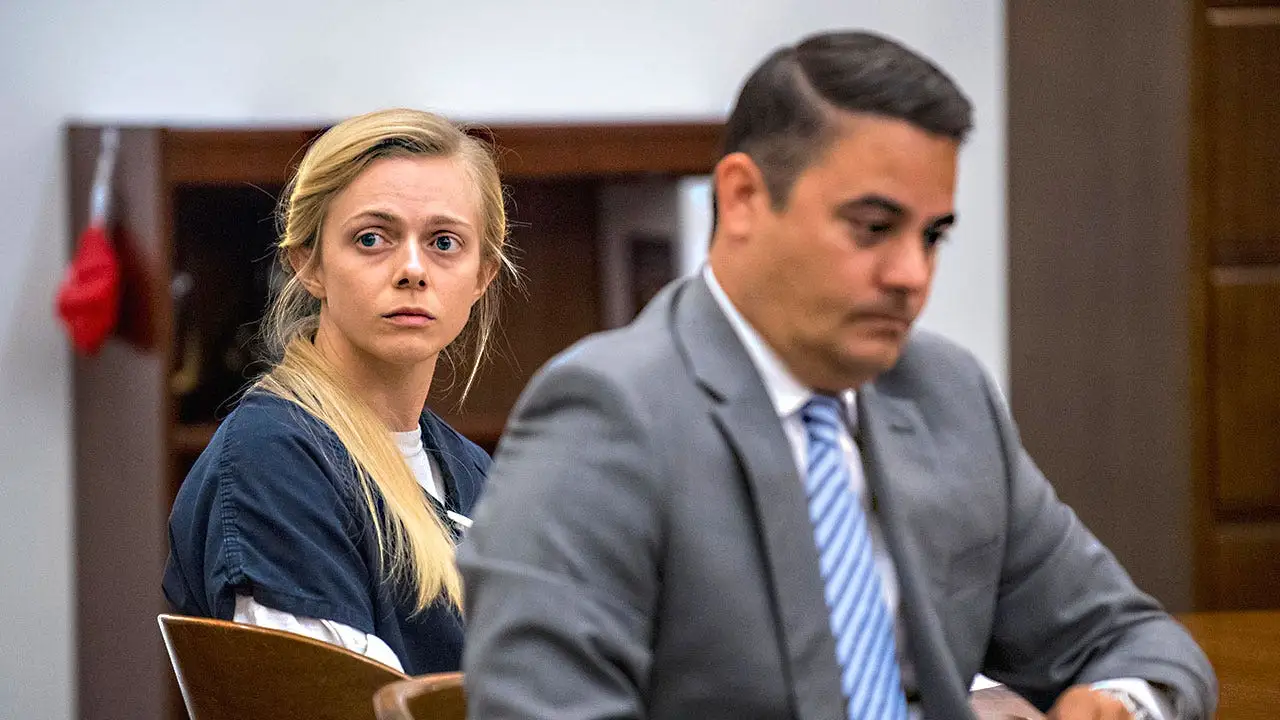
Before the public knew her name in connection with a horrifying double-murder cover-up, Rachel Buffett was an aspiring, charismatic theater student planning her dream wedding—though beneath her bubbly surface lay a volatile, unpredictable current that those closest to her were beginning to fear. For Audrey, a former close friend of Rachel’s, the breaking point in their relationship arrived during the frantic preparations for Rachel’s bachelorette party, an event that was supposed to be a joyous celebration but quickly turned into a frightening revelation of Rachel’s manipulative nature. Out of nowhere, Rachel casually suggested that Audrey should take ecstasy, and when Audrey flatly refused the illicit substance, Rachel’s response was not one of understanding, but a calculating, chilling tease: “Well, if I slipped it in your drink, you wouldn’t know about it.” It was a moment that transcended a simple offhand joke; to Audrey, it felt like an authentic, looming threat, a realization that her personal boundaries meant absolutely nothing to a woman she had trusted. This unsettling exchange was the final straw in a friendship that had already been showing deep, structural fractures, particularly when alcohol was involved. When Rachel and her fiancé, Daniel Wozniak, drank, their charming theater-kid personas disintegrated into explosive, aggressive shouting matches that routinely spilled over onto their social circle, creating an atmosphere of constant tension and unpredictable rage where even Audrey found herself throwing a shoe at Wozniak during one particularly toxic, drunken blowout. Walking away from this cycle of hostility was a matter of self-preservation for Audrey, who promptly cut off contact and declined an invitation to stand as a bridesmaid in their upcoming wedding. Yet, even as she distanced herself, Audrey could never have anticipated that just a month after she severed ties, this toxic couple would become central figures in one of the most horrific, cold-blooded murder cases in Southern California history.
To understand the profound tragedy that was about to unfold, one must look back at the bright, hopeful lives that were extinguished, and the stark contrast between them and the people who took them away. Audrey had originally met Rachel in college while they were both passionately pursuing theater degrees, drawn to Rachel’s infectious, high-energy personality and seemingly warm demeanor, which made her the kind of magnetic person everyone wanted to be around. Through this vibrant theatrical community, Audrey’s social circle expanded to include mutual friends Juri “Julie” Kibuishi, a talented and deeply expressive dancer, and Samuel Herr, a brave U.S. Army veteran who had survived combat only to face a far more insidious enemy at home. Audrey remembered both Julie and Sam as exceptionally delightful, funny, and genuinely loving individuals—the kind of rare, good-hearted people whose warmth was palpable the moment they walked into a room. At the center of this tight-knit group was the buzz of Rachel and Dan’s upcoming wedding, scheduled for May 28, 2010, an event that was supposed to solidify their future together but instead acted as the catalyst for an unspeakable nightmare. Just a week before the nuptials were to take place, the illusion of normalcy shattered when Sam’s father, Steve Herr, grew increasingly frantic because his son had uncharacteristically failed to answer his phone calls or show up for a planned family visit. Driven by an agonizing instinct that something was terribly wrong, Steve let himself into Sam’s apartment, hoping to find his son safe, but was instead met with a scene of unimaginable horror in the bedroom: the partially clothed body of young Julie Kibuishi, who had been shot in the head, while Sam himself was nowhere to be found, leaving behind a frantic crime scene that initially baffled investigators.
In the immediate, chaotic aftermath of the discovery, law enforcement officers operating on superficial evidence initially constructed a tragic narrative, believing that Sam Herr had murdered Julie in a fit of passion and then fled the state to escape justice. However, this convenient and damaging theory began to rapidly disintegrate when detectives noticed a series of highly suspicious, real-time financial transactions occurring on Sam’s bank account long after he had supposedly vanished. Following the digital breadcrumbs of these ATM withdrawals, investigators traced the stolen funds directly to a local teenager named Wesley Freilich, who, when interrogated, confessed that he was merely acting as an unwitting courier for Daniel Wozniak, who had handed him Sam’s bank card and instructed him to withdraw the cash. This crucial breakthrough led police straight to Wozniak, whom they arrested in a dramatic fashion during his own bachelor party, just days before he was scheduled to walk down the aisle with Rachel. Under the intense pressure of police interrogation, Wozniak’s initial web of lies and shifting stories collapsed, culminating in a disturbing confession where he admitted to the brutal murders, chillingly citing “money and insanity” as his sole motivators. Audrey, watching the horror unfold from a distance, was utterly stupefied by the sheer senselessness of the crime, realizing that Wozniak had been drowning in severe credit card debt and was willing to snuff out two beautiful lives just to fund his wedding and maintain a facade of wealth. The devastating truth was that there was absolutely no rationalization or excuse for the monstrous violence Wozniak had unleashed on people who had considered him a friend, leaving a community of artists and loved ones absolutely shattered by his greed.
Despite the bitter end of her friendship with Rachel, Audrey’s natural empathy compelled her to reach out to her former classmate after Wozniak’s arrest, setting aside her personal grievances to offer comfort during what she assumed was an agonizing, life-shattering betrayal. What Audrey encountered instead was a chilling display of narcissism and emotional detachment that forever altered her perception of Rachel’s humanity. When Audrey expressed her deep sorrow for the unimaginable nightmare Rachel must be experiencing, Rachel didn’t cry or lean on her friend; instead, she snapped back with cold hostility, accusing Audrey of only calling to secure “five minutes of fame” rather than out of genuine concern. This bizarre, defensive reaction struck Audrey as a massive psychological disconnect, a response completely devoid of the devastation one would expect from a woman who had just discovered her fiancé was a brutal double-murderer. As the prosecution’s case developed, the full, stomach-turning extent of Wozniak’s depravity came to light: he had lured Sam to a theater space, shot him, and then dismembered his body in a calculated plot to steal $62,000 of hard-earned military savings. To cover his tracks, Wozniak then used Sam’s phone to lure Julie to Sam’s apartment, where he murdered her and staged the scene to make it look as though Sam had sexually assaulted and killed her before running away. Most horrifying of all was the sociopathic compartmentalization Wozniak displayed: just hours after executing his gruesome plan and scattering Sam’s remains, he took to the stage of a local community theater, performing in the musical “Nine” as if he didn’t have the blood of two innocent people on his hands.
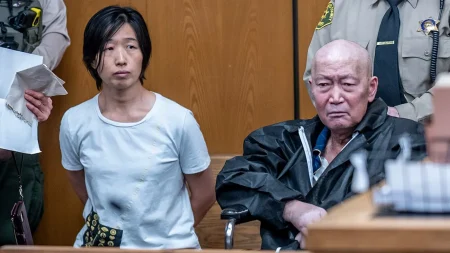
As the wheels of justice slowly turned, the focus inevitably shifted to Rachel Buffett’s actual involvement, sparking a fierce debate over whether she was a naive victim of Wozniak’s manipulation or an active participant in the cover-up. Throughout the investigation and high-profile media appearances on national television programs like “Dateline,” Rachel vehemently maintained her innocence, tearfully claiming that she was being unfairly targeted and painted as a monster by overzealous prosecutors. However, the evidence presented in court painted a far more damning portrait of her actions in the critical days following the murders. In 2012, authorities arrested Rachel on suspicion of being an accessory after the fact, with prosecutors arguing that she had actively lied to police, fabricated stories, and intentionally misled investigators in a desperate bid to shield Wozniak from suspicion. Far from being a clueless bystander, the jury found that Rachel had used her acting skills to construct a protective smoke screen around her fiancé, choosing to protect a killer over helping the grieving families of Julie and Sam find the truth. In 2016, Daniel Wozniak was rightfully sentenced to death for his heinous crimes, and two years later, in 2018, an Orange County jury found Rachel guilty of two felony counts of being an accessory after the fact, resulting in a 32-month jail sentence. Though she escaped the ultimate punishment of death or life imprisonment, her conviction solidified her legacy not as an innocent victim of love, but as a willing accomplice who prioritized her own self-preservation and her fiancé’s freedom over basic human decency and the urgent demands of justice.
Years after the trial concluded and the media circus packed up, Audrey is left to carry the emotional scars of having stood so close to such profound evil, finding herself constantly re-evaluating the memories of those final weeks of her friendship with Rachel. She still wonders about the strange, lingering text messages she received from Rachel’s phone after they had parted ways—messages inviting her back into the fold—and whether they were truly written by Rachel or if they were sent by the manipulative hand of Wozniak using his fiancée’s phone to maintain control. This traumatic chapter of her life permanently reshaped how Audrey approaches relationships, serving as a harsh, permanent lesson in the dangers of superficial charm and the necessity of maintaining firm boundaries. She frequently reflects on a poignant quote from the musical Into the Woods—”Nice is different than good”—a phrase that perfectly encapsulates the deception of the theater community she once loved, where bubbly, performative kindness often masked a deep, psychological rot. Today, Audrey understands that while it is important to treat everyone with basic human respect, you do not have to invite them into the sacred spaces of your life, a hard-won boundary that helps her protect her own peace and mental well-being. Through her healing journey, she strives to keep the focus where it truly belongs: not on the sensationalized actions of the killers, but on the enduring, beautiful memories of Julie and Sam, whose genuine goodness and warmth continue to shine as a beacon of love against the dark, tragic legacy of the people who stole their futures.