






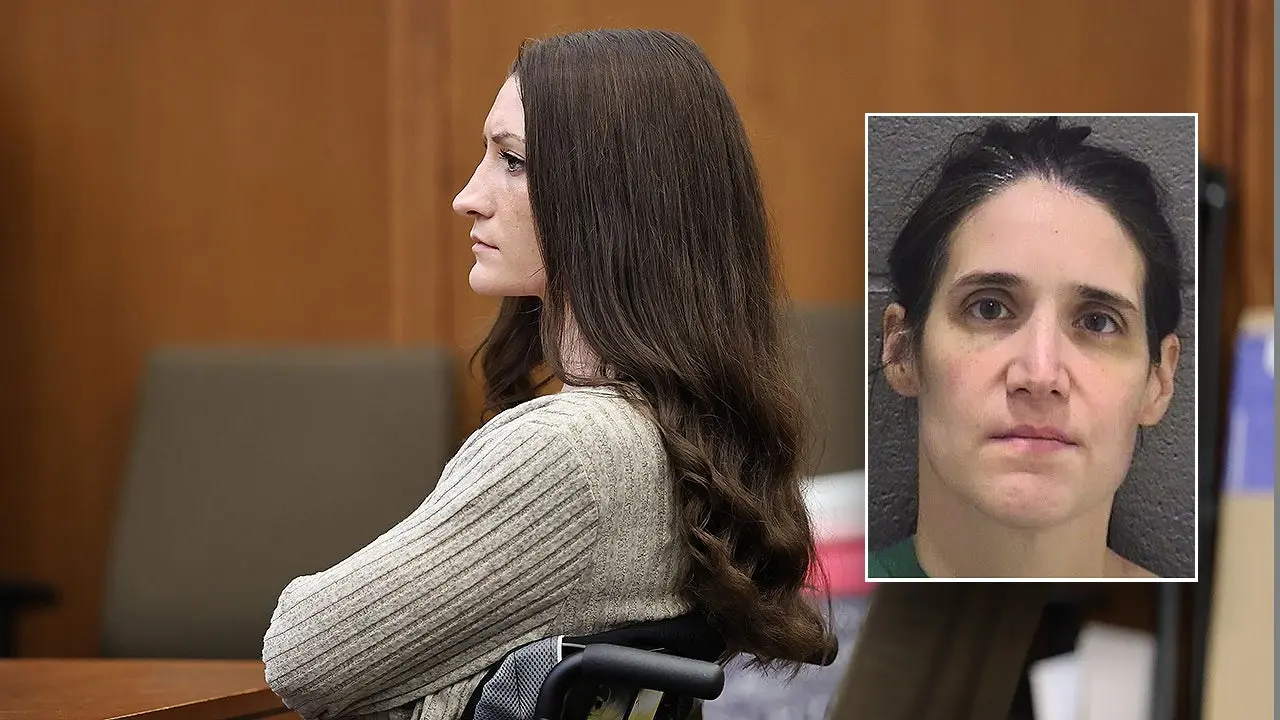
On February 12, a 911 call from a home in Durham, North Carolina, began one of those cases that is almost impossible to absorb. Andrea Faust, a 41-year-old mother, was charged with murder in the death of her three-year-old son and attempted murder in the attack on her two-year-old son. The second child survived, but the family and the community were left in ruins. In the weeks that followed, the central question became not simply what happened, but why. Faust’s attorneys have filed notice that they intend to rely on two intertwined defenses: not guilty by reason of insanity and diminished capacity. That filing does not prove anything by itself, of course, but it tells us where the defense will focus its energy: not on denying the tragic events, but on explaining them through mental illness. In North Carolina, an insanity defense asks a jury to conclude that, at the moment of the alleged crime, the defendant was so impaired that she could not distinguish right from wrong. Diminished capacity, meanwhile, suggests that even if she knew what she was doing, she did not possess the full mental faculties needed for premeditation and intent. These are difficult legal arguments, and they are often misunderstood by the public. The phrase “not guilty by reason of insanity” feels like a technical loophole, but it is actually an acknowledgment that some human beings lose their grip on reality so completely that criminal punishment cannot be the only lens. For Faust, the stakes are absolute. She is not just a defendant in a courtroom; she is a mother who, according to her lawyer, was a loving, doting parent, concerned about her children and caring for them right up to the moment everything shattered. That contradiction—love and violence, nurture and destruction, illness and choice—makes her case deeply unsettling and deeply human.
It is impossible to discuss Faust’s case without thinking about Lindsay Clancy, the Massachusetts mother accused of killing her three children in 2023. Clancy’s trial has dominated national headlines and pulled postpartum mental health out of the shadows. She pleaded not guilty by reason of lack of criminal responsibility, meaning her lawyers argue that she was not criminally responsible for her actions because she suffered from severe postpartum psychosis. Her defense team has painted a picture of a woman drowning in delusions and hallucinations, a mother who believed she was saving her children from a fate worse than death. Prosecutors have countered that Clancy understood what she was doing and acted deliberately, going through the motions of planning and carrying out the killings. As jurors began deliberating, retired Massachusetts Superior Judge Jack Lu said he expects more defendants to raise similar defenses in the future, simply because the Clancy case has made the country more aware of postpartum mental-health conditions. But he also warned that these defenses rarely succeed. “Most of the time, these criminal responsibility, insanity, mental health defenses are unsuccessful,” Lu told Fox News Digital. That is a sobering reality. The law has a very narrow definition of insanity, and juries are often skeptical of claims that someone who committed a terrible act was truly out of touch with reality. Still, the Clancy trial has forced a conversation that was long overdue: how much can postpartum mental illness alter a mother’s brain? How much should it matter in a courtroom? And can we even begin to understand the state of mind of a woman who kills her own children? Those questions now hang over Faust’s case as well, giving it a resonance that extends far beyond one Raleigh-Durham courtroom.
Faust’s attorney, Nicole Galinsky, has been remarkably open about the similarities between the two women. “Andrea and Lindsay’s cases are eerily similar, though not entirely the same,” she told Fox News Digital. Faust, she said, was not suffering from postpartum psychosis, but she was dealing with serious mental-health issues, including hallucinations and hospitalizations. Galinsky says both women were loving, responsible mothers who were worried about their children and trying to care for them up until the very second they killed them. That sentence is haunting because it challenges our instinct to see them as monsters. “Neither woman did this out of the blue,” Galinsky said. “Both were struggling enormously with their mental health. But, like most women and almost all moms, they were just trying to get through each day, care for their children, be a good mom/wife/employee. Both were seeking help from doctors who weren’t really taking their concerns seriously.” This is where the story becomes more than a legal drama. It becomes a mirror held up to a healthcare system that too often dismisses women’s pain, especially mothers’ pain. Galinsky said both women advocated for themselves over and over again, and it got them nowhere. “Both of these cases highlight the failure in our society to take women and mothers seriously when it comes to their mental health,” she said. She then added something that cuts to the heart of the matter: “I am hopeful that our case will demonstrate how to properly treat and rehabilitate a woman living her own worst nightmare. Lindsay Clancy was not given that luxury.” The idea that a mother could be living her own worst nightmare—inside her own mind, with no one truly listening—is terrifying. It makes Faust not a cartoon villain but a broken human being. And it raises a difficult question: if we can recognize that she was trapped in a nightmare, should she be punished as a murderer or treated as a patient?
The legal road ahead is uncertain, and the odds are steep. Retired Judge Jack Lu, who has observed the Clancy case closely, pointed out that mental-health defenses are usually unsuccessful, especially when the victims are children. There is something about the death of a child that makes jurors want to assign blame in the strongest possible terms. The grief of the surviving family, the image of tiny coffins, the anger of a community—all of that weighs heavily in a deliberation room. Lu acknowledged that society and the legal system have not fully understood the effects of postpartum mental illness on behavior and criminal responsibility. Even as a judge, he admitted that the Clancy trial changed his own understanding. “I had no real understanding of what a person like Ms. Clancy was going through until this trial,” he said. That is a striking statement from a legal professional. If a retired judge who has spent decades in the courtroom did not grasp the realities of postpartum psychosis until recently, what does that say about the average juror? What does it say about the rest of us? Faust’s case has already had its own competency journey. She was found incapable of proceeding to trial in March, after court records documented serious concerns about her mental health and safety. She was later transferred to Central Regional Hospital, where she was found capable of proceeding as of May 21. That means she was too ill to stand trial at first, then stabilized enough to participate in her own defense. Her attorney says another evaluation is planned to examine her mental state at the time of the alleged offenses. That distinction is crucial. The law asks two different questions: Is she well enough to stand trial now? And was she well enough to know right from wrong then? Faust’s attorneys will need to answer both, and they will do so in front of a jury that may struggle to feel sympathy for a woman accused of harming her own child.
Lu said mental-health defenses should receive more serious consideration because they can explain behavior and reduce moral culpability. But he also acknowledged that these defenses face an especially difficult path in cases involving children. “These cases should have legs,” he said, meaning they should be able to stand on their own merits, “but unfortunately society and juries don’t give them much credence.” That is a painful truth. The insanity defense is rarely a get-out-of-jail-free card. In many cases, a successful mental-health defense does not mean the defendant goes home. It means she is committed to a psychiatric facility, often for years, under strict supervision. It is not a free pass; it is a different kind of consequence. But the public often sees it as a technicality, and juries may worry that acquitting someone on insanity grounds would insult the memory of the victims or send a message that children’s lives don’t matter. This is understandable, but it is also dangerous. If we refuse to seriously consider mental illness as a factor, we are pretending that psychosis is not real, and we are punishing people for having brains that betrayed them. The bigger tragedy is that cases like Faust’s and Clancy’s are preventable. Both women, according to their attorneys, reached out for help and were not heard. They saw doctors, they were hospitalized, they tried to communicate their terror, and somewhere along the way, the system failed them. Their cases are not just about individual responsibility; they are about collective failure. We hold mothers to impossible standards. We expect them to be endlessly nurturing, endlessly patient, endlessly strong. And when they admit that they are drowning, we too often tell them to pull themselves together. By the time their pain becomes a crime, it is too late for everyone.
In the end, these two cases—separated by hundreds of miles but connected by tragedy—force us to look at ourselves. There are no winners here. Children are dead. A mother in Massachusetts is on trial for her life, and a mother in North Carolina is waiting to see if her case will even make it to a jury. Families are shattered, and communities are grieving. But the way we respond to these women reveals something important about who we are and who we want to be. Do we want to be a society that recognizes mental illness and offers help before it is too late? Or do we want to be a society that waits until a mother has destroyed everything she loves and then demands that the legal system throw her away? Galinsky’s words hang in the air: “I am hopeful that our case will demonstrate how to properly treat and rehabilitate a woman living her own worst nightmare. Lindsay Clancy was not given that luxury.” That is the real tragedy. Both women were struggling, both women asked for help, and both women were left alone with minds that turned against them. The insanity defense may be imperfect, and juries may remain skeptical, but these cases should at least make us more honest about the fragility of the human mind. They should make us more compassionate toward mothers who suffer in silence, and more determined to listen when a woman says she is not okay. If we cannot save Andrea Faust, if we cannot truly see Lindsay Clancy and what she went through, then we have learned nothing. And the next phone call, from the next desperate mother, will end the same way. The legal system will do its best to sort out guilt and innocence, but the deeper judgment belongs to all of us: whether we will hold space for the possibility that a mother who kills her children is not always a monster, but sometimes a patient—a woman living through the worst nightmare imaginable, with no one to save her or her children.