




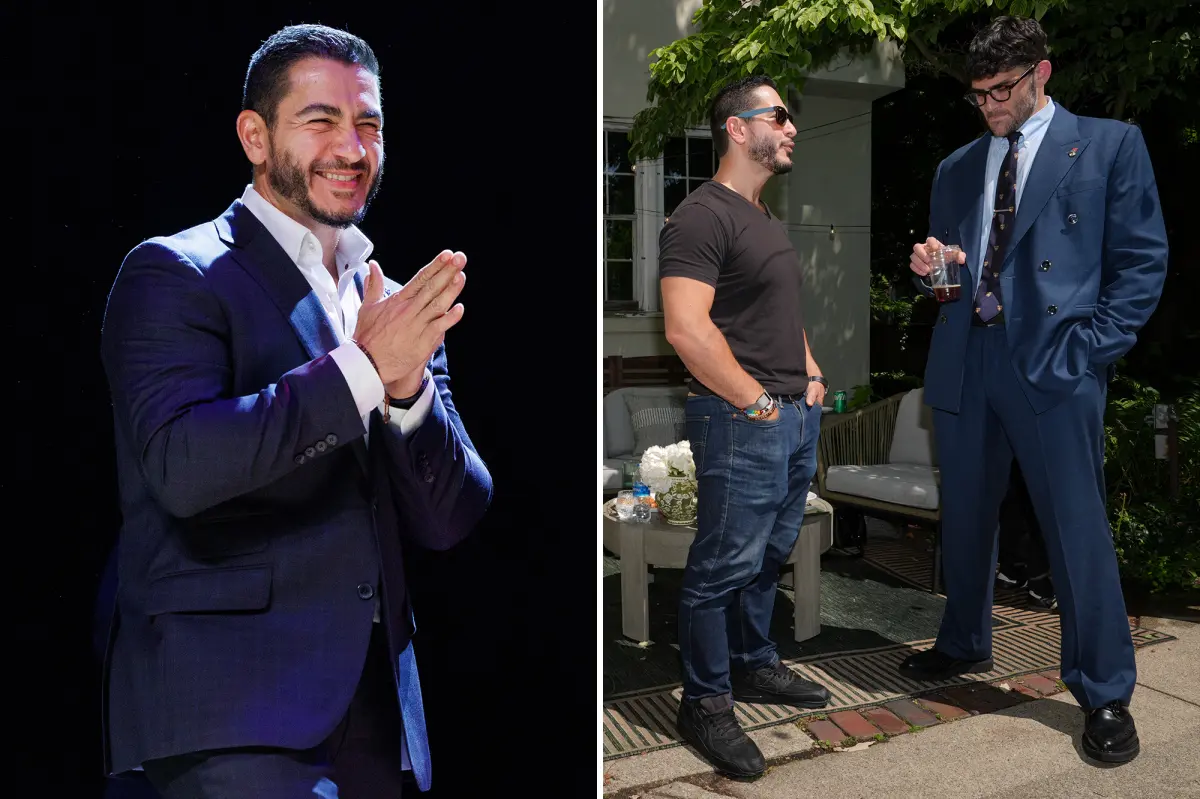
In the high-stakes arena of Michigan politics, the recent Senate primary concluded not with a resounding mandate, but with a tense, razor-thin margin that exposed deep ideological fractures within the Democratic electorate. Dr. Abdul El-Sayed, a prominent 41-year-old progressive figure, secured a narrow victory over Representative Haley Stevens, emerging triumphant by fewer than 15,000 votes out of more than 1.5 million ballots cast. This nail-biting finish sent shockwaves through regional and national political circles alike, particularly because internal and public polling just a week prior had projected El-Sayed holding a comfortable double-digit lead. As the final tallies rolled in, the atmosphere in campaign offices transformed from an expected coronation into an anxious realization of how deeply divided the state remains. For the campaign staff, the exhausted volunteers, and the voters themselves, the evening was a grueling reminder of the volatile nature of contemporary American politics, where long-held electoral assumptions can evaporate in a matter of hours. The incredibly slim margin of victory signaled that while El-Sayed’s progressive platform continues to resonate with a passionate and highly organized base, a significant portion of the constituency harbors deep reservations about the direction of their leadership. This electoral friction sets the stage for a highly contentious general election campaign, where every single vote must be fought for and no demographic can be taken for granted in a state historically known for its pivotal, unpredictable role in national politics.
Central to the post-primary scrutiny surrounding El-Sayed is his close political relationship with Hasan Piker, a highly popular and deeply controversial left-wing internet streamer who served as a key surrogate on the campaign trail. Piker, who commands an audience of millions of young voters online through platforms like Twitch, has frequently drawn intense criticism for his provocative and inflammatory commentary on geopolitics, American history, and Middle Eastern affairs. Critics point to his history of incendiary remarks, including a past assertion that the United States “deserved 9/11,” alongside highly sensitive comments downplaying the gravity of sexual violence reported during the October 7, 2023, Hamas-led attacks on Israel. When questioned by the New York Times in a post-primary interview regarding whether he would continue to feature Piker as a prominent campaign representative heading into the general election, El-Sayed offered a measured, evasive response that stopped short of a denunciation. Rather than distancing himself from the polarizing streamer to appeal to moderate voters, El-Sayed demurred, stating that his primary focus remained on the everyday voters he is actively campaigning to reach. This refusal to cut ties with such a polarizing figure has amplified concerns among his detractors, who interpret his silence as a tacit endorsement of Piker’s extreme rhetoric, illustrating the complex and often precarious alliances modern politicians make with digital influencers to secure youth engagement at the risk of alienating mainstream communities.
The unease surrounding El-Sayed is not solely based on his external associates, but also on his own public statements, which have sometimes struck a discordant note during moments of acute local tragedy. A particularly sensitive flashpoint occurred in mid-March, following an incident where a man drove a pickup truck into the entrance of Temple Israel in West Bloomfield Township, a prominent local synagogue that was hosting numerous schoolchildren at the time. The day after this frightening event, El-Sayed released a video message addressing the community; however, his choice of words ignited immediate controversy rather than providing comfort. In his message, El-Sayed chose to highlight that the driver had recently lost relatives in an Israeli airstrike in Lebanon, concluding with the philosophical assertion that “violence always begets violence.” For many members of the Jewish community, this framing felt less like an expression of solidarity and more like an attempt to contextualize, explain away, or even subtly justify a frightening act of domestic terror targeted at children. This rhetorical approach deeply wounded local families, who felt that a house of worship should be a sanctuary free from geopolitical rationalizations, and sparked a broader debate about the boundaries of political empathy when local safety is compromised.
For many Jewish residents in Michigan, these compounding controversies have transformed political policy debates into deeply personal concerns about physical safety, communal security, and the future of their families. Joe Tigay, a 44-year-old father of three young children living in the Detroit area, expressed the profound anxiety currently gripping his community, describing the current political atmosphere as a genuinely frightening period for Jewish families. Tigay, a politically moderate voter who twice supported Barack Obama’s presidential campaigns, represents a crucial segment of the electorate that feels increasingly alienated by the progressive wing of his traditional party. He noted that the lack of reassurance from El-Sayed has left him seriously considering a vote for the Republican nominee, Mike Rogers, in the upcoming November election. For Tigay and many others in his position, the threshold for regaining trust is remarkably straightforward yet seemingly elusive in the current polarized environment: a clear, unequivocal statement from El-Sayed affirming Israel’s fundamental right to exist and defend itself. Without such basic reassurances, moderate Jewish voters find themselves caught in a painful political limbo, forced to choose between their historical party affiliation and the perceived safety of their families.
Spiritual and community leaders have also stepped forward to give voice to this collective anxiety, translating personal fears into a broader call for moral accountability. Rabbi Aaron Starr of Congregation Shaarey Zedek articulated the widespread dismay among his congregants, directly linking the fear surrounding El-Sayed’s political ascent to the candidate’s public rhetoric following the Temple Israel incident. Rabbi Starr condemned what he viewed as a willingness to falsely justify a terrifying act of aggression, suggesting that such language erodes the essential trust required between a community and its prospective representatives. Furthermore, the Rabbi drew a sharp moral parallel regarding El-Sayed’s continued association with Hasan Piker, arguing that if a conservative politician were to elevate a member of the Ku Klux Klan or another hate group to their platform, it would rightfully trigger massive public outrage. In the same vein, he argued, the Jewish community feels a profound sense of outrage and betrayal when a major candidate legitimizes a figure like Piker, whose stream of commentary is viewed by many as deeply hostile to their identity and existence. This comparison underscores the depth of the pain and the perceived double standard felt by community members who feel their fears are being marginalized by mainstream political figures.
As Michigan pivots toward a pivotal general election in November, the unresolved tensions surrounding El-Sayed’s candidacy highlight the immense challenges of building a broad, inclusive coalition in a deeply divided state. The primary results have demonstrated that while the progressive movement possesses the organizational strength to win elections, the path to governance requires navigating complex, sensitive cultural landscapes with empathy and precision. For El-Sayed, the coming months will test his ability to address the genuine fears of his Jewish constituents while maintaining the support of the progressive base that carried him to victory. The dialogue between political campaigns and local communities must transcend mere rhetoric, requiring a commitment to active listening, mutual respect, and the rejection of divisive voices that amplify hostility. Whether Michigan can bridge these deep-seated divides and foster a political culture of safety and mutual understanding remains to be seen, but the outcome of this election will undoubtedly serve as a crucial bellwether for the nation’s struggle to find common ground amidst deeply personal and global conflicts.