






Nestled amidst the majestic, fog-shrouded redwoods of Humboldt County, California, the peaceful town of Fortuna has long been celebrated for its close-knit community spirit and its deep-seated harmony with the natural world. For over three decades, Miranda’s Rescue Animal Sanctuary stood as the glittering crown jewel of this local compassion, widely recognized as a sacred haven where the forgotten, abused, and abandoned animals of the region could find a second chance at life. To the residents, volunteers, and donors who poured their hearts and hard-earned money into the organization, the sanctuary was synonymous with hope, healing, and unconditional love under the leadership of its charismatic founder, Shannon Miranda. This beautiful illusion, however, was shattered into a million pieces when a chilling tip-off reached the Humboldt County Sheriff’s Office, alleging a horrific underworld of animal cruelty, systemic abuse, financial fraud, and a dark conspiracy hidden behind the sanctuary’s gates. What welfare investigators expected to be a routine inquiry quickly evolved into one of the most emotionally shattering and physically taxing mass animal casualty investigations in Northern California’s history. As local, state, and federal authorities descended upon the idyllic property, the community watched in collective horror as the terrible truth began to rise from the soil, forever altering the landscape of local animal rescue and leaving a permanent, painful scar on the hearts of animal advocates who realized that the sanctuary they championed had transformed into a silent graveyard.
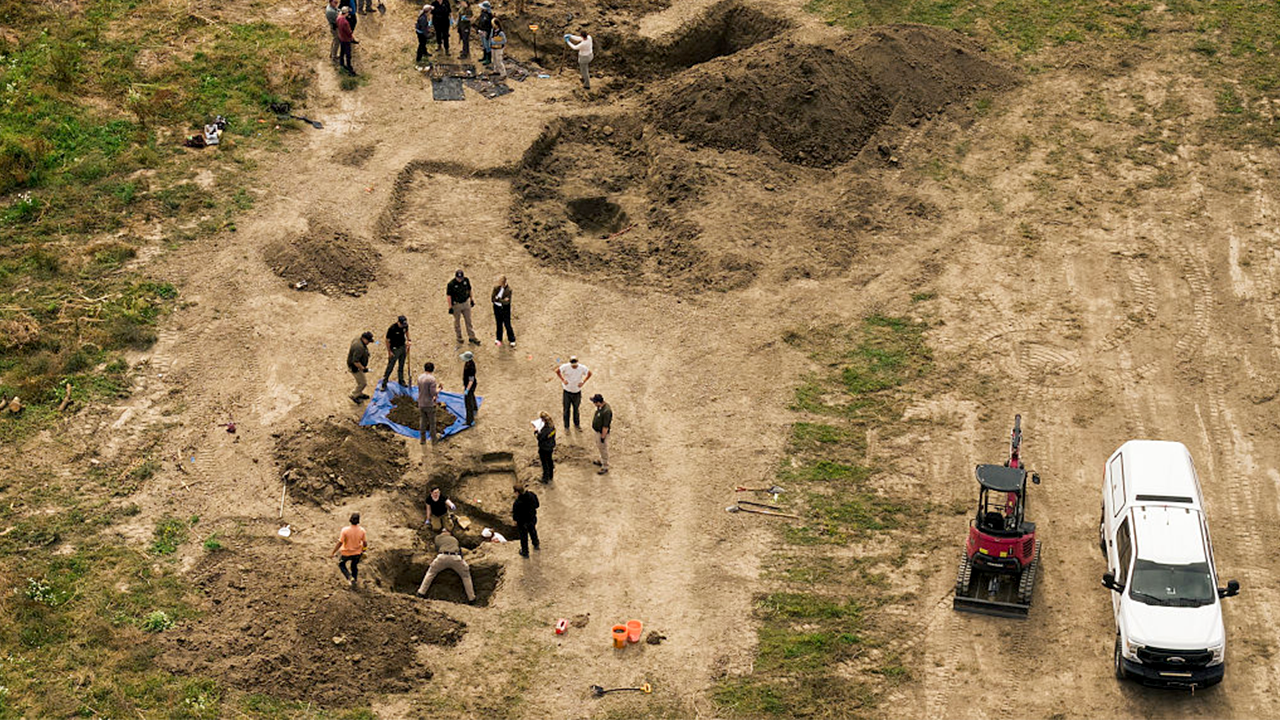
The physical reality of what deputies and forensic investigators uncovered beneath the ground of Miranda’s Rescue was nothing short of a nightmare made manifest. Initial excavations at two distinct dig sites yielded the intact remains of 117 dogs, each resting in various grim stages of decomposition that told a silent story of neglect and untimely death. Further probing of a third nearby location revealed an additional 21 canine skulls, hundreds of loose bones, and six discarded microchips—mute testaments to the sheer scale of the tragedy that had unfolded over time. The horror deepened when forensic veterinarians conducted on-site X-rays of seventy of the recovered dogs, discovering that a vast majority of them harbored bullet fragments within their skeletal structures, indicating that their lives had been abruptly and violently ended by gunfire rather than the peaceful, medically supervised euthanasia typically practiced by humane shelters. Perhaps the most chilling discovery of all occurred inside one of the sanctuary’s barns, where investigators identified an area believed to have served as an execution site; here, they recovered over 600 dog collars, stripped from the necks of the victims and piled away like grim trophies of a secret purge. Each collar, once selected by a hopeful family or a caring volunteer, stood as a heartbreaking symbol of a specific dog who had arrived at the sanctuary seeking safety, only to meet a violent, unmonitored end in the shadows.
To fully grasp the magnitude of this tragedy, one must look at the staggering and incomprehensible mathematical discrepancy that investigators pulled from the rescue’s transfer records. Traffic logs and official animal intake documents show that at least 918 dogs were transferred to Miranda’s Rescue Animal Sanctuary since the beginning of January 2025. Yet, despite this massive influx of vulnerable lives, investigators could only confirm a meager 116 successful adoptions, and a mere 71 living dogs were found surviving on the property during the execution of the search warrants. This leaves an agonizing, haunting void of more than 700 dogs completely unaccounted for—lost souls who entered the facility with a paper trail but simply vanished without a footprint. These are not merely cold statistics on a sheriff’s spreadsheet; they represent 700 individual stories of hope cut short, hundreds of tails that stopped wagging, and countless eyes that searched for a friendly hand in their final moments. The terrifying ease with which hundreds of living creatures were seemingly erased from existence highlights the biological vulnerability of the rescue system, exposing how easily greed, exhaustion, or malice can exploit the lack of oversight to turn a place of refuge into a black hole of despair.
The monumental task of processing this crime scene and building a watertight legal case has fallen on the shoulders of the Humboldt County Sheriff’s Office and its Major Crimes Division, who are working in close lockstep with state and federal partners. Sheriff William Honsal has emphasized that this investigation is only in its infancy, noting that the sheer volume of physical evidence, veterinary data, and witness testimonies will require an exhaustive, long-term commitment from investigators. The emotional toll of this work cannot be overstated, as forensic investigators must painstakingly scan each decomposing body and search through the hundreds of recovered microchips to identify the true identities of these dogs and trace them back to their original owners or the shelters that transferred them. These law enforcement professionals, who are accustomed to dealing with the worst facets of human nature, now find themselves acting as the final guardians and voices for hundreds of deceased animals who cannot speak for themselves. The rigorous, meticulous nature of their investigative work represents the community’s primary hope for answers, as they seek to untangle the web of alleged fraud and conspiracy to ensure that those responsible for this unprecedented betrayal are held fully accountable under the law.
In the wake of these devastating revelations, the sanctuary’s owner and founder, Shannon Miranda, has adamantly defended his life’s work, releasing a public statement on the rescue’s website that pushes back heavily against the allegations. Miranda argued that the media coverage has painted an incomplete and inaccurate picture of his thirty-year legacy, asserting that any euthanasia performed at the facility was a rare and painful necessity reserved only for terminally ill animals or dogs that posed an immediate, uncontrollable threat to human life. To illustrate his point, he shared vivid, harrowing stories of aggressive dogs, such as a dog named Zora who allegedly killed a cat and attacked another dog, and another transfer dog who fixated on and lunged at a baby stroller, forcing him to make the agonizing decision to euthanize them to protect his staff and the public. While behavioral euthanasia is indeed a tragic and widely recognized reality within the animal rescue community, the physical evidence unearthed by investigators presents a dramatic and jarring contradiction to Miranda’s narrative of peaceful, compassionate end-of-life decisions. The presence of mass graves, bullet-riddled bones, and hundreds of stripped collars suggests a systematic, industrialized method of disposal that lies far outside the boundaries of accepted veterinary ethics, changing the conversation from one of difficult management decisions to one of potential cruelty and criminal neglect.
As the community of Fortuna and the broader animal welfare world struggle to comprehend this profound betrayal, the tragedy at Miranda’s Rescue serves as an urgent, painful wake-up call regarding the dire need for greater regulation, transparency, and public oversight in the rescue industry. Many private animal sanctuaries operate in regulatory gray areas, shielded from the strict oversight that governs public shelters, allowing bad actors to hide behind the sterling reputation of their past work or the emotional appeal of “no-kill” dog saving. True healing for this devastated community will not come from anger alone, but from a collective, sustained effort to reform the system, ensuring that donors and volunteers can trust that their contributions are actively saving lives rather than funding a graveyard. Ultimately, we must remember that the 117 dogs recovered from the soil, the 700 missing souls, and the 71 survivors are the true heart of this story; they deserved a lifetime of soft beds, gentle hands, and sunny yards. By keeping their memories alive and relentlessly fighting for truth and systemic change, we can work to restore the sacred meaning of the word “sanctuary,” ensuring that no other animal is ever betrayed by the very hands that promised to save them.