





The blistering, relentless heat of a late-summer Fresno afternoon had finally broken just enough for the residents of the Summer Park Apartments to seek solace in the cool, inviting waters of the complex’s swimming pool, which had only just reopened the previous week. Under the heavy, shimmering haze of triple-digit temperatures that had gripped the Central Valley for days, the atmosphere around the pool, situated near the intersection of Butler and Winery Avenues, was initially alive with the vibrant, chaotic symphony of childhood joy and summer relief. More than twenty children and adults had gathered by the water’s edge, seeking a brief escape from the oppressive valley air in what should have been a safe haven of laughter, community bonding, and recreational leisure. Among these excited residents was seven-year-old Ackamus Gill, a bright, energetic, and deeply loved young boy whose entire life was stretched out before him, full of the innocent promise of summer vacation and the simple, priceless thrills of childhood. Yet, in an agonizingly brief window of time, the joyful splashes, playful games, and elevated voices of a crowded afternoon dissolved into a silent, unimaginable nightmare. The heavy, oppressive heat of the valley day became the tragic backdrop to an unfathomable disaster when young Ackamus quietly slipped beneath the sparkling surface of the water, failing to resurface. Amidst the laughter of a crowded pool, his distress went unnoticed for a few critical moments, turning a routine day of summer fun into a scene of sudden, frantic terror. This devastating incident serves as a heartbreaking, permanent reminder of how quickly a moment of leisure can transform into a lifetime of grief, leaving a family completely shattered and a neighborhood grappling with the profound, heavy silence left in the wake of a child’s sudden departure.
When the realization finally rippled through the crowded pool area that a young child was motionless beneath the water’s surface, the atmosphere shifted instantly from sunny relaxation to a state of absolute, deafening panic. Ackamus was quickly pulled from the depths of the pool by frantic bystanders, his small, fragile body laid out on the hot concrete, unresponsive and lifeless. In the midst of the escalating hysteria, a courageous individual immediately stepped forward, desperately administering cardiopulmonary resuscitation in an agonizingly tense race against time, trying with everything they had to force oxygen back into the young boy’s lungs. The sound of sirens soon pierced the heavy afternoon air as Fresno police officers and firefighters rushed to the apartment complex, their arrival bringing a brief, desperate flicker of hope to the traumatized onlookers who stood frozen in shock. Emergency crews took over the life-saving efforts on the poolside concrete, their hands working with practiced, frantic urgency but heavy hearts, refusing to give up on the young boy as they continued CPR. Ackamus was swiftly loaded into an ambulance and rushed under emergency police escort to a nearby hospital, where a specialized team of medical professionals stood ready to wage a final, desperate battle for his life. Despite the collective prayers of the onlookers, the valiant efforts of the first bystanders to intervene, and the tireless, high-stakes medical procedures administered by first responders, the damage suffered during his submersion was too severe; Ackamus was pronounced dead shortly after arrival, leaving behind an empty space that can never be filled and a sudden, shocking silence that echoed from the hospital corridors back to the quieted apartment complex.
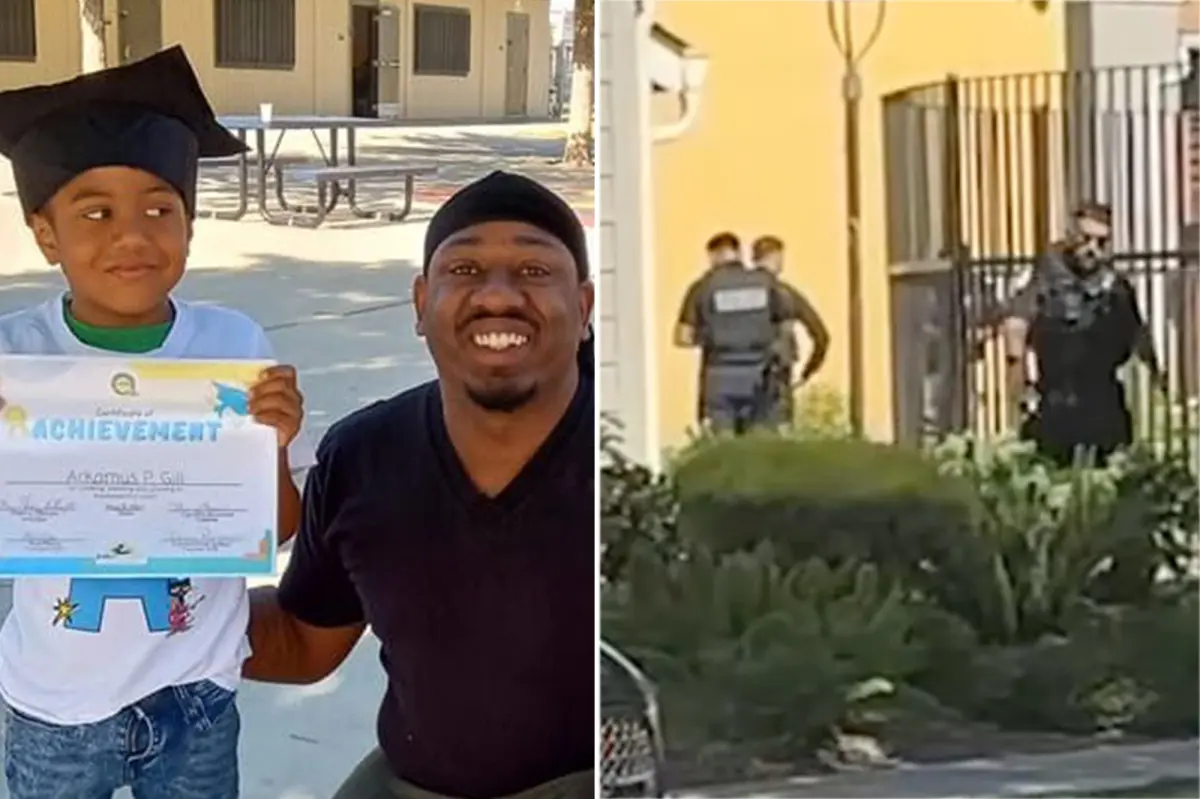
At the absolute center of this devastating storm is James Gill, a father suddenly plunged into the darkest, most agonizing depth of grief that any parent can possibly experience—the sudden loss of a young child. In our modern digital age, where tragedy is often shared in real-time, the raw, unedited pain of a grieving father found its way onto social media, offering a deeply poignant and humanizing look into the immediate, paralyzing aftermath of profound loss. “I lost my son,” James wrote in a heartbreaking post that instantly resonated with anyone who has ever loved and nurtured a child. “Life doesn’t feel real. Please, if you’re not immediate family, place your prayers and support here.” These words, simple yet heavy with absolute disbelief, painted a painful portrait of a man trying to stand upright while his entire world collapsed around him in an instant. For friends and family scrolling through his social media profile, the stark contrast of past happiness made the current reality even more difficult to comprehend; just a short time before this tragedy, pictures captured a proud family celebrating Ackamus’s school promotion, a milestone filled with bright smiles, laughter, and the hopeful promise of a future that has now been cruelly stolen away. These images of a smiling, proud little boy standing alongside his family stand as a painful, beautiful testament to the vibrant life Ackamus lived, reminding everyone who reads about this tragedy that he was not just another headline or statistic in a summer drowning report, but a cherished son, a proud student, and the very center of his father’s universe.
The powerful ripple effect of Ackamus’s untimely passing has spread far beyond his immediate family, deeply touching neighbors, friends, and even complete strangers who found themselves unexpectedly thrust into the tragedy’s orbit on that fateful Thursday afternoon. The digital space quickly filled with an overwhelming outpouring of love, condolence, and shared sorrow, as the wider Fresno community wrapped its virtual arms around the grieving Gill family in an attempt to provide some small semblance of comfort during their darkest hour. Among those deeply mourning was the traumatized individual who had desperately tried to perform CPR on the poolside deck, harboring the heavy, emotional burden of a rescue attempt that ultimately could not save the young child’s life. This witness took to social media to express their profound, lasting sorrow and to describe the agonizing moments spent trying to breathe life back into the boy while waiting for the sound of approaching emergency sirens. Such raw, firsthand accounts underscore the collective trauma experienced by the residents at the Summer Park Apartments, where what was meant to be a positive community asset and a place of summer bonding has now been permanently transformed into a site of communal mourning and quiet reflection. In the quiet hallways and open walkways of the apartment complex, everyday conversations are now whispered in hushed tones of disbelief, as neighbors look at the closed gates of the newly reopened pool with a mixture of profound sadness and shared grief, united by the unbearable loss of a young neighbor whose footsteps will no longer echo down the pathways.
As the community mourns, the unsettling circumstances surrounding this tragic incident raise critical, urgent questions about pool safety, parental supervision, and the deceptively quiet nature of water-related accidents. The apartment pool was heavily occupied with more than twenty children and adults, yet the sheer volume of people present was not enough to prevent this disaster, highlighting a sobering reality that emergency experts frequently emphasize: drowning is rarely the splashy, noisy, and dramatic event depicted in casual media, but rather a swift, silent, and often invisible catastrophe that can happen right in front of distracted onlookers. Furthermore, local authorities confirmed that no professional lifeguards were on duty at the apartment complex pool, a common reality for private residential complexes that places the immense, constant burden of water safety entirely on the shoulders of parents, guardians, and the playing children themselves. The pool had only reopened the week prior due to the scorching weather, drawing a high concentration of eager young swimmers desperate to escape the valley’s relentless heatwave, creating a perfect storm of crowded conditions, high enthusiasm, and a lack of dedicated, professional supervision. Investigators remain uncertain as to exactly how long Ackamus was submerged beneath the surface and unconscious before he was noticed, a haunting, agonizing detail that underscores how easily a small child can slip beneath the water unnoticed even in a highly active and bustling environment. This tragedy serves as a stark, urgent call to action for apartment complexes, landlords, and families alike to reevaluate water safety protocols and supervision practices, emphasizing that vigilance must be absolute, constant, and collective, as even a brief moment’s distraction can have permanent, devastating consequences.
In the long, difficult days and months that lie ahead, the Gill family faces the monumental, seemingly impossible task of navigating a world that has been permanently and painfully altered, trying to find a way to carry the heavy weight of their grief while preserving the precious memory of their seven-year-old boy. The community’s role must now transition from immediate shock and transient condolences to sustained, long-term support, ensuring that James Gill and his loved ones are not left to carry this unbearable burden in isolation once the news cycles fade and the summer heat eventually gives way to the cool of autumn. Ackamus Gill’s legacy should not be defined solely by the tragic, untimely circumstances of his final afternoon at the apartment pool, but by the love he inspired in his family, the joy he brought to his friends during his seven years of life, and the pride of his recent school achievements. As the city of Fresno mourns one of its youngest, brightest residents, there is a collective hope that this heartbreaking event will foster a deeper, more permanent commitment to community safety, parental vigilance, and mutual support during times of unfathomable darkness. Though the physical presence of Ackamus has been cruelly taken away, the memory of his bright, hopeful smile and the deep love of his family will endure in the hearts of all who knew him, serving as a beacon of light for those left behind to mourn a beautiful young life that burnt so exceptionally brightly, yet ended far too soon.