



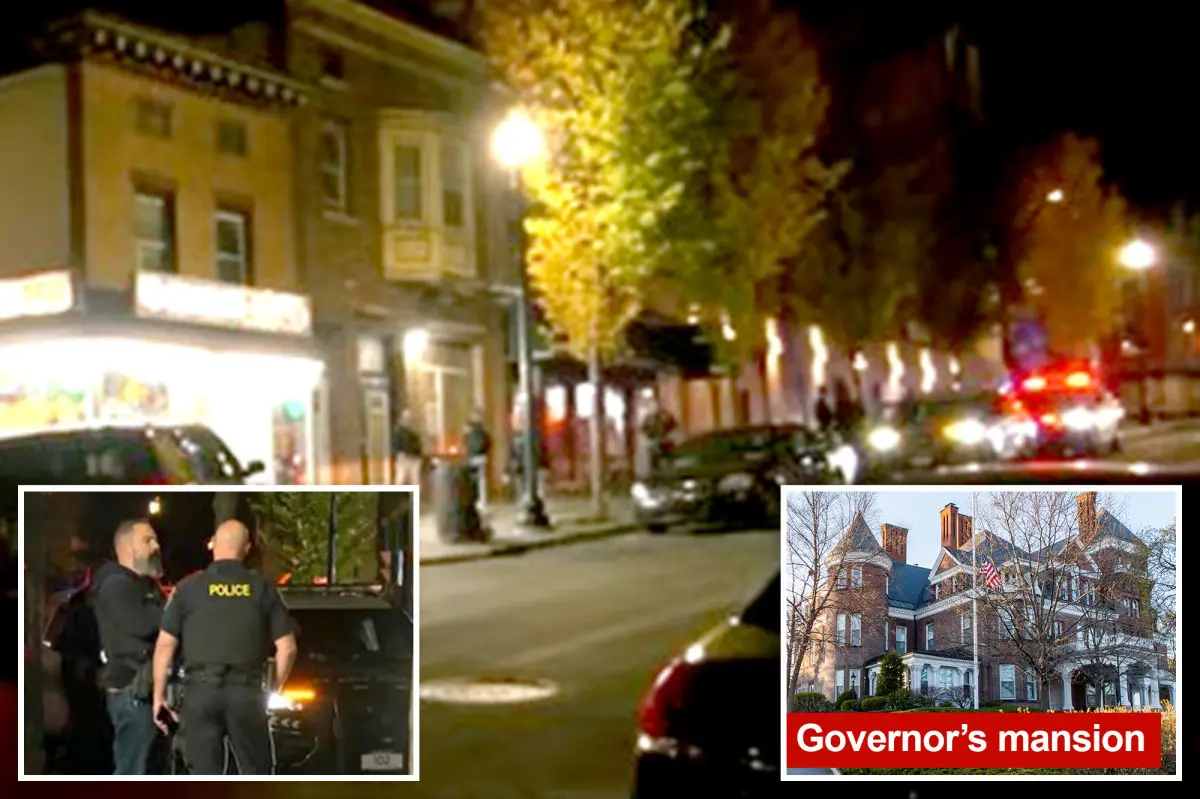
On a quiet Wednesday evening, in a neighborhood that usually belongs to commuters, families, and state employees finishing their workdays, a 15-year-old girl was shot in the leg at the corner of Ash Grove Place and Trinity Place in Albany, New York. The time was around 6:35 p.m. — an hour when many people are still out and about, returning from errands, walking dogs, or heading home from school. The girl was just three blocks from the official residence of Governor Kathy Hochul, a sprawling manor on Eagle Street that stands as a symbol of political power, security, and institutional authority. Yet in that moment, none of those protections could help her. She was simply a teenager in the wrong place at the wrong time, or perhaps in a place that should never have become dangerous at all. The sound of a gunshot shattered the evening routine. Neighbors who may have heard the noise or seen something out of place would later have to piece together what happened, but at that moment there was only confusion and fear. First responders arrived quickly and found the young victim conscious and breathing, with a gunshot wound to her leg. They treated her at the scene before rushing her to a local hospital, where doctors determined that her injuries were not life-threatening. It was a small mercy in a terrifying situation, but the emotional wound is far harder to measure. No suspect was in custody, and police had no clear motive. A 15-year-old girl’s life was interrupted, possibly altered forever, for reasons that remained unknown. This is the kind of news that appears in brief articles and disappears within a day, but for the girl, her family, and her friends, it will not disappear. It will replay in their minds for years: the sudden noise, the pain, the fear, the flashing lights of ambulances, the questions with no answers. In a city that is no stranger to violence, this incident stands out because of its proximity to the governor’s mansion, but it also stands out for a more human reason: it could have been any teenager, any daughter, any neighbor. And it should never have happened.
The immediate response was efficient, even as the scene remained chaotic with the kind of controlled urgency that comes with any gunshot wound. Paramedics stabilized the girl, wrapped her wound, and transported her to a nearby hospital, where she was listed in stable condition. The Times Union reported that her injuries were non-life-threatening, which offered a sliver of relief to those who had gathered on the sidewalks as police tape went up. But even good news in such cases is complicated. A bullet wound, even to the leg, can leave lasting physical damage — nerve damage, muscle loss, months of rehabilitation, and constant reminders of the attack. And then there is the psychological toll. A teenager who has been shot must live with the knowledge that someone deliberately aimed a firearm at her body, that her life could have ended in an instant. The trauma will likely affect how she walks, how she sleeps, how she reacts to loud noises, how she trusts the world around her. For the first responders, this was one call among many, but each call leaves a mark; they see the blood, hear the fear, and then move on to the next emergency, yet they too carry the memory of every victim they have tried to save. The neighborhood, too, is shaken. Albany is the capital of New York, a city with both urban challenges and residential pockets that feel safe and familiar. Ash Grove Place and Trinity Place are not high-crime intersections in the public imagination; they are ordinary blocks near government buildings, historic homes, and the kind of quiet streets where parents push strollers. When violence strikes such a place, it forces residents to confront the fragility of their safety. The absence of arrests only deepens the unease. Police have no suspect and no motive. That means there is no one to hold accountable, no explanation for why a 15-year-old was targeted or chosen at random. It also means the shooter remains free, perhaps in the same neighborhood, perhaps moving among the same people. The investigation is ongoing, but for the community, the waiting is agonizing. Parents will now think twice before letting their children walk alone. Neighbors will look at strangers with suspicion. The trust that binds a community together has been cracked, and it will not be repaired overnight. Meanwhile, the girl lies in a hospital bed, her phone buzzing with messages from friends who cannot believe what happened, her family holding vigil and praying for the day they can take her home.
The geography of this shooting adds another layer of meaning. The governor’s mansion on Eagle Street is not merely a residence; it is a fortified symbol of state power, with security protocols, police details, and a constant awareness of threat. It is a place where leaders make decisions about public safety, gun laws, and criminal justice. To know that a teenage girl was shot just three blocks away is a stark reminder that violence does not respect boundaries of power or privilege. It can happen in the shadow of the very institutions designed to prevent it. For Governor Kathy Hochul, this incident may be especially personal. Her own home is near the site of the shooting. Her security team would have been alerted; her daily routine, and those of her staff, might have been disrupted. But the shooting also raises difficult questions. If a child can be wounded within sight of the governor’s mansion, what does that say about the safety of children in neighborhoods that do not enjoy such proximity? What about the parts of Albany, and New York State, where gunfire is more common and where the nearest symbol of authority is a distant and sometimes mistrusted institution? The proximity to the mansion might bring additional police attention to the case, and perhaps that is a good thing. But it should also bring attention to the larger epidemic of gun violence that claims far too many young lives, often in places where the cameras are not rolling and the politicians are not looking. Every shooting is a personal tragedy, but the ones that happen close to power have a unique ability to shock the conscience. They remind us that the safety we take for granted is fragile and unevenly distributed. They also remind us that elected officials, for all their speeches and policies, have not yet solved the problem of easy access to guns, of unresolved conflicts, of communities starved of resources and hope. The girl shot at 6:35 p.m. on a Wednesday was not a statistic. She was someone’s daughter, someone’s friend, someone with dreams and plans for the future. But her life was nearly cut short in a place where no one expected a gunshot. And the only thing that separated her from the governor, in that moment, was a few hundred yards and a world of difference in the protection they receive.
This shooting is part of a broader and deeply troubling pattern. Across the United States, teenagers are disproportionately affected by gun violence, whether as victims, witnesses, or mourners. For every fatal shooting, there are many more non-fatal ones like this, leaving survivors to navigate a long and difficult recovery. Public health agencies have described gun violence as a public health crisis, and the numbers support that description. But behind every statistic is a human story. The 15-year-old girl in Albany is one of those stories. She is at an age when life is supposed to be about schoolwork, friendships, first jobs, and figuring out who she wants to become. Instead, she is learning about trauma, hospitals, and the harsh reality that some threats cannot be predicted or avoided. Her family is now part of a painful club that no one chooses to join: the families of gun violence survivors. They will spend weeks and months helping her heal, fighting with insurance companies over medical bills, and struggling to restore a sense of normalcy. They may also have to deal with the fear that the shooter is still out there, and that this could happen again. Survivors often face long-term mental health challenges, including post-traumatic stress disorder, anxiety, and depression. The world after a shooting is not the same as the world before it. For the wider community, each shooting erodes the collective sense of security. Young people in Albany, like young people in many cities, are growing up with a kind of hyper-vigilance that should not be normal. They know which streets to avoid, which sounds are dangerous, which situations can turn deadly. They carry this knowledge with them to school, to social gatherings, to the simple act of walking home in the evening. The fact that a shooting could happen near the governor’s mansion might make adults pay attention, but for many young people, it is just another reminder of what they already know: that gun violence is never far away, no matter where you live. It is a tragedy that we have become so accustomed to these stories. It is even more tragic that we have accepted a world in which a 15-year-old’s injury is considered relatively lucky because she survived. We should not have to be grateful that a child was only shot in the leg. We should be angry that she was shot at all.
In the aftermath of the shooting, the focus now turns to the investigation. Albany police will be reviewing security cameras, canvassing the area for witnesses, and following up on any tips from the public. The fact that the shooting occurred so close to the governor’s mansion may increase pressure to find the culprit quickly. But even with all the resources in the world, solving a case like this is not always easy. Witnesses may be reluctant to come forward, especially if they fear retaliation. The shooter may have fled the area, disposed of evidence, or had no connection to the victim, making the motive impossible to understand. Still, there is hope. Somewhere, someone knows something. A neighbor heard the shot, saw a car speeding away, or noticed a person acting suspiciously. That person now has a choice to make. Coming forward with information is not easy, but it is often the only way to bring justice to a family that has been torn apart by violence. The community, too, has a role to play. Candlelight vigils, social media posts, and neighborhood watch meetings can send a message that violence will not be tolerated. Support for the victim and her family is essential, not just in the immediate days but in the long months ahead. A fundraiser might help with medical expenses. Meals, rides, and offers to help with everyday tasks can ease the burden. But the most important thing is to make sure the girl knows she is not alone. She needs to hear that her life matters, that her community is behind her, and that she has the strength to recover. She also needs to know that the adults in charge are doing everything they can to find the person who did this. Without an arrest, there is no closure. Without justice, there is no sense that the world is fair. The investigation may take weeks or months, but every day that passes without an answer makes the waiting harder. For now, the best the community can do is hold onto hope, watch out for one another, and refuse to let this incident fade into the background of forgotten news cycles. The 15-year-old victim is more than a headline. She is a human being, and she deserves not just our sympathy but our determination to make sure this never happens again.
Ultimately, the story of a 15-year-old girl shot near the governor’s mansion is not just a story about crime. It is a story about the world we have created and the world we want to create. It is about the failures that allowed a child to be in the path of a bullet, and the responsibilities we all share in preventing the next tragedy. Gun violence is not inevitable. It is the result of choices — individual choices, but also systemic choices about laws, enforcement, mental health, education, poverty, and conflict resolution. The anger and despair that lead someone to shoot another human being do not appear out of nowhere. They are shaped by environments in which violence is normalized, guns are accessible, and people feel they have no other options. Changing that is hard work, but it is not impossible. It requires courage from elected officials, investment in communities, and a willingness to listen to the voices of young people who are tired of being afraid. It also requires a kind of collective humanization: seeing every victim of gun violence as a person, not a statistic, and demanding better for them. The girl in Albany will survive her physical wounds, but she will carry this experience with her forever. Her family will carry it too. Her friends will carry it. The neighborhood will carry it. And if we are paying attention, we will carry it as well, allowing it to fuel our commitment to change. We cannot bring back the innocence of that Wednesday evening, and we cannot undo the terror of that gunshot. But we can honor the girl’s suffering by refusing to look away, by supporting those who are working to reduce violence, and by holding our leaders accountable for the promises they make. We can also simply be kind — to the next person we meet, to the teenager who seems anxious, to the neighbor who is struggling. Sometimes the most human thing we can do is to reach out and say, “I see you, and you are not alone.” That is the message this 15-year-old deserves. That is the message every survivor of violence deserves. And that is the message that might, one day, help prevent the next tragedy.