



The social safety net of any nation is built on a foundation of mutual trust—a quiet promise between the citizens who fund these resources through their hard work and the vulnerable individuals who desperately rely on them to survive through difficult times. However, that foundation was deeply shaken in Massachusetts as federal authorities announced the arrest of 15 individuals accused of exploiting these very systems to steal more than $1.4 million in taxpayer-funded benefits. The sweeping crackdown, which targeted those fraudulently obtaining funds from essential programs like the Supplemental Nutrition Assistance Program (SNAP), MassHealth, Social Security disability, housing assistance, and unemployment benefits, sent shockwaves through local communities. Strikingly, federal prosecutors revealed that 11 of the 15 defendants are suspected undocumented immigrants, many of whom went to extreme lengths to conceal their actions by assuming the stolen identities of actual American citizens. It was a massive operational bust that highlighted not just a failure of municipal oversight, but a profound violation of the social contract that keeps communities whole.
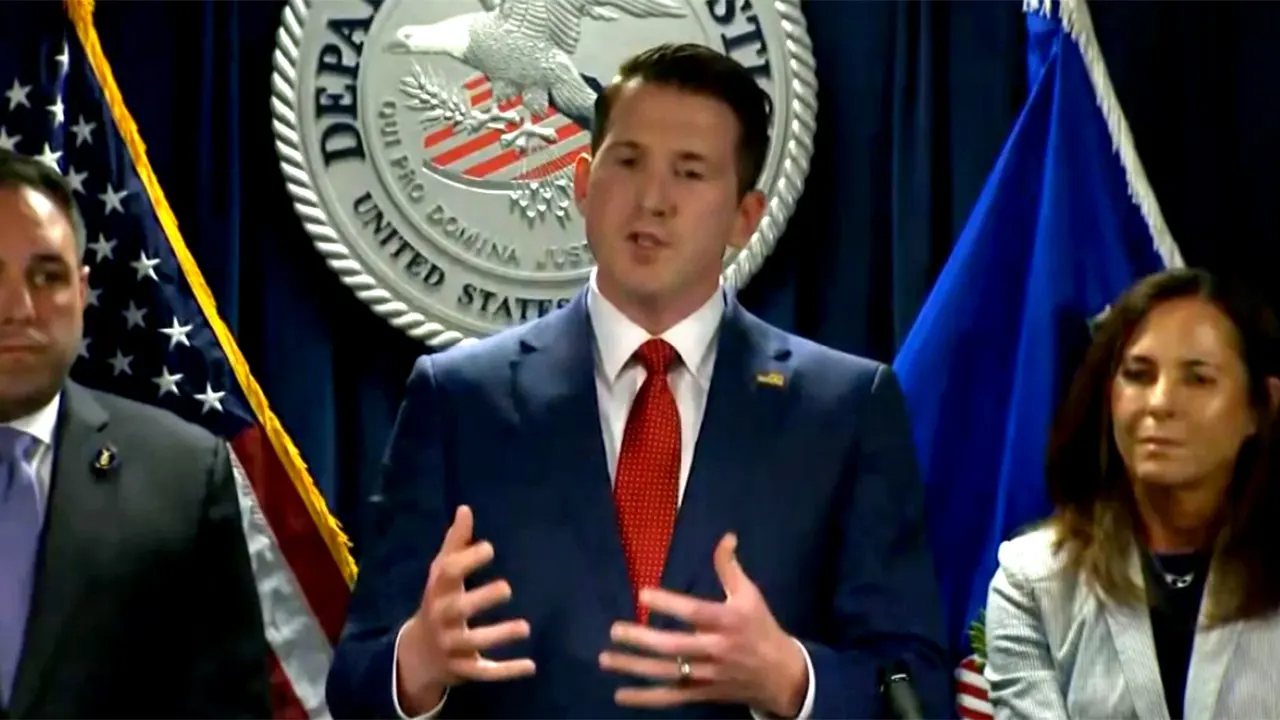
Behind the staggering financial figures of this fraud scheme lies a deeply troubling human cost, one that directly impacted some of the most vulnerable legally registered beneficiaries in the country. When a fraudster steals a real person’s identity to siphon off government assistance, the immediate consequence extends far beyond the federal deficit; it actively blocks needy families from accessing life-saving help. Acting Assistant Attorney General Colin MacDonald illuminated this heartbreaking reality during a press conference in Boston, pointing out that several legitimate eligible citizens were shut out of the welfare programs they relied on because their names and social security numbers had already been compromised. Imagine a low-income mother arriving at a grocery store or a disabled veteran visiting a clinic, only to be told they are ineligible for assistance because a stranger has already claimed their benefits. For these invisible victims of identity theft, the bureaucratic nightmare of proving their own identity to regain access to basic sustenance and medical care can take months of agonizing uncertainty and financial desperation.
The scale of individual greed within the conspiracy is perhaps best illustrated by the case of Heriberto Rodriguez of Framingham, Massachusetts. Rodriguez is accused of orchestrating a massive, multi-layered fraud scheme that yielded over $546,000 in stolen MassHealth coverage, Social Security funds, housing stipends, and SNAP benefits. To put that sum in perspective, it represents decades of tax contributions from hardworking neighbors who commute early every morning to earn an honest living. While families across the Commonwealth of Massachusetts have been tightening their belts to deal with high inflation and the rising cost of living, Rodriguez and his co-defendants were allegedly living on taxpayer cash obtained through systemic deception. The investigation revealed that stolen identities are often traded on the black market for trivial prices, treated like disposable commodities to open up fraudulent pipelines of government funding, showcasing a complete detachment from the human labor that funded those safety nets in the first place.
This recent bust is not an isolated incident of institutional vulnerability, but rather the tip of a massive economic iceberg that federal prosecutors have been chipping away at for months. U.S. Attorney Leah Foley revealed that the arrests are merely the latest development in a relentless, ongoing federal offensive targeting rampant systemic fraud across the state of Massachusetts. According to Foley, federal prosecutors have charged more than 65 defendants in fraud-related cases since January alone, uncovering a mind-boggling $56 million in sheer losses. When combined with previously documented fraud operations over the past seven months, the total alleged losses reaching the state’s taxpayer-funded coffers approach $63 million. This astronomical figure reveals a systemic fragility within state administrative agencies, illustrating how quickly massive public funds can be siphoned away when validation protocols fail to keep pace with sophisticated criminal networks.
The revelation of such deep-seated exploitation has instantly ignited a fierce debate regarding political accountability, state policy, and the ethical boundaries of public compassion. U.S. Attorney Leah Foley did not hold back in her criticism of the local political climate, pointing out that the state has gained a reputation as a consequence-free environment where individuals can secure housing, food, and healthcare without fear of meaningful verification. Foley’s sharp words underscore an ongoing national dialogue: how do states balance their humanitarian goals of helping those in need with the rigorous, uncompromising oversight required to prevent widespread theft? When welfare systems are designed with high trust and low barriers to entry to ensure rapid delivery to people in crisis, they inadvertently present soft targets for bad actors who view compassion as weakness, ultimately punishing the honest citizens who pay into the system.
Looking ahead, federal law enforcement agencies are making it clear that they have no intention of slowing down, framing this week’s arrests as the opening salvo of a much larger, systemic cleanup. The extensive investigation was a collaborative triumph, utilizing the resources of Homeland Security Investigations alongside multiple federal inspector general offices to trace public assets back to the perpetrators. Federal officials have promised that additional arrests and criminal charges are on the immediate horizon as investigators continue to meticulously audit state benefit rolls. As Assistant Attorney General MacDonald starkly warned, the deeper authorities look, the more corruption they continue to uncover. The final goal of this massive mobilization is not merely to punish those who broke the law, but to restore a sense of security, integrity, and dignity to welfare programs so that the public can once again trust that resources meant for the vulnerable are actually reaching the hands that need them most.