



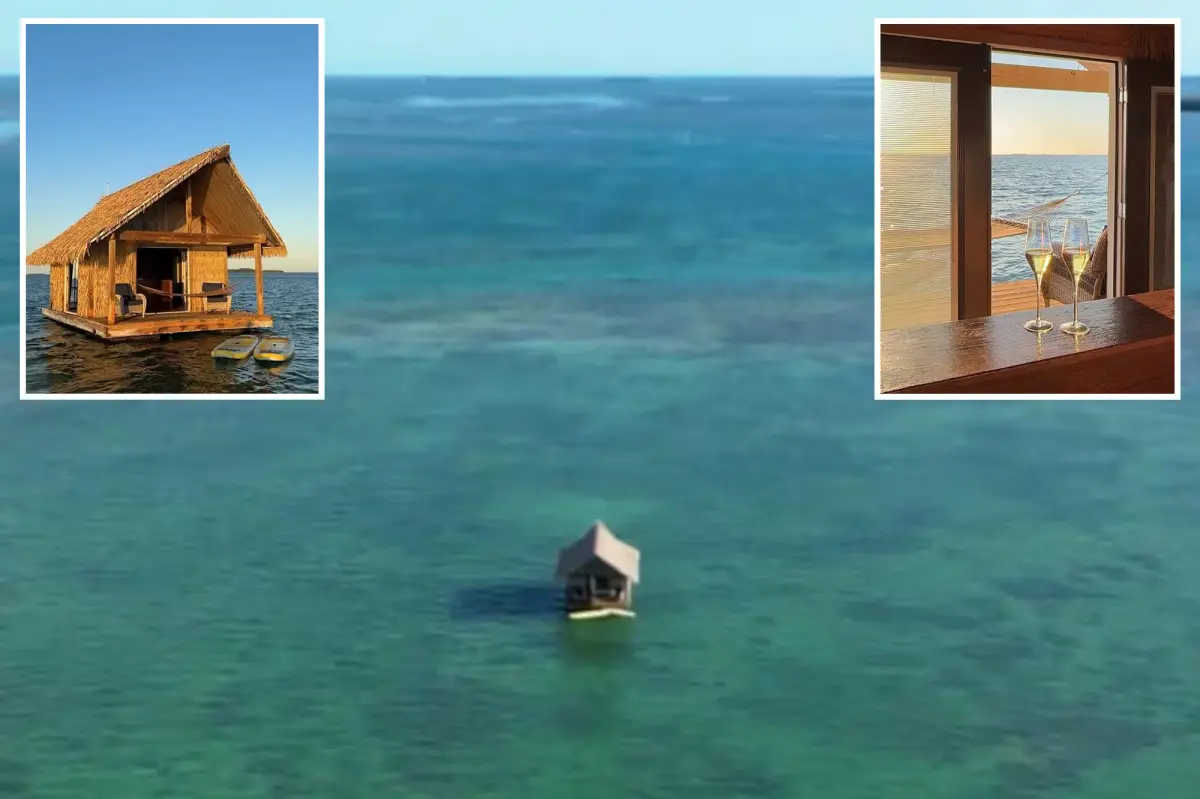
In an era defined by hyper-connectivity and the relentless hum of digital noise, the quest for genuine solitude has become the ultimate modern luxury, driving contemporary travelers to the absolute edges of the map in search of quietude. Among these intrepid modern pilgrims is Ruben Holgado, a charismatic twenty-three-year-old content creator and travel influencer from the historic, bustling metropolis of Barcelona, Spain. Seeking an escape from the familiar, fast-paced rhythms of European urbanity, Holgado embarked on an extraordinary odyssey to document what he would later describe to his massive online audience of hundreds of thousands as the most isolated hotel on the planet. His journey was not merely a casual holiday but a grueling, multi-stage pilgrimage across hemispheres: first enduring a lengthy ten-hour transcontinental flight from Spain to the vibrant, sun-drenched city of Miami, Florida, followed immediately by an arduous five-hour drive down the Overseas Highway, crossing the breathtaking, narrow ribbon of keys that divides the Gulf of Mexico from the deep Atlantic Ocean. The ultimate destination lay even further beyond the southernmost tip of the United States in Key West, where the asphalt finally dissolved into the sea, requiring Holgado to trade his terrestrial wheels for a motorized watercraft. His target was a solitary dot on the horizon—a rustic yet elegant floating sanctuary known as the “Tiki Suite,” a tiny, off-grid houseboat anchored permanently in the open ocean waters stretching toward Cuba, offering an unparalleled existence suspended entirely between sky and sea. For a young creator utilized to the fast-paced world of social media, the sheer physical distance of this journey served as a necessary psychological transition, a slow shedding of urban armor in preparation for an encounter with the absolute silence of the open ocean. By documenting this formidable transit on his YouTube channel, where his immersive travelogue quickly amassed nearly a million views, and sharing snapshots with tens of thousands on Instagram, Holgado managed to tap into a universal collective yearning of the modern vibe: the desire to disappear, if only for a brief moment, to a place where the grid cannot reach, and where the horizon remains completely unbroken by human infrastructure.
To reside in such pristine, vulnerable isolation, however, requires far more than merely booking a room and showing up with a suitcase; it demands a complex logistical dance with maritime law, physical stamina, and a substantial financial investment. The Tiki Suite, despite being popularized as a cozy, romantic glamping destination on Airbnb, operates under the strict legal definitions of a marine vessel, meaning that guests cannot simply be chauffeured to their rooms by a resort concierge. Holgado quickly discovered that to legally inhabit this floating home, he first had to obtain an official boating license, transforming him from a passive vacationer into the active captain of his own destiny. This legal and practical requirement highlighted the raw, uncompromising nature of the accommodation, which sits a full hour’s boat ride away from the safety of the Key West shoreline, completely detached from any landmass, dock, or terrestrial utility grid. Renting this slice of marine paradise is also an exclusive endeavor, commanding a premium price tag of $3,458 for a five-night stay—a cost that reflects both the sheer novelty of the architectural engineering and the immense difficulty of maintaining a luxury dwelling in a corrosive saltwater environment. Holgado noted that the journey between the mainland and the suite was entirely dictated by the rules of the sea, making simple tasks like transporting camera gear, fishing equipment, and personal luggage a delicate exercise in water safety. The idea of swimming the distance was entirely and laughably unrealistic, leaving him completely reliant on his newly acquired seamanship to navigate the turquoise channels. This barrier of entry, both financial and developmental, underscores a growing trend in luxury travel where the wealthiest experiences are no longer about gold leaf and white-glove service, but about the high-stakes logistics of accessing places where human beings were never physically meant to dwell permanently.
The true weight of his isolation began to set in before Holgado even untied his skiff from the Key West harbor, delivered in the form of a sober briefing from the property’s owner and guardian, a seasoned mariner known simply as Captain Chris. Captain Chris did not offer the sweet, rehearsed platitudes of a typical hotel receptionist; instead, he presented the young Spaniard with a strict, life-supporting checklist of supplies to carefully purchase and ration, alongside a series of ominous warnings regarding the unforgiving nature of the surrounding wilderness. The captain emphasized that the boundary between an unforgettable adventure and a life-threatening emergency on the water is razor-thin, reminding Holgado that it would certainly not be the first time a careless traveler required an emergency maritime rescue after failing to respect the elements. Central to these warnings was the pervasive presence of the local wildlife, particularly Key West’s notoriously dense shark population, which calls these warm, shallow flats home. Standing on the fragile wooden deck of the Tiki Suite, looking down into the crystalline waters, Holgado felt the thrill of adventure mingle intimately with a primal sense of vulnerability. It was a potent reminder that despite the comfortable mattress and bohemian decor waiting inside, the houseboat was fundamentally an intruder in an ancient, wild ecosystem where humans are neither the dominant presence nor the top of the food chain. This lurking threat did not diminish the beauty of the location but rather elevated it, transforming what could have been a passive glamping experience into an active exercise in environmental awareness, where every step on the outer deck required mindfulness and a deep respect for the ocean’s silent, powerful inhabitants.
The romantic illusion of tropical tranquility was quickly shattered when the unpredictable atmosphere of the Florida Straits asserted itself, rolling in a sudden, menacing tropical storm that tested the limits of Holgado’s resolve. Alone in the middle of a vast watery desert with no land in sight, he watched the sky transform from brilliant turquoise to an ominous, bruising shade of slate grey, while the gentle ocean swells grew into violent, white-capped waves. The wooden structure of the Tiki Suite, built to resemble a traditional Polynesian hut, began to creak, groan, and sway under the sudden, furious onslaught of the wind, driving home the reality of his absolute vulnerability. During these intense hours of isolation, as rain lashed against the glass windows and the horizon disappeared into a blinding mist of grey water, Holgado found himself grappling with deep internal questions about the wisdom of his journey, wondering if seeking the ultimate disconnected getaway had transcended peacefulness and crossed into reckless self-endangerment. There is a profound psychological shift that occurs when an individual realizes that no immediate help is coming, that there are no neighbors to call, and that the only thing separating them from the churning depths of the ocean is a few inches of sealed wood and fiberglass. Yet, as tropical storms are prone to do in this part of the world, the tempests eventually exhausted themselves, leaving behind a washed, incredibly quiet sky and a sea that slowly returned to its glassy, deceptive calm. This dramatic encounter with the elements served as the emotional climax of his stay, proving that true off-grid living is not merely an aesthetic background for social media, but an active, and sometimes highly intimidating, negotiation with the raw power of mother nature.
Once the storm passed and the sea regained its tranquil calm, Holgado was able to fully appreciate the fascinating paradoxes designed into the interior of the Tiki Suite, which manages to merge high-end domestic comforts with the utterly wild outer environment. Inside, the space is a triumph of clever space-saving naval architecture, boasting an efficient air conditioning system powered by off-grid solar arrays, a beautifully crafted custom oak bed that anchors the bedroom, and a cleverly concealed television screen that rises from the furniture. In a touch of eccentric, nostalgic hospitality, the suite came equipped with a modest library of physical DVDs, featuring modern cinematic classics like The Shawshank Redemption, Django Unchained, The Aviator, and The Notebook. In a marvelous moment of self-aware irony that delighted his online viewers, Holgado bypassed the uplifting romances and historical epics to select James Cameron’s disaster masterpiece, Titanic, as his evening entertainment. Sitting in the middle of the dark, silent ocean, watching the world’s most famous shipwreck saga unfold on screen while feeling his own small wooden vessel bob rhythmically on the waves, was an experience steeped in dark humor and existential reflection. This juxtaposition highlights the bizarre nature of modern adventure travel, where we painstakingly seek out the scariest, most isolated environments imaginable, only to import our favorite digital comforts and media to buffer ourselves against the crushing weight of the silence. It allowed Holgado to find comfort and humor in his situation, transforming his cozy cabin into a private theater where the boundary between the movie’s watery tragedy and his own floating reality became delightfully and safely blurred.
Beyond the walls of his floating cabin, the remaining days of Holgado’s retreat were spent immersing himself directly into the slow, healing rhythms of the marine wilderness, far removed from the constant notifications of modern life. He spent his hours embarking on solo paddleboarding excursions, skimming over the shallow flats where the water was so clear he could watch the shadow of his board dance across the sandy sea floor below. He donned his snorkeling gear to plunge beneath the surface, exploring silent, forgotten shipwrecks that lay swallowed by the ocean, now acting as vibrant artificial reefs teeming with colorful schools of tropical fish, gliding rays, and curious barracudas. His days were enriched by peaceful visitations from the ocean’s gentle giants—dolphins breaking the surface with soft exhalations, and slow-moving manatees drifting lazily past his deck—reminding him of the abundant life thriving just beneath his floorboards. When evening fell, he would sit quietly on the edge of the wooden platform, fishing directly into the deep blue water to catch his own dinner, experiencing a primitive, deeply satisfying form of self-sufficiency that is completely lost in the urban sprawl of Barcelona. Ultimately, Holgado’s journey to the Tiki Suite proved that while such extreme isolation is undoubtedly intimidating, expensive, and logistically challenging, it offers a rare and profound mental reset for those brave enough to seek it out. It is a destination designed not for the commercial tourist looking for effortless pampering, but for the true adventurer willing to trade the safety of dry land for an unforgettable, deeply human conversation with the vast, sovereign ocean.