



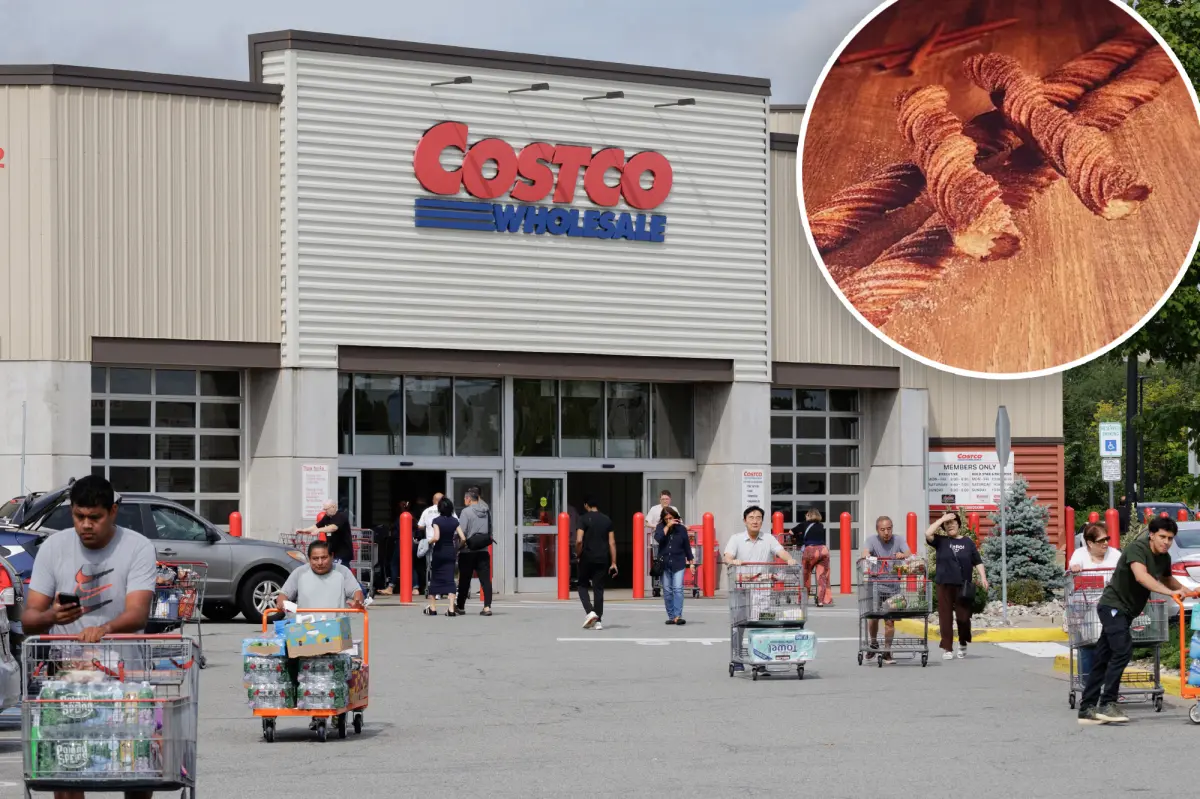
Few things in life inspire the kind of irrational, unashamed joy that comes from the return of a beloved food item. In the vast ecosystem of American retail, Costco occupies a special place—not just as a warehouse where you can buy enough mayonnaise to last a decade, but as a cultural institution with its own food-court mythology. The food court is the heartbeat of the Costco experience, a democratic oasis where a hot dog and a soda still cost $1.50 and where a warm, cinnamon-sugar-dusted churro once felt like a small, perfect victory. So when Costco posted an Instagram video to its 2.5 million followers announcing that its famous churro was coming back, the internet reacted with the kind of fervor usually reserved for championship games or surprise album drops. Fans who had spent months mourning the pastry’s absence felt vindicated. “SHUT UP GUYS, IT’S A F**ING CHURRO,” wrote one exuberant fan. “Best news all week!!!” chimed in another. For a brief, beautiful moment, the collective memory of biting into that crisp, sugary shell united Costco devotees everywhere. It seemed like the prodigal pastry had finally returned, ready to resume its rightful place next to the iconic hot dog combo, bringing closure to a culinary saga that had been simmering for years. After all, the churro had not simply vanished from the menu on a whim; it had been replaced by a Double Chocolate Chunk Cookie, a dessert that, while perfectly pleasant, never earned the same obsessive loyalty. The return felt like an apology, a correction, a triumph of tradition over trend. People were ready to celebrate, ready to plan their next warehouse trip around a sweet, golden reward, ready to believe that good things can, in fact, come back.
Then came the twist—literally. As the excitement settled and fans looked closer at the announcement, a cold realization crept in: this was not the original straight churro. This was the twisted churro, a serpentine, spiral-shaped relative of the iconic snack, and for many, it was a profoundly disappointing distinction. The straight churro, after all, had achieved legendary status before being discontinued in 2020, and its departure had prompted online moaning that bordered on grief. The twisted churro, by contrast, had always been something of a controversial figure. Redditors, ever the connoisseurs of snack minutiae, described it as “too bready.” It allegedly lacked the satisfying crunch, that brittle snap followed by a soft interior, that made the original so transcendent. The backlash was swift and unforgiving. “You brought back the WRONG CHURRO,” one disappointed shopper blasted on Instagram. “We said churro, not twisted churro,” another complained, punctuating the message with nose-blowing and crying emojis. It was a classic case of expectation versus reality, a reminder that nostalgia is a fragile thing. Costco had dangled the possibility of a beloved classic and then delivered a lookalike that didn’t live up to the memory. The internet’s mood shifted from jubilation to indignation in the time it takes to microwave a frozen pizza. In the rush to reclaim its culinary heritage, Costco had inadvertently turned a happy announcement into a referendum on the difference between a churro and a “churro.” The word “twisted” suddenly felt like an understatement; the entire saga seemed designed to test the patience of loyal snackers who just wanted one thing done right.
If the shape was enough to make fans sigh, the price made them wince. When the original churro first debuted in Costco food courts, it cost just one dollar—a single crisp bill, the kind of price that felt almost too good to be true for a warm, doughy, sugar-dusted pleasure. Now, the twisted churro is arriving with a 50 percent markup, which means the new version costs a dollar and a half. It isn’t hard to imagine the collective jaw drop in Costco aisles across America. A 50 percent increase on a food-court staple is not just a price change; it’s a betrayal of the warehouse’s bargain-hunting ethos. Costco has built its reputation on offering incredible value, and a dollar churro was part of that mythology, a tiny luxury that didn’t break the bank. But the complaints weren’t only about money. They were about quality. Fans who had sampled the twisted churro in the past recalled a denser, less crispy product, one that sacrificed the original’s delicate balance of crunch and chew for a more bready, dough-like consistency. The original was golden, crackly, and unmistakably satisfying; the twisted version, critics argued, was more like a pastry that had given up halfway through its job. “They got it twisted” wasn’t just a clever phrase—it became the rallying cry for a generation of snackers who felt that Costco had missed the point entirely. The churro’s return was supposed to be a victory lap, but instead it turned into a lesson in the dangers of rebranding beloved foods. For those who remember the dollar churro, the new price and recipe feel like double insults: one to their wallets, and one to their memories. The phrase “you can’t go home again” has never seemed more fitting—especially when home used to cost a dollar and taste like cinnamon and fried dough.
The disappointment didn’t stop at the churro itself. For a certain kind of Costco fan, the arrival of a controversial pastry was an invitation to open the floodgates of grievances, a kind of Festivus airing of complaints, but with more food-court nostalgia and less aluminum pole. Instagram comments sections became a public forum for every discontinued Costco item that still lives rent-free in the hearts of shoppers. One superfan, clearly not willing to let the moment pass without a proper list, wrote, “We need the combo pizza back for good and the hand-dripped ice cream with almonds.” The combo pizza—a rectangle of gooey cheese, pepperoni, sausage, and vegetables—has achieved near-mythological status among Costco faithfuls, who have been mourning its removal for years. The hand-dipped ice cream with almonds, which disappeared back in 2013, holds an even more special place in the pantheon of lost Costco delicacies. Another fan summed up the mood with a blunt ultimatum: “No combo pizza, no care.” This is the strange, intense culture of warehouse-store fandom, where a food-court menu is not merely a list of items but a collection of memories, values, and loyalties. The churro debate, in this context, is not really about fried dough. It is about recognizing that the little things—a cheap snack, a familiar taste, a square slice of greasy pizza—help make the weekly shopping ritual feel human. When those small comforts disappear or come back different, it feels less like a menu change and more like a loss. The twisted churro, by failing to satisfy, reopened old wounds and reminded everyone of all the other once-beloved items that have been taken away. It also reminded everyone that Costco, for all its size and success, is not just a place to buy things; it is a place where people develop genuine attachments, almost like a hometown diner or a neighborhood park. And when you mess with those attachments, people will let you know, loudly and with emojis.
But for those sad snackers, there may be reason to hold out hope. Costco is not retreating; it’s expanding. The warehouse giant recently announced plans to open ten new U.S. stores, with expansion across nine states, and has set a goal of opening around thirty new locations each year for the foreseeable future. That kind of growth means more food courts, more menus, more chances for the company to listen to its most devoted customers—or, at the very least, more opportunities for a straight churro to sneak back into the rotation somewhere along the way. With 924 warehouses worldwide, Costco already has an enormous footprint, but the company is clearly betting on the continued appeal of bulk shopping and affordable food-counter indulgences. Every new store opening is an occasion for locals to discover the joys of a $1.50 hot dog and soda, and to join the ongoing national conversation about what should and shouldn’t be on Costco’s menu. It’s not unreasonable to imagine that, at some point, the company will take the internet’s feedback to heart and bring back the straight churro in all its crunchy, cinnamon-dusted glory. After all, the backlash to the twisted churro has been loud enough to make headlines, and Costco isn’t in the habit of ignoring its customers—at least not permanently. The expansion also suggests that Costco is paying attention to where its fans live and how they shop, opening locations in states where the passion for warehouse deals runs deep. If even one of those new stores serves a straight-and-narrow churro, the internet might just forgive everything. Stranger things have happened, especially in the chaotic, snack-driven world of Costco fandom. The company’s willingness to grow and adapt could be the very thing that eventually brings the original churro back, perhaps as a limited-time offering, perhaps as a response to the endless comments, or perhaps simply because the noise became too loud to ignore.
Ultimately, the saga of the twisted churro is a story about the peculiar relationship between people and the food they love. It is not rational to care this much about a snack sold in a giant warehouse. And yet, we do. The churro, the combo pizza, the hand-dipped ice cream—these items are anchors for ordinary moments, markers of family trips, weekend errands, and small indulgences that turn a shopping chore into something almost pleasurable. When Costco announced the churro’s return, it tapped into a deep well of collective memory. When it turned out to be the wrong churro, that well briefly overflowed with outrage. But the passion itself is the point. The fans who typed angry comments, who posted crying emojis, who reminded everyone that the original churro cost just a dollar—they are not just whining about a snack. They are saying that certain things should stay the same because they were right the first time. “They got it twisted” has become a perfect punchline, but beneath the humor there is a real request: Don’t tamper with the things we treasure. Costco, for its part, has the chance to learn from this moment. It has the resources, the scale, and apparently the ambitious expansion plans to keep evolving, but its greatest asset is the loyalty of its customers. Listening to that loyalty, even when it comes in the form of angry Instagram comments, might be the best business strategy of all. The straight churro may be gone for now, but the memory of it remains crisp, crunchy, and gloriously, unapologetically straight. And if enough fans keep making noise, there’s a good chance Costco will eventually get un-twisted and bring it back. Until then, the twisted churro will have to stand in the shadow of a legend—and the internet will continue to wait, patiently and impatiently, for a dollar snack that felt like a million bucks.