




For generations, the ocean’s depths have carried one of the natural world’s most hauntingly beautiful mysteries: the complex, echoing songs of the male humpback whale. Traveling for miles through the cold, blue expanses of the sea, these intricate vocalizations can last for hours on end, serving as a vital, poetic centerpiece of the winter breeding season. Yet, while humans have spent decades recording, analyzing, and marveling at the acoustic beauty of these marine melodies, we have remained largely in the dark about what these gentle giants are actually doing physically while they sing. The deep ocean has kept its secrets well, leaving scientists to wonder how the act of singing intertwines with the strenuous physical demands of navigating the water column. Now, a groundbreaking study led by Dr. Julia Zeh has shattered this barrier of understanding, offering the very first comprehensive connection between a humpback whale’s entire song structure and its physical dive cycle. By revealing that these magnificent creatures choreograph their musical performances to match their movement through the water, this research opens up an entirely new window into the biology, evolution, and daily lives of these ocean vocalists.
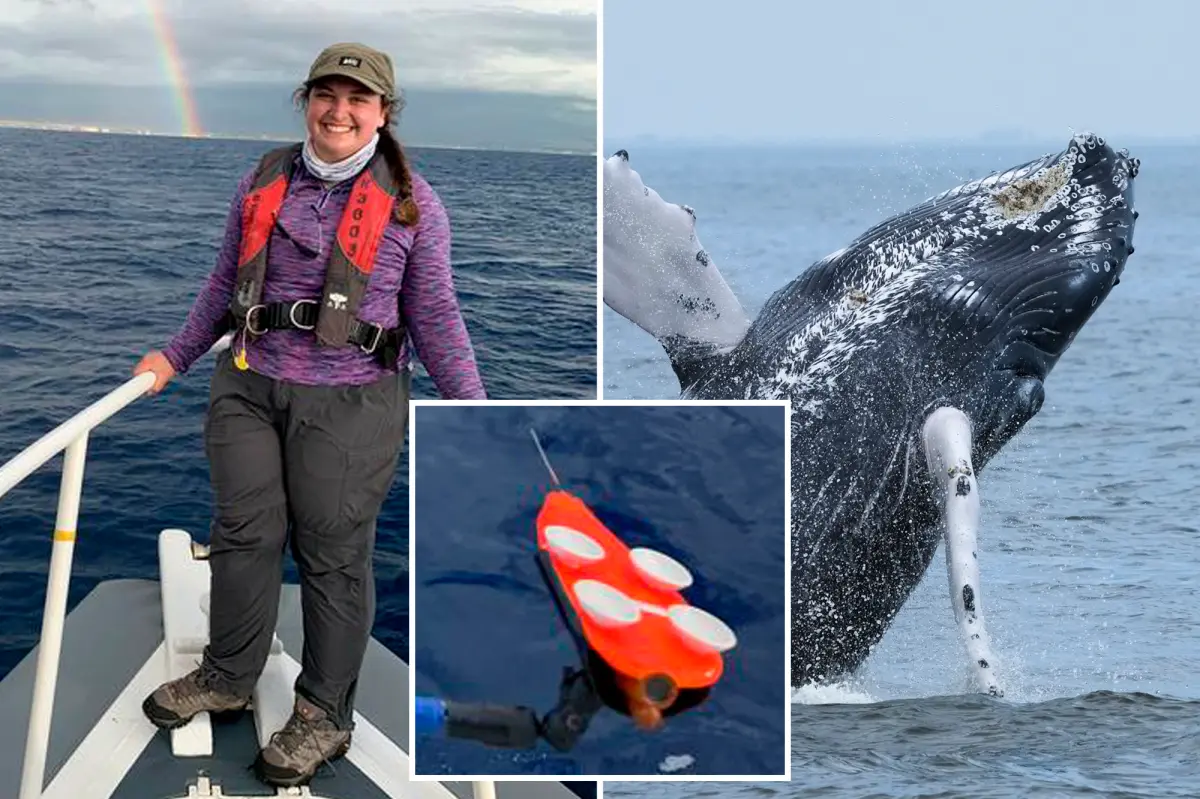
To bridge the gap between sound and motion, researchers had to venture into the windswept waters off the coast of Maui, Hawaii—a critical breeding ground for the North Pacific humpback population. Over a span of six years, from 2018 to 2024, Dr. Zeh and her research team embarked on a high-stakes endeavor to temporarily tag singing whales using non-invasive, tablet-sized suction-cup devices. Navigating small boats alongside these multi-ton animals required immense patience, skill, and, in recent years, the innovative assistance of aerial drones to gently place the tags from above. Once successfully attached to a whale’s back, these high-tech sensors quietly recorded both the surrounding underwater acoustics and the three-dimensional movements of the animal as it glided through the depths. Eventually, the suction cups would lose their grip and float to the surface, where the team would retrieve them to download a treasure trove of data from sixteen different whales. This dedicated, multi-year effort yielded an unprecedented look at whale behavior, revealing that some of these tireless singers could perform continuously for up to sixteen hours without a single break.
The true breakthrough came when the researchers began aligning the acoustic recordings with the physical depth data, revealing a breathtakingly synchronized underwater ballet. For the first time in marine science, the team discovered that specific “themes”—the recurring, structured blocks of sound that make up a humpback’s song—lined up consistently with distinct phases of a whale’s dive. While previous studies had occasionally noted that certain sounds seemed to occur as a whale approached the surface to breathe, Dr. Zeh’s work mapped the entire vocal journey across the complete rise and fall of a deep dive. The data showed that the song is not just a random sequence of beautiful noises, but a highly organized acoustic map deeply tied to the whale’s physical location in the water column. This structural alignment suggests that a whale’s physical environment and its internal biological state are active participants in shaping the melody, transforming our understanding of the song from a simple performance into a complex physiological display.
This intriguing link between depth and song structure points to a delicate balance between evolutionary display and the harsh realities of survival. Dr. Zeh discovered that the themes sung while a whale remained at a relatively constant depth—specifically during the deepest, quietest portion of its dive—exhibited a much higher degree of variability and complexity than those sung during transitions. This suggests that these deep-water movements, free from the immediate physical strain of ascending or descending, may be heavily influenced by sexual selection, serving as a highly sophisticated signal of a male’s individual strength, stamina, and genetic quality to nearby females. Conversely, the song themes associated with climbing toward the surface or diving into the deep are much more rigid, likely constrained by the intense physical demands of managing buoyancy, water pressure, and a rapidly depleting oxygen supply. In essence, the song is a compromise between a male’s desire to show off his physical prowess and the inescapable biological limits of being a lung-breathing mammal singing in the deep ocean.
Beyond its fascinating ecological insights, this research holds profound, practical implications for the global conservation of humpback whales. Because marine scientists already rely heavily on passive acoustic monitoring—using underwater microphones to track whale populations without disturbing them—this study provides a vital new tool for “seeing” whale behavior through sound alone. By understanding the precise relationship between a song’s themes and a whale’s depth, conservationists can now use acoustic recordings to infer exactly where a whale is positioned in the water column and what it is doing. This capability is crucial for establishing a baseline of healthy, natural whale behavior, which in turn helps scientists quickly identify when these animals are being stressed or disrupted by human activities. In an era where ocean noise pollution from commercial shipping traffic, military sonar, and offshore construction is rapidly increasing, being able to detect subtle behavioral shifts through sound could be the key to protecting these vulnerable populations from harmful vessel strikes and acoustic distress.
Ultimately, this discovery is a testament to the power of academic collaboration and the creative integration of diverse scientific tools. Dr. Zeh developed and executed this research during her doctoral studies at Syracuse University’s College of Arts and Sciences, working closely within Professor Susan Parks’ renowned Bioacoustics and Behavioral Ecology Lab. Reflecting on her journey, Dr. Zeh credits the unique academic environment at Syracuse with expanding her view of what is possible, enabling her to creatively merge bioacoustic analysis with cutting-edge biologging technology to answer questions that had eluded scientists for decades. Looking ahead, the scientific community is eager to see if these same song-dive patterns hold true for humpback whale populations in other corners of the globe, particularly in the Southern Hemisphere where songs evolve differently. By continuing to combine human curiosity, technological innovation, and a deep respect for the natural world, researchers are poised to unlock even more secrets of the deep, ensuring that the hauntingly beautiful songs of the humpback whale continue to echo through our oceans for generations to come.