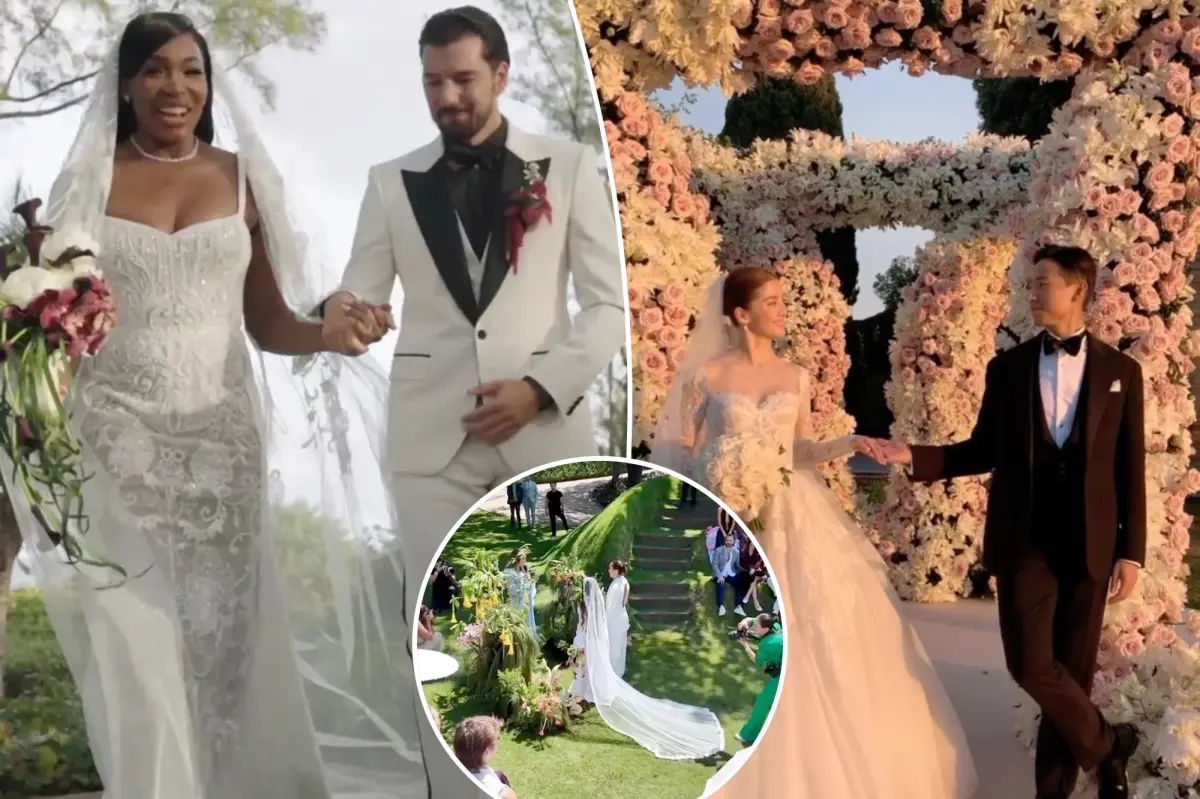
The internet, long accustomed to the aspirational and often surreal pages of Vogue, experienced a collective moment of vertigo when the legendary fashion publication decided to pull back the velvet curtain on the staggering financial realities of its featured weddings. By publishing an itemized, unfiltered breakdown of what it called the “real budgets” of seven weddings celebrated over the past two years, the magazine touched a raw societal nerve, instantly setting off a firestorm of digital outrage and intense fascination. It was a fascinating transition for Vogue, which has firmly established itself as the premier global arbiter of aspirational, high-society nuptials—chronicling the breathtaking unions of celebrities like Venus Williams, Lauren Sánchez, and Sofia Richie, alongside fashion industry heavyweights. Historically, the actual price tags of these impeccably styles, high-production spectacles were kept strictly confidential, discussed only in hushed tones among elite circles of vendors and coordinators. By displaying these astronomical figures in cold, hard print, Vogue inadvertently initiated a highly polarizing public discourse on wealth, modern love, and social class, forcing readers to grapple with the true cost of aesthetic perfection in an era marked by widespread economic anxiety and inflation.
Among the most talked-about events detailed in the expose was a massive, three-day destination wedding in Mexico that ultimately commanded a jaw-dropping total of $537,230. The anonymous couple behind this half-million-dollar affair admitted that they were initially taken aback and even offended by their wedding planners’ brutally honest, upfront assessment of what their grand vision would actually cost to execute. However, as the logistical machinery began to grind, they realized that transforming three days of celebrations for 245 guests into a flawless reality required a monumental, highly expensive production engine. The cold data tells a story of incredible financial escalation: the largest single line item was a staggering $91,381 dedicated solely to reception food and beverages, closely followed by $74,107 in professional planning fees, and $53,600 spent on high-end photography to ensure every moment was captured with editorial precision. Even with the bride’s high-fashion gowns generously gifted to her—saving tens of thousands of dollars in designer fees—the total continued to swell with $46,500 allocated for live entertainment, $42,000 for the venue rental alone, $32,175 for professional lighting design, and several thousands of dollars more spent on custom invitations, hair, makeup, and videography, illustrating how quickly a dream wedding can evolve into a complex, high-stakes corporate enterprise.
If the Mexican celebration was defined by its inevitable scale, a $198,483 wedding near the scenic shores of Cape Cod became a poignant case study in human stress, mismatched expectations, and the emotionally fraught dynamics of outsourcing help. This couple, both of whom work demanding full-time jobs, entered the planning process hoping that hiring a professional organizer would act as a shield against the crushing pressure of managing a major event; instead, they found that relinquishing control only heightened their anxiety and led to runaway costs that slipped completely out of bounds. In their candid interview with Vogue, the newlyweds openly placed the blame on their wedding planner, expressing deep regret for placing too much implicit trust in her to respect and honor their financial limits. Over the course of the planning cycle, traditional but steadily accumulating expenses bloated their budget to nearly $200,000 for 115 guests, driven by a $68,761 venue and catering bill, $37,291 in planning fees, $19,000 for a luxury outdoor tent setup, and $13,015 for organic floristry. The couple’s lingering resentment highlights a persistent, modern marital paradox: the quest to buy peace of mind through luxury services often generates its own unique breed of relational tension, leaving behind beautiful memories that are unfortunately overshadowed by the financial hangover of a compromised budget.
The absolute pinnacle of luxury in the Vogue lineup, however, was a breathtaking, multi-day Tuscan blowout that crossed the threshold of imagination to land at a monumental €1,125,034—well over $1.3 million in US dollars. The anonymous couple behind this Italian fantasy candidly confessed to going massively over their initial budget, yet they maintained that the resulting memories and guest experiences were worth every single cent. The defining, most extraordinary financial decision of this wedding was the couple’s choice to spend €384,775 on a complete buyout of a luxury hotel, effectively subsidizing 70% of the accommodation and travel costs for their 108 guests so they could all celebrate together in perfect, private harmony. The remainder of the million-dollar bill reads like the budget of a feature film, featuring €100,767 for gourmet dining and exquisite regional wines, €89,288 for world-class entertainment, and €86,866 spent on romantic floral designs—which the bride, in a rare moment of post-celebration clarity, admitted she could have easily scaled back. When factoring in an additional €69,400 for a massive reception tent, €30,764 for custom furniture rentals, and €25,000 for exclusive wedding fashion, the event stands as a striking testament to how the modern ultra-wealthy conceptualize hospitality, turning a personal, intimate milestone into an all-inclusive, multi-million-dollar vacation for their social circle.
Unsurprisingly, this unvarnished, detailed peek into the spending habits of the top tier of society provoked a wave of intense hostility across social media, but some of the sharpest, most painful criticism came from within the wedding industry itself. Numerous professional planners, florists, and coordinators took to the comments and online forums to vent their frustration, focusing heavily on how these wealthy couples publicly blamed their service providers for their own choice to spend lavishly. Industry veterans expressed profound dismay at the cultural devaluation of their labor, pointing out a painful irony in the Cape Cod budget where a planner—who routinely dedicates hundreds of hours over a year to manage crises, coordinate vendors, and absorb the couple’s psychological stress—was paid a fraction of what some photographers charged for a single weekend of physical shooting. Creative professionals argued that the article exposed a deep, troubling economic disconnect, where ultra-wealthy clients demand perfection, emotional labor, and flawless logistics on a global scale, yet look down on the very artisans, vendors, and laborers who work tireless, sleepless hours behind the scenes to bring those dreams to life.
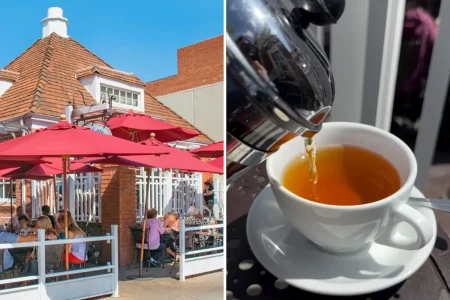
In the aftermath of the viral publication, the internet’s collective curiosity could not be contained, sparking a massive digital game of hide-and-seek as amateur sleuths and journalists worked to unmask the anonymous couples. Publications like the New York Post led the charge, cross-referencing Vogue’s extensive editorial archives with the specific guest counts, geographic locations, and design details outlined in the budget expose. For example, investigators suggested that the $537,230 Mexican festival could potentially be linked to high-profile destination weddings like the Oaxaca wedding of A24 marketing executive Poppy Thekdi and tech entrepreneur Ajay Mehta, or the design-focused Mexico City ceremony of Sofia Alva and Dan Haddad. Similarly, a smaller but highly curated $79,517 Canadian destination wedding matched almost perfectly with the Banff nuptials of Johnny Link and Matthew Davies, down to the exact 55-guest count, localized planning fees, and unique outdoor guest activities like canoeing and afternoon tea. Ultimately, the drive to identify these anonymous couples reveals a deeper human truth: behind the expensive floral arrangements, the custom tents, and the million-dollar price tags, we remain hopelessly fascinated by the human drama of weddings, reminding us that no matter how much money is spent, a wedding is still a deeply personal and vulnerable theater of family, love, social status, and human connection.