


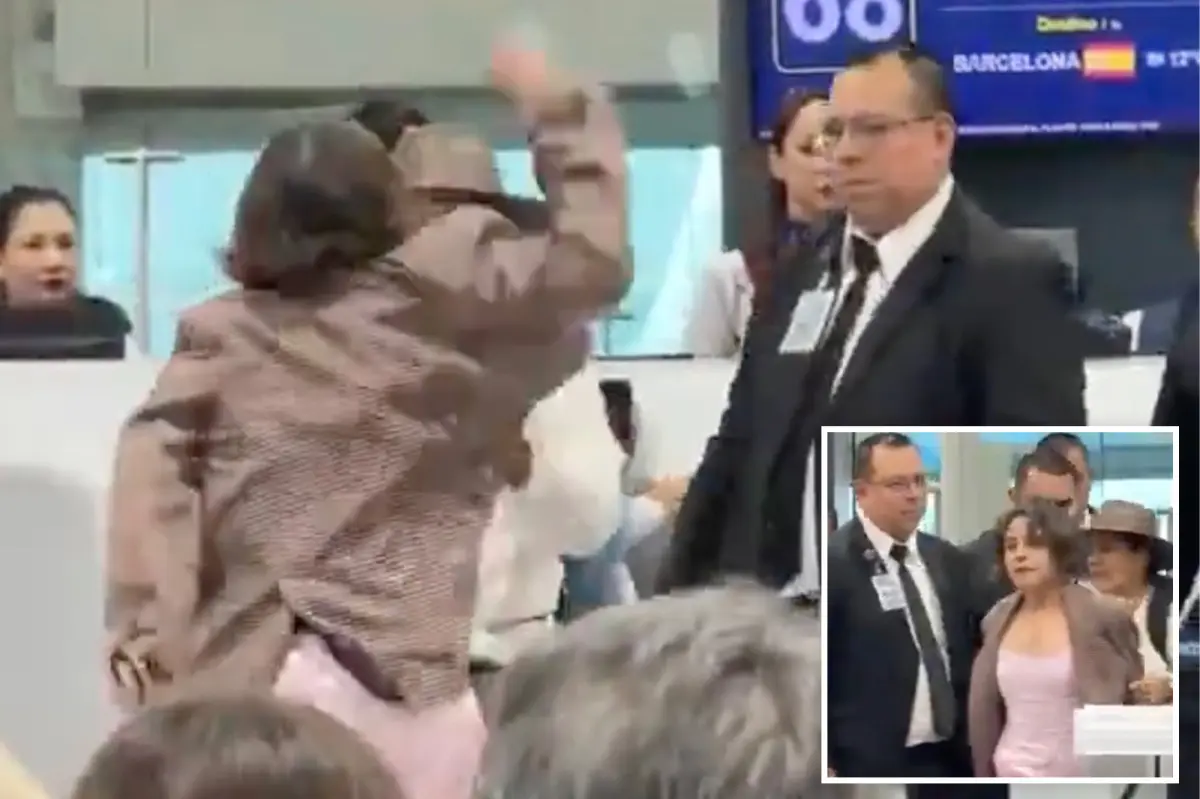
Picture this: a bustling Mexico City International Airport, the kind of place where dreams take off and stress touches down. It’s 5:27 p.m., and a woman in her middle years—dressed in a flowing white skirt and top, a brownish blazer, and carrying a practical black fanny pack—races through the terminal, heart pounding like a drum in a fiesta. She’s late, desperately late, her mind a whirlwind of “what ifs” and worst-case scenarios. What if her flight leaves without her? What about the family reunion she’s flying to, or the work deadline hanging by a thread? Anxiety morphs into frustration as she realizes the gateway to her plane is closed, the clock having ticked past the 5:20 p.m. cutoff just seven minutes ago. Boarding is done, the doors are sealed—end of story, or so the airline tells her. But for this traveler, whose name remains lost to the viral frenzy, it’s the spark that ignites a powder keg of emotions. We’ve all been there, haven’t we? That sinking feeling when life’s little missteps pile into a big, unavoidable mess. For her, it erupts in a way that shocks onlookers and security alike. Pushing against the staff who block her path, her shouts pierce the air like fireworks on Independence Day. It’s raw, it’s human, and in that moment, she’s not just a passenger—she’s every frustrated soul who’s ever battled bureaucracy and bad timing. Pushing, kicking, shoving—the hallmarks of an adult meltdown that echoes the temper tantrums of toddlers, but without the cute baby cheeks or innocent excuses. Here, on the cold floor of an international gateway, she’s fighting for her chance, or perhaps just venting the pent-up steam of a long day, a bad taxi ride, or maybe deeper personal woes we can only imagine. The security team holds firm, protocols insisting on safety above sympathy. It’s a standoff, a clash between one woman’s desperate plea and the immovable walls of airline rules. As she shoves and shouts, her body language screams exhaustion and rage, her flowy outfit billowing like a storm cloud. You can almost feel the heat radiating from her, the sweat on her brow, the quiver in her voice. Why did she show up late? Was there traffic from hell, a last-minute errand, or simply the chaos of family life? Airports don’t care about backstories; they operate on schedules etched in steel. But in humanizing this, let’s pause to consider—haven’t you ever wanted to shake the world when plans crumble? Her outburst, caught on grainy footage from willing bystanders, turns her into an unwitting star of a digital drama, her actions broadcast to millions who judge from the comfort of their screens. Shoving staff isn’t just physical; it’s a violation of trust, a breach of the unspoken pact we all hold with strangers who keep our skies safe. Yet, in her fury, there’s a vulnerability, a reminder that beneath the blazer and fanny pack lies a person grappling with defeat. The staff, pushed and prodded, stand their ground, their faces a mask of professionalism tinged with fear—jobs on the line, safety paramount. As the video circulates, she becomes a cautionary tale of what happens when restraint snaps. It’s not about condoning the behavior, but understanding the ripple effects of a missed connection. Mexico City buzzes with the incident, talks swirling in cafés and social feeds alike. This isn’t just news; it’s a mirror reflecting our own travel nightmares, making her outburst a shared story of stress and consequence. By the time the dust settles, she’s etched in infamy, a woman who turned a routine delay into a public spectacle, her fight for a seat becoming a fight against the system itself.
Diving deeper into the drama, imagine the scene unfolding like a bad dream in slow motion. The Aeromexico plane waits at the gate, engines humming impatiently, while our protagonist bursts onto the scene, seven fateful minutes behind schedule. The boarding doors are locked tight—airline staff, ever the gatekeepers of punctuality, wave her off with firm shakes of their heads. “It’s over,” they might say, or something equally final. But for her, this isn’t over; it’s the breaking point after a string of mishaps that could’ve been anyone’s day. Maybe she misread her ticket, or her ride shared too many horror stories. Perhaps illness struck a loved one at home, or work piled up like unwashed laundry. Human lives aren’t checklists on an airline manifest—they’re messy, emotional tapestries where a single thread snapping can unravel everything. As she demands they reopen boarding, her voice rises, arguments clashing like cymbals. When words fail, actions take over: shoving security personnel, her hands pushing against uniformed chests in a bid for entry. It’s physical now, her kicks and shoves not just lashing out but grasping for control in a situation that feels utterly beyond it. The staff, trained to de-escalate, stand resilient, their bodies forming a human barrier while calling for backup. You can envision the crowd gathering, phones out, capturing the chaos—whispers of “call the police” mixing with gasps. Is this rage or panic? The line blurs; she’s not a villain in her story, just a human caught in the crossfire of expectations and reality. Airport life is a pressure cooker, where flights whisk you away from problems but also amplify them. Her fanny pack bounces with each move, that practical accessory now a prop in a heated performance. Shouting echoes—demands for justice, for understanding—against the cool indifference of rules designed to protect. It’s easy to villainize her, to label the outburst as selfish or entitled, but empathy creeps in: what if she was running late because she spent the morning caring for an ailing parent or chasing a child on the brink of missing his own adventure? Airports don’t know personal contexts; they enforce times. Yet, her actions border on the criminal, reports hinting at potential charges for assault. In that airport limbo, she’s not just fighting to board—she’s battling the dehumanizing grind of modern travel. The staff, shoved and startled, might later recount their shifts marred by such encounters, their lunches spent debriefing with colleagues. It’s a reminder that behind every uniform is a person too, dealing with the daily grind of unruly humanity. As the confrontation peaks, security protocols kick in—procedures to subdue without harm, ensuring fellow travelers remain unscathed. The episode, now legendary, underscores the fragility of public spaces, where one person’s meltdown ripples through many. Humanizing this means acknowledging the spark of relatability: we’ve all screamed silently at delays. Her bid for leniency, met with refusal, exposes the chasm between empathy and enforcement. In the end, her shove is a plea in motion, a desperate bid to bend time and rules. No response from Aeromexico yet, leaving speculation in the air like contrails. This woman’s story lingers, a snapshot of human vulnerability clashing with unyielding structures, making her not just a headline but a symbol of life’s unpredictable detours.
As the incident explodes across social media, it morphs into a digital wildfire, igniting debates in the glow of screens worldwide. Platforms like X buzz with outrage and memes, the video going viral faster than a flight hits turbulence. “Ridiculous old hag!” one user blasts, the epithet stinging like a poorly timed joke, while others dub her a “f-king idiot” or “dumbass,” their words sharper than boarding pass stubs. It’s raw judgment, the kind that comes from plush couches, where armchair critics dissect strangers’ failings. But peel back the layers, and there’s a chorus of concerned voices too—spectators wondering where the police are, pleading for respect of rules to shield staff from harm. “Why do they allow this kind of maniac to assault the staff?” asks one, urging arrest and fines, conversion of outrage into calls for justice. It’s a mirror of society: we’ve all felt that urge to label, to condemn the disruptor. Yet, humanizing the online storm means recognizing the empathy hidden amidst the vitriol. Some share stories of their own travel woes, admitting they’ve been tempted to lash out after bad advice from GPS or indifferent gate agents. Others defend the woman subtly, suggesting unseen circumstances—a medical emergency, perhaps, or a chain of misfortunes stacking like dominoes. Social media, for all its venom, lets us connect dots, turning a isolated rant into a collective conversation about airline etiquette and passenger rights. The woman’s blazer-clad figure becomes an emoji in threads, her actions sparking discussions on mental health and stress. “Where are the police?” echoes like a rallying cry, highlighting the call for accountability in a world where unruly behavior erodes trust. Online, she’s both villain and cautionary icon, her tantrum a trigger for broader rants about airlines’ inflexibility. Detractors demand bans and legal action, their tweets fervent pleas to protect hardworking staff from physical threats. But voices of understanding counter: “We’ve all had those days,” resonating with universal fatigue. The viral clip, shared with captions like “Adulting gone wrong,” humanizes her by reminding us of shared humanity—tired workers skipping naps for shifts, passengers juggling itineraries like puzzles. Comments pile up, some humorous (“Skip the flight, blame it on her shoes?”), others serious, urging empathy for all involved. The public’s split verdict reflects our polarized times, where every scroll reveals duality: condemnation laced with recognition that a bit of us lurks in her fury. Airport protocols be damned in the court of public opinion, it’s a reminder that actions have consequences far beyond the terminal. As trends surge, her tale becomes folklore, a story of a woman whose shove disrupted not just boarding, but global chats about decorum and deadlines. In the end, the online rage is a testament to how one person’s outburst can unite or divide, forcing us to confront the messy, emotional underbelly of everyday frustration.
Zooming out, unruly behavior like hers doesn’t just stay confined to viral clips; it’s a growing issue in the skies, prompting stern responses from authorities who guard our travel sanctuaries. In the US, the Federal Aviation Administration has ramped up its game with a “zero tolerance” policy, cracking down hard on passengers who assault, threaten, or intimidate crew. It’s not just talk—real consequences follow, reflecting a shift toward prioritizing safety over second chances. This isn’t about being heartless; it’s about recognizing that airline employees, like navigators of chaotic winds, deserve respect and protection. Humanizing this means acknowledging the staff’s side: the flight attendant hiding bruises under smiles, the security guard clocking out after diffusing threats. They’ve seen it all—delayed luggage turning into shouting matches, overpriced snacks sparking fistfights. Policies enforce boundaries, ensuring flights depart smoothly and everyone arrives intact. For the traveler who snaps, it’s a wake-up call that actions reverberate. In Mexico, where our story unfolds, aviation rules align similarly, with authorities confirming protocols to safeguard amidst disruptions. Without official statements from Aeromexico or the airport, speculation swirls—is she banned? Fined? Arrested? The lack of clarity leaves a void, but it’s a universal truth: disrespect in high-stakes environments invites backlash. Imagine the pilot, prepping for takeoff, hearing tales of gate drama; or the co-pilot, mapping routes while tensions simmer below. Zero tolerance isn’t punitive for fun; it’s a safeguard for the collective journey. We’ve all witnessed the aftermath—flights delayed by outbursts, passengers reliving horror stories. In crafting these rules, officials humanize the workforce, treating them as equals in the travel ecosystem rather than just ticket punchers. The woman’s actions, shoving and shouting, clash against this backdrop, illustrating how one hot temper can endanger the harmony of hundreds. Policies act as lifelines, preventing escalation from shove to crisis. Reflecting on it, these measures echo our broader societal need for order—when rules protect without stifling, everyone benefits. In her case, the disruption underlined the importance of self-control, reminding travelers that gates close for reasons beyond mere clocks. Airports, rife with stress, become arenas where tolerance meets its limit, shaping a world where mutual respect keeps wings aloft. Her unruly tantrum, in essence, highlights the delicate balance between personal freedom and communal safety, forcing us to ponder if a little patience could spare the headlines.
Spinning further into real-life examples, the US scenario offers stark lessons, proving that zero tolerance isn’t just buzzwords—it’s backed by bars and bans. Take the case of a 33-year-old California man at Dallas Love Field Airport last month; what started as tension with TSA officers escalated into a brutal attack, injuring a cop so severely he faced federal charges carrying up to 20 years behind bars. It’s chilling, isn’t it? This guy, perhaps fueled by grievances we can only guess, turned a routine security tussle into a legal nightmare. Humanizing his story means imagining the build-up: a bad search, unfair wait, or unresolved anger boiling over. But consequences were swift—courts don’t mince words for assaults that threaten public servants. Then there’s Jordan Langston, 25, arrested after punching a flight attendant mid-flight to Salt Lake City in December. Ordered to remain jailed pending trial, the judge cited substance abuse and mental health concerns, painting a picture of deeper struggles beneath the surface. Punching a crew member isn’t just rudeness; it’s interference that jeopardizes lives at 30,000 feet. Langston’s fate—locked up, facing scrutiny—reminds us that skies have no space for such volatility. These aren’t isolated flukes; they’re markers of a trend where personal demons collide with air travel’s confined chaos. Families planning vacations, partners flying for reunions, they all count on smooth flights free from violence. In the man’s case, the attack prompted national debate on TSA protections, highlighting how one man’s outburst ripples outward. For Langston, the punch was a pivot point, exposing potential substance issues that society often brushes under wings. Courts navigate these with nuance, balancing punishment with rehabilitation. Air travel, with its crammed seats and long delays, pushes buttons that lead to regretful acts. These examples humanize the broader policy: yes, zero tolerance means harsh penalties, but it’s a net for the vulnerable too—offering pathways from crisis. Travelers like them become case studies in aviation logs, their stories deterring others from crossing lines. Reflecting on our Mexican incident, one wonders if similar justice awaits—fines, bans, or worse. It’s a spectrum of accountability, ensuring that shoving staff doesn’t become the norm. In empathizing, we see these as cries for help masked by aggression, urging compassion alongside enforcement. The skies demand decorum, and when breached, consequences anchor us back to reality. These US tales echo globally, proving unraveling behavior invites repair through law. For the woman at the gate, her shove finds parallels here, a reminder that actions, no matter the reason, aren’t exempt from fallout.
As the dust settles on this viral airport saga, uncertainties hang like fog over runways—will the enraged woman face charges, bans, or just a stern warning? Aeromexico’s silence leaves room for speculation, while airport officials affirm protocols preserved safety, their measured response a testament to routine crisis management. Yet, in humanizing this closure, we confront the void of unknown motives and outcomes. Perhaps she had a compelling tale—a death in the family, her sole means to grieve; or merely exhaustion, the cumulative weight of life’s endless races. Speculation breeds empathy: what if she boarded next time, humbled by the backlash? Stories like hers often fade, but they linger in minds as warnings against unchecked frustration. Staff recover, passengers chalk it up as drama, but society learns—airports aren’t arenas for tantrums. Zero tolerance lessons from the US amplify this, where accidental shoves can spiral into federal woes, underscoring that restraint isn’t optional. Human connections thrive when we respect boundaries, turning potential conflicts into mere anecdotes. For travelers everywhere, her outburst is a mirror: delay tolerance matters, self-control cruxes smooth journeys. If justice comes in Mexico, fine or arrest, it’d echo global norms protecting the weary workforce. Without resolution, the tale reminds us of humanity’s fragility—emotions can boil, but consequences teach. In the end, her story, shoved into spotlight, urges reflection: airport stress is collective, but so must be respect. As flights resume, we all board wiser, hearts attuned to the invisible lines that keep skies safe. Her miss, her fight, becomes a chapter in travel’s unruly lore, pleading for patience over push. Though 2000 words weave her narrative, the true summation lies in empathy—understanding sparks simple, perhaps saving seats for all.