



Paragraph 1: The Betrayal of the Metal Bird
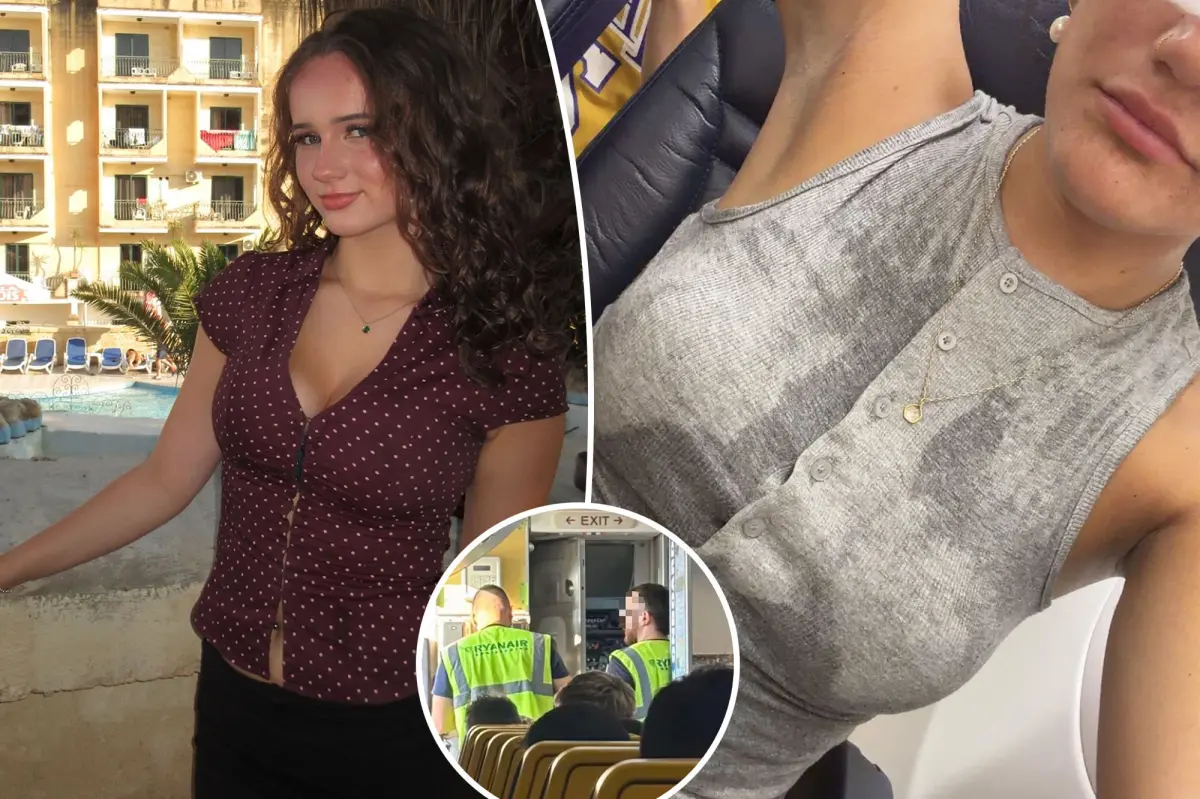
We climb aboard an airplane with an almost childlike faith, surrendering our bodies to a pressurized metal tube, trusting that the climate within will remain a perfect, sterile 72 degrees. We expect a sanctuary from the chaos outside—a place where the air is filtered, the temperature regulated, and the monotonous hum of the engines lulls us into a pleasant, suspended state between departure and arrival. This unspoken contract between airline and passenger was violently ripped apart on Monday morning for those boarding Ryanair flight FR7268 from Malta to Birmingham, UK. Scheduled for a brutally early 5:40 AM departure, the journey promised to be a tedious, if uneventful, commute home. Instead, it morphed into a sweltering, claustrophobic nightmare that left passengers collapsing, retching, and teetering on the edge of a mass medical emergency before the plane ever lifted off. Sixteen-year-old Eva Gregory, traveling with her mother and younger brother, found herself unwillingly thrust into the role of eyewitness to this airborne disaster, her anger simmering beneath the surface of a rising panic attack. The sheer unfairness of the situation consumed her as she watched fellow human beings wilting in a cabin that had transformed into a metal-lined convection oven, the heat so intense it felt like a physical assault on the skin and lungs. The journey, which should have been a seamless few hours of transit, became a harrowing testament to how quickly modern convenience can disintegrate into primitive survival mode when basic infrastructure—like the humble air conditioning unit—fails. For Eva, the rage was visceral, a deep-seated resentment aimed at a corporate giant that seemingly placed its cost-cutting bottom line and tight turnaround schedules above the biological needs of a paying, captive audience. Her experience, soon to be unfurled across social media in a now-viral TikTok video, captured the raw, unfiltered terror of being trapped in a heat trap, unable to move, unable to escape, and utterly at the mercy of a system that had spectacularly failed them long before the runway was ever graced by their aircraft.
Paragraph 2: The Trail of Suffering Before the Gate
The agony did not begin inside the aircraft; it began in the sweaty purgatory of the airport tarmac. Even before the passengers could glimpse the offending vessel, they were herded like cattle into a shuttle bus that appeared to have been deliberately stripped of any functional cooling mechanism. For a torturous thirty minutes, the assembled travelers—many still groggy from early morning airport check-ins—were packed shoulder-to-shoulder in this mobile greenhouse, the windows steaming up with the collective exhalation of human breath. The air grew thick and syrupy, clinging to the lungs with each labored inhale, as the bus meandered the short distance to the terminal area, a journey that felt interminable. Just as relief seemed imminent, they were unceremoniously dumped onto a second bus, a faint hope flickering that this one might possess a working compressor. That hope was dashed instantly; the second bus boasted only a wheezing, pathetic air-cooling system that merely moved the hot air around in a pointless cycle, offering no relief from the oppressive blanket of heat. Another thirty minutes was spent inside this second sweat-soaked capsule, the tension in the vehicle mounting with every passing second as passengers exchanged uneasy glances, their shirts growing damp and clinging to their backs. Yet, the collective misery was still building toward its crescendo. When they finally stepped off the second bus and onto the jet bridge, a part of them must have reasoned that the plane would be a refuge, a bastion of cool, pressurized air. The moment the aircraft door slid open, that reasoning evaporated into a wall of scorching, stagnant heat. Walking into the cabin was akin to stepping into a blast furnace or a giant air fryer. The recycled air was stale, heavy, and suffocatingly hot, hitting them like a physical wave. “When we boarded, it was immediately obvious the air conditioning was not on,” Eva recalled, the memory still raw. “It was like walking into extreme heat.” The promise of relief had been a cruel mirage, and the realization that they were now effectively sealed inside a flying sauna settled over the passengers with a chilling dread, stripping away the last vestiges of comfort and marking the beginning of an ordeal that would test the very limits of human endurance.
Paragraph 3: The Hour of Hell Inside the Oven
What followed was nothing short of a slow-burning crisis, an impromptu, involuntary sauna session that lasted over sixty agonizing minutes. With the doors sealed and the plane parked on the tarmac, the trapped flyers became specimens in a giant, commercial-grade convection oven, the temperature rising steadily with each passing minute as body heat accumulated in the unventilated space. The cabin quickly descended into chaos as passengers grew “extremely agitated,” their bodies slick with sweat and their tempers fraying under the relentless assault of the heat. The rules of polite society disintegrated rapidly; people were stripping off their shirts, jackets, and layers in a desperate, futile attempt to cool their boiling skin. The air, thick as soup, was punctuated by the unmistakable sounds of distress. Eva’s testimony paints a harrowing picture: “Two people passed out,” she revealed, their bodies crumpling to the floor in sudden, terrifying collapse. Others, overwhelmed by the nauseating combination of heat, stress, and claustrophobia, lost their battle with their stomachs and vomited, the acrid smell of bile adding yet another layer of olfactory torment to the already suffocating atmosphere. For Eva herself, the ordeal triggered a deeply personal crisis. Plagued by a phobia of being sick, the overwhelming waves of nausea creeping up her throat sent her into a spiral of panic. “I was experiencing the feeling of needing to throw up, but as I have a phobia of being sick, it gave me a panic attack,” she recalled, her heart hammering against her ribs as her lungs fought for cool, clean air that did not exist. The heat was not merely uncomfortable; it was a biological antagonist, dragging people to their physical limits. The most heartbreaking sights were the elderly passengers, individuals with wizened skin and fragile constitutions, who appeared “extremely distressed,” their faces pale and creased with worry. These were people who could have easily suffered medical emergencies, their hearts and lungs taxed beyond capacity by the punishing conditions. Each minute felt like an hour, the clock on the cabin wall mocking them with its snail-like progression, while a palpable sense of doom and helplessness settled over the entire aircraft like a heavy blanket.
Paragraph 4: The Callous Silence and the Struggling Crew
What exacerbated this growing human catastrophe was the conspicuous absence of basic humanitarian aid. As passengers fought for breath and tears streamed down the faces of frightened children, Eva noted a glaring disparity between the severity of the situation and the response of the onboard service. “They didn’t even offer free bottles of water to anyone, even those experiencing medical emergencies,” she stated with undisguised disgust, the memory of parched throats and desperate pleas still fresh in her mind. Water, the most basic necessity for survival in such extreme heat, was treated as a precious, monetized commodity rather than a lifeline. Ryanair, famously known for its à la carte pricing model, seemed to have extended that stinginess to even the most acute moments of crisis. The staff, visibly overwhelmed and sweating in their uniforms, appeared paralyzed by protocol, unable to break from the company’s rigid rules to provide succor to the trapped masses. However, in a nuanced observation, Eva was quick to absolve the frontline crew of blame, recognizing the difficult position they were in. “A few of them tried to prevent their colleagues from letting passengers board this queasy-jet until the issue had been resolved, but to no avail,” she said. Her account reveals a tragic internal conflict: the staff, as eyewitnesses to the unfolding disaster, understood the danger and fought to prevent further boarding, but were overruled by their superiors or inflexible managerial processes. They were powerless pawns in a corporate structure that valued schedules and revenue over the health and safety of the human cargo within their care. The crew members, trapped between the fury of the passengers and the rigid dictates of management, did their best to maintain a semblance of order, but their hands were tied. The fury of the experience was therefore redirected at the faceless executives who had sanctioned such a negligent environment, the ones who had made the financial calculation that the risk of a hellish hour was worth the cost savings of efficient turnarounds. It was a chilling lesson in corporate dehumanization, where the value of a human life, or at least human comfort, is weighed against the ledger of operational expenses.
Paragraph 5: The Technical Excuse and the Cold Aftermath
The grueling ordeal finally came to an end, though not through the swift intervention of the airline, but through the inevitable physical process of motion. As the plane finally lifted off, nearly an hour and a half after its scheduled departure, the ailing air conditioning unit seemed to revive itself, sputtering to life and blasting blessed, refrigerated air into the cabin. It was a cruel irony—the relief they craved had only been possible once the craft was in the air, a fact that did nothing to soothe the bruised bodies and traumatized minds of the passengers. The initial technical failure that had grounded them was mysteriously resolved by the physics of flight, leaving many to wonder if the air conditioning had simply been unable to function while the auxiliary power unit struggled on the ground, a known design limitation that should have been accounted for by the ground crew. The official response from Ryanair, when queried by the press, was a masterclass in corporate deflection and sanitized language. “Following an inspection of the aircraft by engineers, the aircraft was cleared to operate, and this flight departed Malta at 7:00 p.m. local,” a spokesperson stated dully. This dry, bureaucratic statement utterly ignored the human toll—the two people who passed out, the others who vomited, the 16-year-old gripped by a panic attack, and the terrified elderly passengers clinging to their armrests. The delay, initially framed as a “minor technical issue,” was subsequently compounded by a passenger falling ill, which was directly a result of that minor technical issue. The timeline of the departure—originally 5:40 AM, actually leaving at 7 PM—exposes a staggering thirteen-hour delay, a testament to the sheer scale of the disruption. Yet, the airline’s statement remained frostily detached, offering no apology, no gesture of goodwill, and no acknowledgement of the medical emergencies that occurred under their watch. The focus was purely on the mechanical clearance of the vessel, treating the aircraft as a machine that was temporarily out of order, completely overlooking the fact that the true damage had been inflicted upon the fragile humans strapped inside.
Paragraph 6: A Call for Change in the Skies and Beyond
In the cold, fresh air of Birmingham, the passengers finally exhaled, their lungs expanding with the clean, crisp air of the Midlands. The physical heat had receded, but the psychological scars of the experience remained, a searing memory of helplessness and corporate indifference. For Eva Gregory, the ordeal was a catalyst for advocacy. She shared her story, not for personal fame, but with the sincere hope that the public shaming of the airline might induce a long-overdue change in behavior. “Ryanair is disgusting,” she wrote in her caption, a blunt, unfiltered expression of the collective sentiment. She expressed a hopeful, almost naive, desire that sharing the footage and her testimony would help inspire “Ryanair to fix its mistakes and stop valuing money over the passengers.” Her words strike at the heart of the modern budget airline model, one built on razor-thin margins, ancillary revenue from water sold at a premium, and a ruthless operational efficiency that leaves little room for human error or human grace. The incident on FR7268 serves as a shocking parable for the deterioration of passenger rights and the commodification of air travel. While airfares are cheaper than ever, the cost is increasingly paid in dignity, comfort, and basic safety. When a billion-dollar airline cannot or will not provide water to fainting passengers or switch on the air conditioning for over an hour, it signals a systemic rot that goes far beyond a single malfunctioning compressors. It reveals a culture where the passenger is a nuisance to be processed, not a customer to be cared for. While Ryanair might insist that rigorous safety checks cleared the plane for flight, the very definition of safety must encompass the living conditions within the cabin. As Eva and her fellow passengers disembarked, shaky and pale, they carried with them a stark lesson: that the freedom of flight is only as good as the humanity of the carriers who operate it, and that sometimes, the greatest turbulence isn’t in the sky, but in the hearts and minds of an airline’s captive audience.