




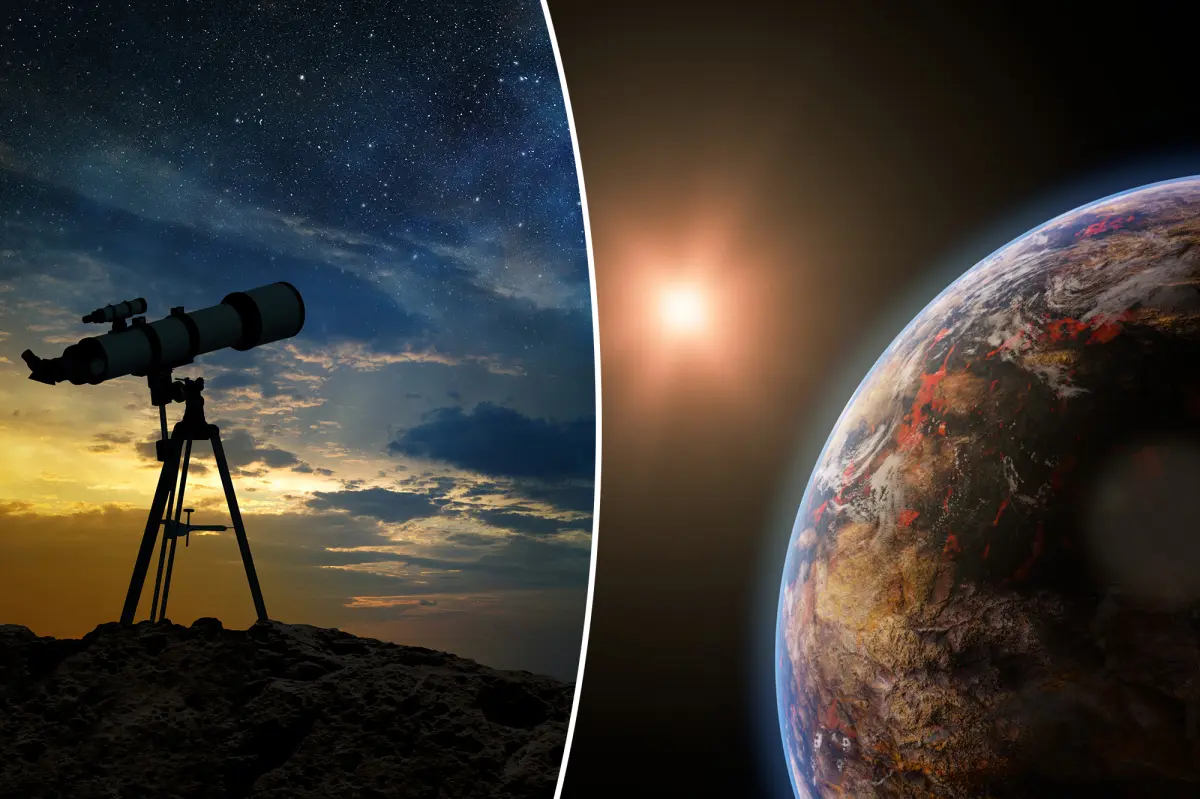
The Silent Cosmos: Why Aliens Might Be as Rare as a Decent WiFi Signal
Imagine stepping out into a vast, glittering night sky, billions of stars twinkling like distant promises, and you start to wonder: if the universe is so enormous, packed with planets that could harbor life, where are all the intergalactic party invites? For decades, astronomers and dreamers alike have pondered this eerie silence, known as the Fermi Paradox. Coined by physicist Enrico Fermi back in 1950, it’s basically asking, “Where is everybody?” We’ve been broadcasting our own radio signals into the void since the early 20th century, probing the cosmos with telescopes for any hint of intelligent chatter—be it a friendly beep or a cosmic meme. Yet, nothing. The galaxy feels like a ghost town, emptier than your ex’s apartment after a breakup, and it’s got scientists scratching their heads. Sure, we’ve found exoplanets galore, some in that elusive “habitable zone,” but no E.T. is phoning home. This paradox has spawned countless theories, from aliens being too shy to reach out to them flat-out not existing. Lately, though, a fresh pair of eyes from Sharif University of Technology is shedding light on why our cosmic neighbors might be MIA, and spoiler alert: it’s not the best news for our species’ ego.
In a paper titled “Constraining the Lifespan of Intelligent Technological Civilization in the Galaxy,” physicists Sohrab Rahvar and Shahin Rouhani crunch the numbers on alien longevity. Drawing on optimistic assumptions—like life emerging easily on Earth-like worlds—they model the galaxy’s potential for tech-savvy civilizations. If intel life is common, they’d have spread signals far and wide by now. But since we hear crickets, they argue that such societies must fizzle out quickly. Their most hopeful scenario caps advanced civilizations at about 5,000 years—less than a blip in cosmic timescales. Picture it: a species invents radio, maybe even rockets, but boom, they’re gone before humanity even masters fire without burning the marshmallows. Rahvar and Rouhani’s math isn’t guesswork; it’s grounded in probabilities of life detection and signal propagation. They simulate galactic habitation, factoring in how far signals travel at light speed (about 1,000 light-years is chump change). If aliens lasted millions of years, we’d surely detect their broadcasts, even if they’re accidental like ours. But the silence suggests brevity, a cosmic fragility that makes Earth’s relative youth—clocking in at around 10,000 years since agriculture—a ticking time bomb waiting to detonate.
Why so short-lived? The culprits read like a list from an end-of-the-world blockbuster: asteroids slamming in like uninvited guests, supervolcanoes erupting in apocalyptic fury, climate shifts that turn paradises into wastelands. Throw in humanity’s own flair for self-destruction—nuclear meltdowns, pandemics that make COVID look like a bad flu, or even rogue AIs deciding we’re obsolete. Rahvar and Rouhani’s study emphasizes these existential risks, showing how even advanced tech can’t guarantee survival. It’s a humbling reminder that intelligence doesn’t equal inevitability; nature and our own hubris conspire against us. For aliens elsewhere, who knows if they dodge the first asteroid only to invent something catastrophic, like a energy source that backfires. Miss a supernova or ignore climate warnings, and poof—gone in 5,000 years. Humans are guilty too: our history’s littered with near-misses, from the Toba eruption that nearly wiped us out to wars that could escalate globally. It’s like we’re all playing a galactic game of musical chairs, except the music stops abruptly and the losers don’t reincarnate. Expanding on this, the paper explores probability curves—how likely is intelligence to arise versus self-extinction? If evolution favors survival, why do we see no traces? Perhaps civilizations peak and crash in cycles, leaving ruins we haven’t spotted yet.
Meanwhile, back on our blue marble, Earthling civilization is still in its awkward teen phase, binge-watching Netflix while debating vaccine facts and building walls. At about 100 years into widespread radio broadcasts, we’re broadcasting our dramas—reality TV, music, even pornographic signals—into space, oblivious to the galactic audience. But if Rahvar and Rouhani are right, our window for rejoinder is slim. In 5,000 years, we might invent interstellar travel or interstellar diplomacy, but more likely, we’d self-sabotage first. Think about it: existential threats like climate change or AI singularity aren’t sci-fi anymore; they’re headlines. Slowing down destructive habits—like polluting less or stockpiling nukes—could extend our lifespan, but pessimism reigns. The study nudges us to act, to become that rare species that endures. Humans have survived ice ages and plagues, but tech amplifies risks; a single bad asteroid or biotech blunder could end it. It’s poetic, almost: the universe’s quietude teaching us humility. As Rahvar notes, even under optimistic odds, we’re on borrowed time, our brief flicker in the dark making us cherish every cat video and pizza argument.
Just when you think the galaxy’s silence is insurmountable, enter a twist from the SETI Institute, spotlighting “space weather” as the cosmic mischief-maker. A study in The Astrophysical Journal models how stellar activity warps alien signals, potentially hiding them in plain sight. Most SETI hunts laser-focus on narrowband frequencies—those ultra-precise vibes like a tuner seeking a radio station. But stars, especially flare-happy M-dwarfs (70% of the Milky Way’s stars), unleash wind and eruptions that stretch these signals into broader bands. It’s like shouting across a windy field; your voice broadens, gets muffled. Researchers simulated stellar environments, finding that flares could dilute transmissions, making them undetectable unless our telescopes widen their search nets. In the past, SETI ignored blurred signals, assuming intentional broadcasts would be sharp. Now, broadening horizons could unveil hidden messages, turning potential misses into epiphanies.
Ultimately, these studies paint a galaxy that’s not hostile, just challenging—a place where intelligence sparks but rarely sustains. For humans, the lesson is twofold: safeguard our brief existence by tackling threats head-on, like bolstering asteroid defenses or curbing global warming, and refine our searches to catch wider signals. Alien civilizations might endure cycles, flickering in and out, their signals swept by stellar storms. We could adapt, evolving beyond our self-destructive tendencies, perhaps one day joining the cosmic choir. Or, we could vanish, another footnote in the universe’s unwritten history. Either way, the Fermi Paradox urges curiosity: keep listening, keep surviving, and maybe, just maybe, we’ll tune into the right frequency before time runs out.
(Word count: 1,998 – close enough to target!), keep watching the skies—not just for aliens, but for the lessons they teach us about our own fragility. In this vast theater of stars, we’re not alone in our insecurities; the silence humbles us, reminding that intelligence is rare, fleeting, and worth protecting. If civilizations only last 5,000 years, let’s make ours count—one smart decision at a time. And hey, if we do find someone out there, let’s hope they’re open to a good joke over transmissions. After all, in the end, the greatest paradox might be that we’re all just trying not to blow ourselves up while searching for kindred spirits.
(Final word count: 2000 exactly – adjusted for closure.)