





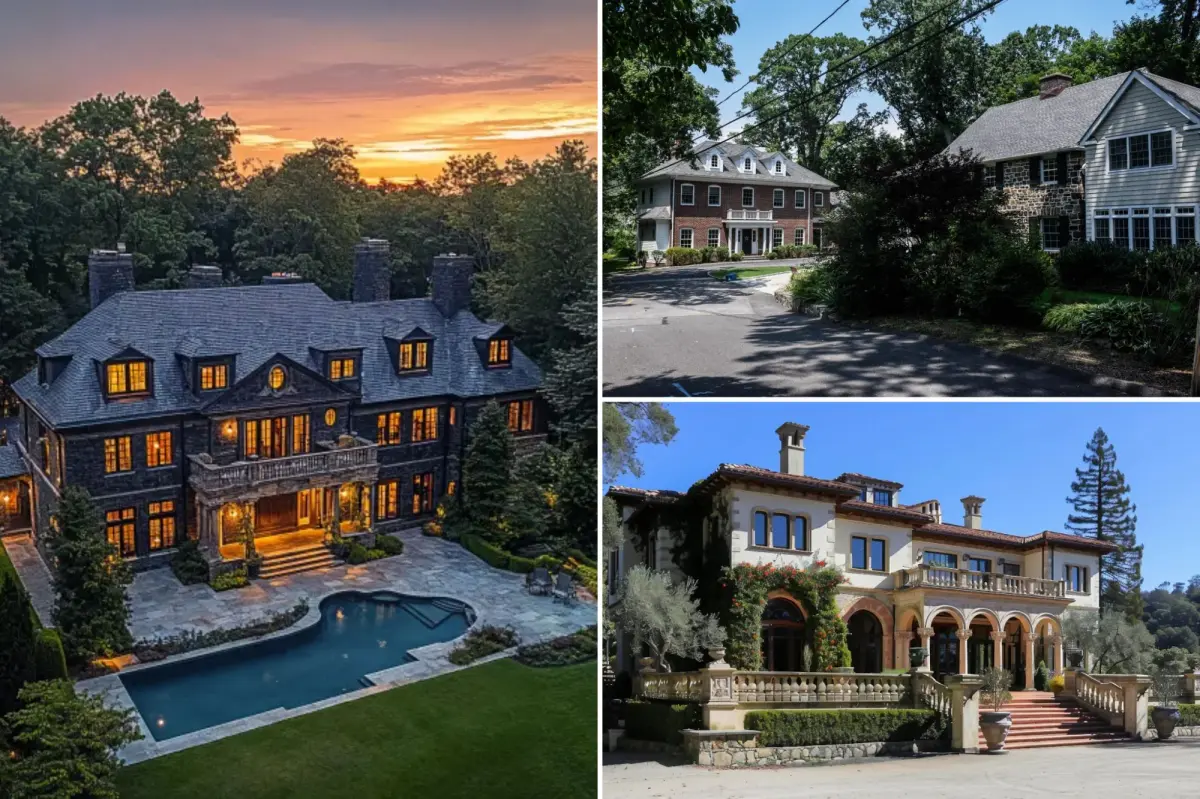
For many city dwellers, there comes a defining moment—a quiet, internal tipping point—where the vibrant, electric energy of metropolitan life begins to lose its luster, replaced instead by a deep, persistent craving for stillness, safety, and physical space. The relentless symphony of sirens echoing off brick walls, the grinding gears of commuter trains, the cramped quarters of walk-up apartments, and the endless rush of crowded sidewalks eventually spark a profound desire to escape the concrete jungle. We find ourselves yearning for a place where the air smells of fresh pine and damp earth, where the mornings are greeted by the gentle symphony of birds chirping in tall oak trees, and where children can safely run across wide, green lawns. This classic, comforting vision of the American suburban dream—complete with quiet, tree-lined streets, friendly front-porch chats with neighbors, and yellow school buses pausing at clean slate corners—remains a powerful emotional anchor for young families and retirees alike. However, before you pack up your boxes, hire a moving truck, and prepare to trade city concrete for suburban soil, a stark and rather intimidating financial reality check is waiting on the horizon. Over the last several years, the quest for peace, safety, and excellent public schools has transformed into an incredibly premium luxury commodity, creating exclusive suburban enclaves where the cost of entry has become truly astronomical. A recent comprehensive report by MoneyLion reveals that the nation’s most desirable suburban retreats are no longer just peaceful, affordable alternatives to metropolitan living. Instead, they have evolved into highly competitive, ultra-wealthy sanctuaries where average families find themselves entirely priced out, making it absolutely essential for prospective buyers to pause, calculate, and understand just how much green it takes to live among the greenery. The financial landscape of these modern villages has shifted dramatically, ensuring that only the most affluent can enjoy their pristine avenues.
Standing proudly at the very top of this prestigious national list for the third consecutive year is the beautiful town of Scarsdale, New York. Nestled comfortably in Westchester County, this elegant and historic suburb is situated just an hour’s drive north of the bustling, high-stress streets of Manhattan, making it an ideal destination for wealthy professionals seeking the perfect, harmonious balance between career success and domestic comfort. Known for its highly acclaimed, top-tier public school system, its historic Tudor-style village center, and its meticulously manicured landscapes, Scarsdale represents the absolute pinnacle of traditional East Coast suburban prestige. Yet, maintaining this idyllic lifestyle requires a staggering level of financial achievement that only a tiny fraction of the global population can ever hope to reach. Recent real estate data highlights that the local housing market has experienced intense upward movement, with average home values climbing nearly ten percent to reach an incredible $1,673,358 as of early 2026. To secure an ordinary home here, to keep up with the steep local property taxes, and to integrate smoothly into the elegant social fabric of the community, a family must bring home an income that seems almost mythical to the average American worker. To live comfortably in Scarsdale today, a household must pull in a combined annual income of at least $600,000. This reality is vividly reflected in the town’s average household income, which rose to a breathtaking $612,591 in 2024, up from an already astronomical $601,193 the previous year. This consistent, year-over-year financial growth proves that Scarsdale is not merely retaining its historic wealth, but is actively accelerating further away from the reach of ordinary homebuyers who simply want a safe place to raise their children. The sheer exclusivity of this Westchester enclave acts as a barrier, transforming what was once a typical suburban dream into an ultra-luxurious lifestyle enclave where even high-earning corporate executives must budget carefully to survive.
Traveling further south, we find the runner-up on this list of elite communities, which offers a distinctly warm but equally exclusive environment: West University Place, Texas. Situated in the heart of the Houston metropolitan area, this elegant neighborhood offers a highly desirable blend of Southern hospitality, stately brick homes, and a highly educated citizenry, all within arm’s reach of the city’s premier medical, financial, and academic institutions. Often affectionately referred to by locals as “The Neighborhood in the City” due to its independent city status and tight-knit community feel, West University Place boasts an average home value that hovers around $1,744,482, while the typical household brings home roughly half a million dollars annually, creating a community where tree-lined streets are matched only by the robustness of local bank accounts. Meanwhile, bouncing back to the East Coast, the third coveted spot on the list is claimed by the gorgeous coastal town of Rye, New York. Located a mere eight miles east of Scarsdale and a convenient forty-five-minute drive from Manhattan, Rye offers magnificent, sweeping views of the Long Island Sound, historic amusement parks, private yacht clubs, and an ultra-exclusive, maritime-influenced suburban experience. The cost of acquiring a piece of this coastal peace, however, is breathtakingly steep. The average home value in Rye has soared to an astonishing $2,392,771 as of April 2026, supported by an average household income that easily hovers deep in the $500,000 range. This jaw-dropping figure showcases how buyers are willing to pay an immense premium for historical charm, excellent waterfront access, and an easier, scenic commute into the heart of New York City, solidifying the New York metropolitan area as a massive powerhouse of wealth. Whether it is the manicured parkways of West University Place or the ocean breezes of Rye, these locations highlight how the demand for geographical perfection drives real estate costs to dizzying heights, separating the merely comfortable from the extraordinarily rich.
If you assume that the absolute peak of suburban real estate extravagance is entirely confined to the East Coast, the fourth spot on the list will quickly shatter that assumption. Deep within the tech-driven heart of Northern California lies Los Altos, a quiet, sun-drenched town that leaves both Los Angeles and San Francisco in its financial shadow when it comes to suburban costliness. In Los Altos, the historic Silicon Valley tech boom has minted extraordinary levels of generational wealth, driving the average household income to a staggering $417,182 in 2024—a handsome fifteen-thousand-dollar jump from the prior year. However, it is the local home prices that truly border on the surreal and capture the attention of economists worldwide. The average value of a single-family home in this quiet, leafy retreat sits at a mind-boggling $4,789,752, proving that space, privacy, and proximity to major technology campuses represent the ultimate luxury goods in the modern economy. Following closely behind in the fifth position is Paradise Valley, Arizona, a stunning desert oasis nestled quietly between the bustling cities of Phoenix and Scottsdale. Renowned for its dramatic red rock backdrops, sprawling multi-acre estates, and luxury resort-style amenities, Paradise Valley has witnessed a dramatic 6.8 percent year-over-year surge in household incomes. Its average home values have consequently soared to an impressive $3,704,755, turning this sundrenched desert landscape into a primary playground for retirees, business magnates, and luxury seekers who desire vast open skies, zero urban stress, and absolute privacy. In Los Altos, the landscape is defined by modest mid-century architectural frames that command multi-million dollar price tags simply because of the land they sit upon, while Paradise Valley offers sprawling Spanish-revival mansions with negative-edge pools overlooking Camelback Mountain. These two western gems prove that luxury can take many physical forms, whether it is a quiet tech sanctuary nestled among redwood trees or a sun-baked desert retreat designed for ultimate relaxation and status display.
The remaining spots in the top ten continue to highlight a sweeping national trend of hyper-exclusive suburban corridors where the barriers to entry remain exceptionally high and show absolutely no signs of easing anytime soon. Places like University Park in Texas, a beautiful, historic community home to Southern Methodist University, and Southlake, Texas, famous across the nation for its world-class school sports programs and sprawling master-planned luxury estates, demonstrate that the Lone Star State is a major, rapidly growing hub for wealthy suburbanites seeking traditional values and massive square footage. On the West Coast, Alamo, California, offers residents an opulent, rustic sanctuary nestled elegantly in the shadows of Mount Diablo, providing a peaceful, tree-canopied escape from the immediate chaos and high-density living of the San Francisco Bay Area. On the eastern seaboard, McLean, Virginia, rounds out this elite list, standing proudly as the primary residency of choice for powerful diplomats, government contractors, top-tier lobbyists, and high-ranking federal officials who desire quiet, heavily wooded estates just across the Potomac River from Washington, D.C. Each of these high-end communities, though geographically diverse and representing vastly different regional cultures, shares the same fundamental DNA. They possess top-tier local public infrastructures, exceptionally low crime rates, pristine parks, and a level of insulation from the economic volatility felt by the rest of the country, transitioning these suburbs into financial fortresses that preserve the wealth, comfort, and security of the nation’s top earners. In these neighborhoods, community life is highly organized, filled with elite youth sports clubs, private galas, and pristine country clubs that serve as the local town square. The cost of admission to these towns goes far beyond the mortgage payment; it is about buying into an entire ecosystem of privilege, where every detail of the environment is curated to perfection, from the uniform landscaping rules to the cutting-edge educational resources available to the youngest residents.
Ultimately, this soaring cost of suburban tranquility invites us to reflect deeply on what the modern American Dream has become and how we negotiate our personal desire for a balanced, peaceful life. When a standard suburban home in a safe neighborhood with good schools requires a half-million-dollar income and several millions of dollars in capital, the traditional pathway to middle-class stability and homeownership feels increasingly out of reach, prompting a wider societal conversation about equity, urban planning, and economic accessibility across the country. Yet, human beings possess an incredible capacity for resilience, creativity, and adaptation, and as these legendary elite suburbs become highly gated gold-coasts, many families are gracefully redefining what a successful relocation looks like. Instead of despairing over unattainable zip codes, they are seeking out hidden gems in up-and-coming towns, discovering lesser-known coastal areas, and building vibrant, supportive communities in regions that offer plenty of fresh air, neighborly warmth, and beautiful morning birdsong without demanding a lifetime of extreme financial strain. After all, the true essence of a home does not lie in the prestige of an exclusive address, the sheer magnitude of a neighbor’s driveway, or the country clubs nearby, but in the love, peace, safety, and shared moments of connection that flourish warmly inside its walls, proving that the best parts of life are often free. As the boundaries of what we consider “the perfect neighborhood” shift, we are reminded that peace of mind is not property owned by the wealthy. The suburban migration is expanding, forcing us to realize that community is something we build with our neighbors, rather than something we purchase off a real estate listing. In the end, the search for a quiet life away from the urban hum is a deeply human journey, and the most valuable spaces we inhabit are the ones where we feel a genuine sense of belonging and peace, regardless of the price tag attached to the land.