





Paragraph 1
It is a familiar scene at any major international airport: the steady hum of jet engines, the hurried shuffle of passengers dragging wheeled luggage, the crackle of radio communications between pilots and air traffic controllers. But beneath the routine choreography of modern air travel lies an unforgiving environment where timing is measured in seconds and margins for error are razor-thin. Over the past three months, Sydney Airport—Australia’s busiest and most complex aviation hub—has become the focal point of a sobering safety review. The Australian Transport Safety Bureau (ATSB) released preliminary reports on September 30 detailing a series of runway incidents and near-collisions involving passenger aircraft. None of these events resulted in a catastrophic crash, but together they paint a picture of a system under pressure, where every avoided collision feels less like good planning and more like luck. The incidents have prompted questions not just about pilot decision-making or weather conditions, but about the broader institutional pressures facing air traffic control, airline operations, and airport management. For the average traveler, these reports are a reminder that the safety net protecting commercial aviation is woven from countless invisible threads—and those threads are being stretched.
Paragraph 2
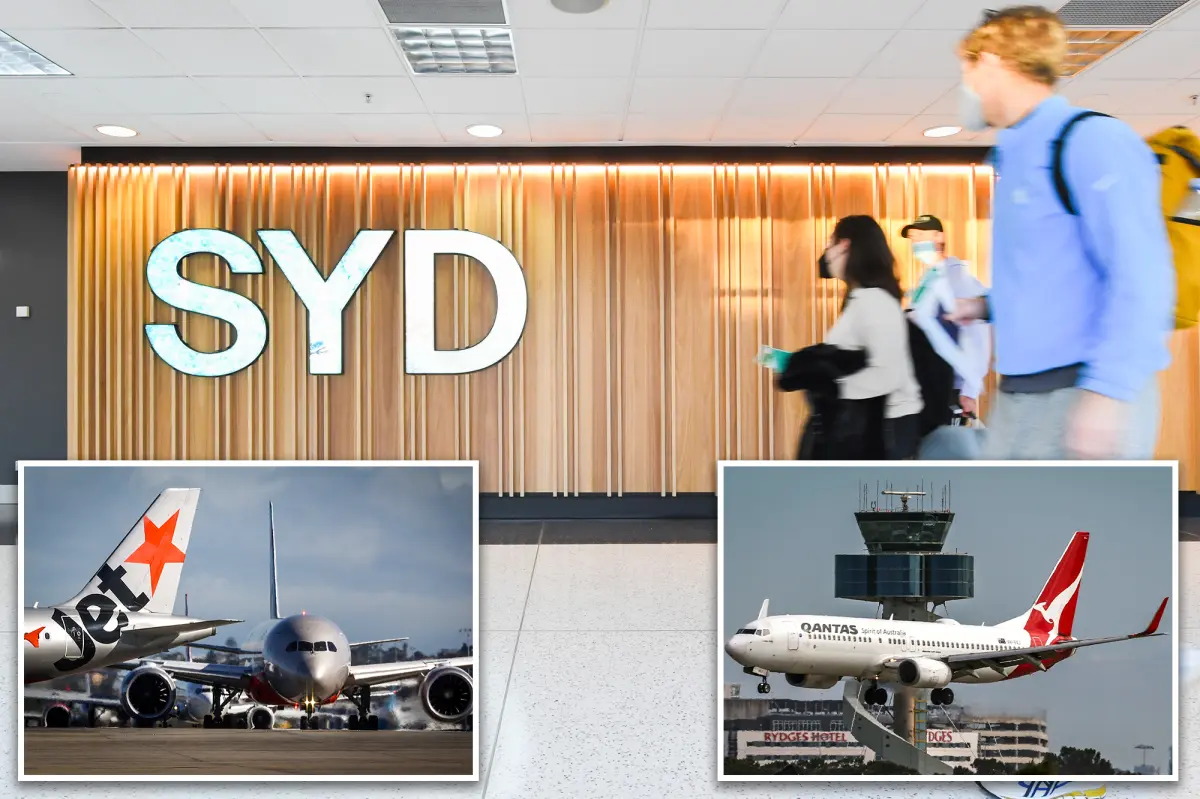
The chronology of events reads like a list of aviation worst-case scenarios narrowly avoided. On July 27, a Qantas Boeing 737 was cleared to cross a runway directly in the path of a QantasLink Dash 8 that was already landing—a miscommunication or misjudgment that could easily have ended in disaster. The same type of incident repeated itself on August 9, when a Jetstar Airbus A320 was forced to brake abruptly to avoid colliding with a Qatar Airways Boeing 777 that was being towed across its path. That sudden braking had real consequences: a flight attendant aboard the Jetstar aircraft lost their footing and fractured a wrist. On that same day, another Qantas Boeing 737 was cleared to cross a runway in front of a Virgin Australia 737 that had just been given clearance for takeoff—two separate serious occurrences in a single day. Nine days later, a Qantas Airbus A321 had to brake while taxiing to allow another Qantas 737 to pass in front of it. These are not distant, abstract statistics; they are moments when trained professionals had to react in real time to avoid catastrophe. Each incident involved commercial aircraft full of passengers, many of whom were likely unaware of how close they came to being part of a major aviation disaster.
Paragraph 3
Behind the technical language of runway incursions and near-collisions are human stories—pilots focusing through adrenaline, controllers trying to manage multiple moving targets, flight attendants thrown from their feet, and passengers who may have felt only a sudden jolt or an unusually firm stop. The flight attendant who fractured her wrist is a stark reminder that even when aircraft do not collide, people can still be injured. That injury could easily have been much worse had the aircraft not stopped in time. Aviation safety experts often speak of the “Swiss cheese model,” where accidents are prevented by layers of defense that line up imperfectly. In these incidents, the holes in the cheese aligned just enough to create danger, but not enough to cause a tragedy. Still, the psychological impact on those involved cannot be overstated. Pilots who walk away from a near-miss often carry the weight of it for years. Controllers who realize they cleared an aircraft too late may replay the moment in their minds again and again. The public tends to focus on the dramatic moments—the close calls, the screaming engines, the smoke from brakes—but the quieter cost is the toll on the men and women whose split-second decisions stand between life and death.
Paragraph 4
Perhaps the most troubling aspect of the ATSB’s preliminary findings is not the incidents themselves, but the underlying systemic issues they may reveal. Investigators have turned their attention to staffing levels at Sydney Airport’s control tower. According to Angus Mitchell, ATSB chief commissioner, the investigations will examine the significance of staff resourcing pressures within the tower, specifically the practice of combining operational roles, the routine reliance on overtime to fill shifts, and the conduct of training or supervision activities alongside operational duties. In other words, the very people responsible for keeping planes separated may be stretched thin, working extra hours, multitasking in ways that divide their attention, and doing so under a cloud of fatigue. Mitchell was careful not to claim that staffing shortages directly caused any of the recent incidents, but he did acknowledge that investigators are “examining the effectiveness of the measures in place to manage this identified risk.” Fatigue, he noted, is a heightened risk in any safety-critical industry, but it becomes especially dangerous when combined with the pressure of managing one of the world’s most complex airspace environments. The concern is not just that a controller might be tired on a particular day, but that the system has become so reliant on overtime and dual roles that fatigue has been normalized as part of the job.
Paragraph 5
The broader safety context makes these questions even more pressing. According to a separate ATSB analysis, Sydney Airport recorded the highest rate of ground conflicts per aircraft movement among Australia’s major airports in the post-COVID period—approximately 20 percent above the national average. On its face, that statistic sounds alarming, and it has already triggered headlines about Sydney being Australia’s most dangerous airport. But Mitchell was quick to caution that the findings should “be viewed in the context of Sydney Airport being the most complex in the country.” More movements, more runway intersections, more mixed traffic of large airliners, regional turboprops, and general aviation aircraft mean more opportunities for conflict. Still, even with that context, the fact that ground conflicts are occurring at a higher-than-average rate is a signal that something may be off. It could be that Sydney’s runways are simply more complicated to navigate, requiring more instructions and more communication. It could also be that the pressure on air traffic controllers is leading to more mistakes. The ATSB has not yet determined which explanation is closer to the truth, but the preliminary data underscores why these investigations matter. You cannot manage what you do not measure, and right now, the measurements are telling aviation authorities that Sydney needs a closer look.
Paragraph 6
In response to the reports, Sydney Airport issued a statement emphasizing that safety is its “highest priority” and that it will continue to support the Minister and Airservices as they work through the preliminary findings. “We await the final reports and any recommendations arising from the ATSB’s investigations,” a spokesperson said. That response is typical of an industry that knows how to manage public perception: express concern, promise cooperation, and wait for the official review to conclude. But for passengers, the true test will be whether these incidents lead to meaningful changes. The final reports will likely include recommendations on staffing, fatigue management, and air traffic control procedures, and those recommendations need to be taken seriously. The aviation industry has a remarkable safety record, but that record is not guaranteed. It is built on a culture of continuous improvement, where every near-miss is treated as an opportunity to learn. The recent events at Sydney Airport are a stark reminder that complacency is the enemy of safety. The system that protects millions of travelers every year is not a machine; it is a collection of human beings, each doing their best under difficult circumstances. The goal now is not to assign blame, but to ensure that the next time an aircraft is cleared to cross a runway, everyone involved can be confident that the decision was made with full attention, full knowledge, and full support from the system around them. Until then, every avoided collision is a reminder of how much work remains.